









The Texas rig — or T-rig for short — has a long history. As far back as 1949, Nick Creme, an absolute legend of the American largemouth bass scene, had the idea for a special rig using rubber worms. Working from home in Ohio at the time, he developed the concept into a production-ready system. Demand for the innovative rig grew, and from around 1960 the production T-rig was first manufactured in larger quantities at a new factory in the city of Tyler, Texas.
It caught fish and caught fish, spreading like wildfire among largemouth bass anglers in the years that followed. The original rig consisted of a few beads and a specially shaped sinker in the form of a bullet. Thanks to this bullet weight, the rig sank quickly and even punched through weed mats, tempting one largemouth bass after another.
Components of the T-Rig
Even today, the bullet weight and bead remain the core components of the T-rig, and it is more popular than ever — opening up possibilities for the predator angler that a standard jig head simply cannot offer. The Texas rig has become one of the most widely used and best-loved finesse methods in Europe.

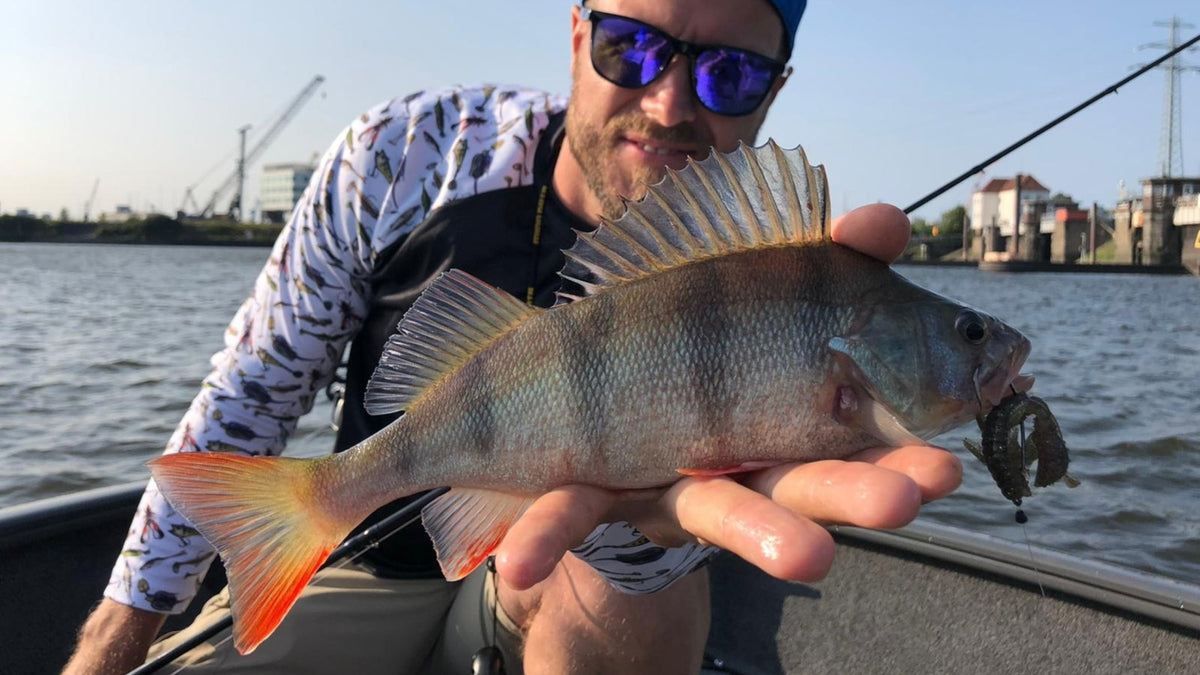
Liesi with a beautiful perch on a finesse filet at the Texas rig. Photo: Ihno Tamminga
What Can You Catch on a Texas Rig?
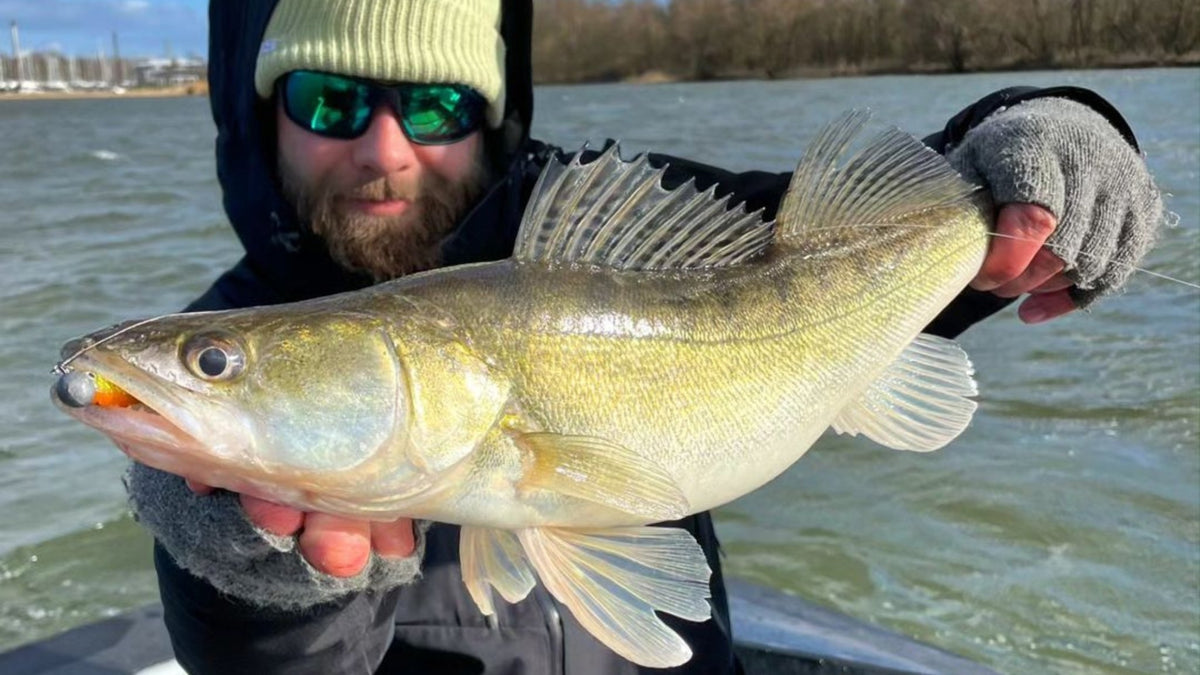
Anglers in France and Italy have long embraced the Texas rig, using it specifically to target the largemouth bass found in their waters. But here in central Europe, soft plastics on a T-rig also find very willing takers. Perch and zander in particular — and occasionally pike — are all too happy to pick up a temptingly presented morsel from the bottom. The Texas rig works throughout the year and really comes into its own in cover and during cold-water conditions.

Craws are an excellent choice for the Texas rig
How the Texas Rig Is Set Up
So what makes this rig so effective, and how do you actually put it together and fish it?
Bullet Weight
The centrepiece of the Texas rig is its distinctively shaped running sinker. It is formed like a bullet — hence the name bullet weight. This shape gives it excellent casting properties. More importantly, it rarely snags on the bottom, as the tapered profile avoids wedging between obstacles.
The rear of the weight has a moulded recess that either accepts the (optional) bead perfectly or sits snugly against the head of the soft lure being used.
Bullet weights are made from various materials, each with its own characteristics:
- Lead: Cheap, dense and easy to work with. Lead weights are simply cast in a mould. The high density means lead sinks fairly quickly, but it is quite soft, so bottom feedback is not ideal. The sound it produces in combination with the bead is rather muted. The through-channel is cast rather than machined, which means it is not always cleanly finished — there is some risk of the leader gradually being worn down. Lead is toxic.
- Steel: Steel weights are also inexpensive. Unlike lead, however, they have a lower density, so at the same weight they are somewhat larger. They produce a wonderful clicking sound when the bead strikes. Because steel is very hard, the finish quality matters — burrs and sharp edges can damage your leader more quickly than lead weights would. Some steel weights feature moulded plastic inserts to protect the leader.
- Brass has very similar properties to steel. It has a marginally higher density and is therefore slightly smaller at the same weight. That said, both steel and brass weights are noticeably chunkier than lead.
- Tungsten: Tungsten is arguably the optimum material for bullet weights. It has the highest density of all the materials used, so even heavier weights stay impressively compact. It is also extremely hard, giving you excellent feedback about bottom composition. The only downside: tungsten is difficult to process, which makes tungsten weights more expensive than lead. In return, they simply offer the best performance and the best all-round package.
As well as shape and material, bullet weights are available in a range of colours — from understated black through classic silver to vivid, eye-catching shades.

Strike King Rage Ned Bug on a light tungsten bullet with a Deka Soundbead
Bead
In principle, you can fish the Texas rig without a bead. Going beadless works well on waters with high fishing pressure, where noise is more likely to spook fish than attract them. On extremely snag-heavy spots where a compact, fixed unit between weight and lure is needed (see Florida rig below), leaving the bead out is often the right call too.
Setting those special cases aside, the bead plays a very important role. During the retrieve, the weight and bead repeatedly separate, because the weight sinks faster than the lure. When the next pull comes on the rig, the weight and bead crash back together, producing a sharp clicking sound. This triggers the curiosity of predators even at range, drawing them in effectively to your lure.
Various types of bead are used. Glass beads in different colours, sizes and cut patterns are the most popular. Depending on the cut, they add light-reflecting flash alongside that enticing sound. Different colours allow you to tune the rig to match conditions.
You can also use rubber beads or specialist magnetic beads. Rubber beads serve primarily as knot protectors — the soft material absorbs the hard impacts of the weight against the knot, helping to prevent unexpected break-offs. Magnetic beads cling to tungsten or steel weights, so at a gentle pace they produce no sound at all. Fish the lure more aggressively, however, and they rattle away, creating a different and less predictable soundscape. On certain days, that can be the key to success.
Hook
A offset hook is normally tied to the end of the leader for Texas rig fishing. This is the logical choice if you want to preserve the weedless nature of the rest of the rig. You can fire the whole setup into the densest weed and still stand a good chance of pulling out a decent predator rather than five kilos of vegetation.
You can also use flipping hooks — essentially worm hooks with a special bait keeper. Combine a Texas weight, a flipping hook and a rubber craw, and you can flip big perch straight out of the thickest cover. If you are fishing the T-rig in relatively snag-free areas, a standard worm hook is perfectly viable and may improve your hook-up rate slightly.

At less snag-prone spots, worm hooks with or without a weedless guard are a solid alternative to offset hooks
Texas Stopper
The Texas rig can be fished free-sliding on the leader (or main line), or fixed directly above the hook eye using a Texas stopper. In relatively open water, the free-sliding setup is usually preferred, as it fully exploits the extended sink time of the lure relative to the weight. After a lift, the weight shoots back towards the bottom while the lighter lure, slowed by water resistance, follows more gently — the line passes freely through the running weight, held back only by friction. Weight and lure briefly separate, giving fish a better chance to inhale the lure.
In snaggy conditions this separation is undesirable, as an uncontrolled falling lure can catch in cover all too easily. Here, a firm silicone stopper is pushed up against the bullet weight on the leader to lock weight and lure together.
In this configuration, the Texas rig is also known as the Florida rig.
By fitting such a stopper between the weight and the hook, you can also turn the Texas rig into an improvised Carolina rig.

A Texas stopper holds the bullet weight in position — essential when fishing in cover.
Leader
There is really only one material to consider here: fluorocarbon. Its high abrasion resistance means it stands up well to the wear caused by the sliding bullet. Mussels and other sharp edges on the bottom are no problem during the close-to-bottom T-rig retrieve. Fluorocarbon is also nearly invisible underwater, which means fish are far less likely to notice it — a significant boost to your bite rate when working the lure slowly.
Sensible line diameters start at around 0.25 mm. Going finer is not advisable, as the free-running weight puts considerable strain on the leader. There is no real upper limit. In extreme cases you can even build and fish pike-proof T-rigs with a leader diameter of 1 mm. For standard perch and zander fishing, the practical upper limit is around 0.40 mm — plenty to cope with even the densest cover.
T-Rig Tuning
In Nick Creme's original Texas rig, a small propeller was incorporated to provide additional attraction for largemouth bass. Today, a wide range of spinner blades and propellers is available, giving you every opportunity to add an extra edge to your Texas rig. This is where creativity pays off — squeeze everything you can out of a great rig.
Best Lures for the Texas Rig
In principle there are no restrictions on lure choice — anything from a classic soft lure to a frog is fair game. That said, some lures suit the Texas rig particularly well.
Crab imitations, creature baits and worms stand out above all else. Crabs and insect larvae move underwater in a slow, hopping fashion. This unhurried style of movement is perfectly replicated with a T-rig and convincingly presents itself to a hungry predator as easy prey. If your soft plastic is also well salted and scented, there is no holding back — the lure gets grabbed and held in the mouth long enough to set the hook cleanly.
Here Are Some of the Lures I Fish Successfully on the T-Rig:
- Jackall Cover Craw
- #LMAB Finesse Filet Craw
- Strike King Rage Ned Bug
- Noike Donkey BOO
- X Zone Lures Muscle Back Finesse Craw
- Z-Man Turbo CrawZ
- Illex iShad Tail
- Strike King KVD Finesse Worm
Working the T-Rig
The lure choice described above already points towards the right retrieve style. As mentioned, weight and lure move independently of each other under normal conditions. On the cast they press tightly together, forming a streamlined unit that carries a long way. Once the rig hits the surface, they separate — the weight sinks ahead while the lure glides down behind it. This only works properly with a relatively slack line; if the line is held tight during the drop, the two components stay close together.
You can therefore vary the lure's action dramatically depending on how you work the rig. One option is to drag it slowly across the bottom, keeping weight, bead and lure as one unit — no noise, just small puffs of silt from the disturbed bottom. Jigging with the rod followed by a tight-line drop keeps the assembly compact as it returns to the bottom, producing an effect similar to a lure fished on a jig head. If instead you snap the rod with short, aggressive twitches while keeping the line slack, weight and lure separate fully and the rig shows its true colours — the lure floats freely down after the bullet. This is best achieved with a loose, wrist-led action.
It is important to build regular pauses into the retrieve. During these pauses the lure rises and hangs for a brief moment — predators often use exactly this moment to pick up the sometimes scented bait from the bottom.
Strike Immediately or Wait?
If you watch videos of largemouth bass fishing, you will notice that anglers consistently delay the strike. This is partly down to the largemouth bass's habit of holding the lure in its mouth and chewing on it for a while. It is also because most lures used with this method are heavily scented and salted. With a standard jig head this delay would be unthinkable — the weight of the head would cause the fish to spit the lure out immediately. Because the lure has considerably more freedom of movement on a T-rig, you can actually let the fish take line on the bite. You can afford to wait a moment and set the hook with a slight delay. This does require either giving line towards the fish with the rod tip or fishing a main line with a little more stretch. More on that below.
Line Choice
American anglers firmly favour fluorocarbon as their main line, and for good reason. First, fluorocarbon sinks thanks to its water-like density, giving you more direct contact with your lure than braid would. Second, fluorocarbon has more stretch than braid. This means the fish feels less resistance — or at least a more natural resistance — and keeps moving with the lure before dropping it. Don't worry: the low-load stretch of fluorocarbon is not dramatically higher than that of braid. You will still detect bites clearly and can react with a well-timed, slightly delayed strike. The fluorocarbon main line diameter is chosen between 0.235 and 0.40 mm depending on target species and conditions. Can you use braid? Absolutely. If you are committed to braid, there is no need to switch. As described, fluorocarbon does have real advantages — but the Texas rig works perfectly well on braid too.
The Right Tackle for Rig Fishing
Rods for rig fishing need to be sensitive — constant feedback on bottom composition and what is happening at the lure is non-negotiable. At the same time, they should not be stiff clubs. A slightly soft tip combined with a solid backbone (extra-fast or fast action) is ideal. The tip telegraphs bites clearly while not offering the fish too much resistance. The faster the tip recovers, the greater the sensitivity.
Plenty of small guides also improve feedback by reducing loose line and slack between the rings. Short rods between 180 and 220 centimetres are spot on here — light and balanced in the hand, and well suited to accurate casting. Baitcasting rods are the preferred choice, as they offer greater casting precision and eliminate the line deflection of a fixed spool reel, further improving contact with the lure. Of course, you can fish Texas rigs on a spinning rod too. Since you are often working in cover, rods with a firm backbone are entirely appropriate.
Florida Rig
As described above, the Florida rig is a straightforward modification of the Texas rig. The Texas stopper is simply pushed all the way up against the weight, locking it directly in front of the hook eye so that weight and lure no longer separate during the retrieve. This lets you fish even the densest cover with minimal snagging. The bead is usually left out altogether with this setup, or replaced by a small rubber bead for knot protection.
Summary
- Ideal for fishing in cover and weed
- Highly versatile
- Weight and lure sink independently depending on rig setup and retrieve
- Perfectly suited to crabs and creature baits
- Primary target species: perch and zander
- Simple to build
- Easy to tie
- Casts a long way

The Texas rig is highly adaptable in both construction and components, allowing you to fine-tune it for a wide range of conditions.
With these tips and recommendations, you should have no trouble tying and fishing the T-rig successfully. Trust me — it won't be long before you're putting your first fish on the mat with this brilliant method.
Tight lines,
Florian