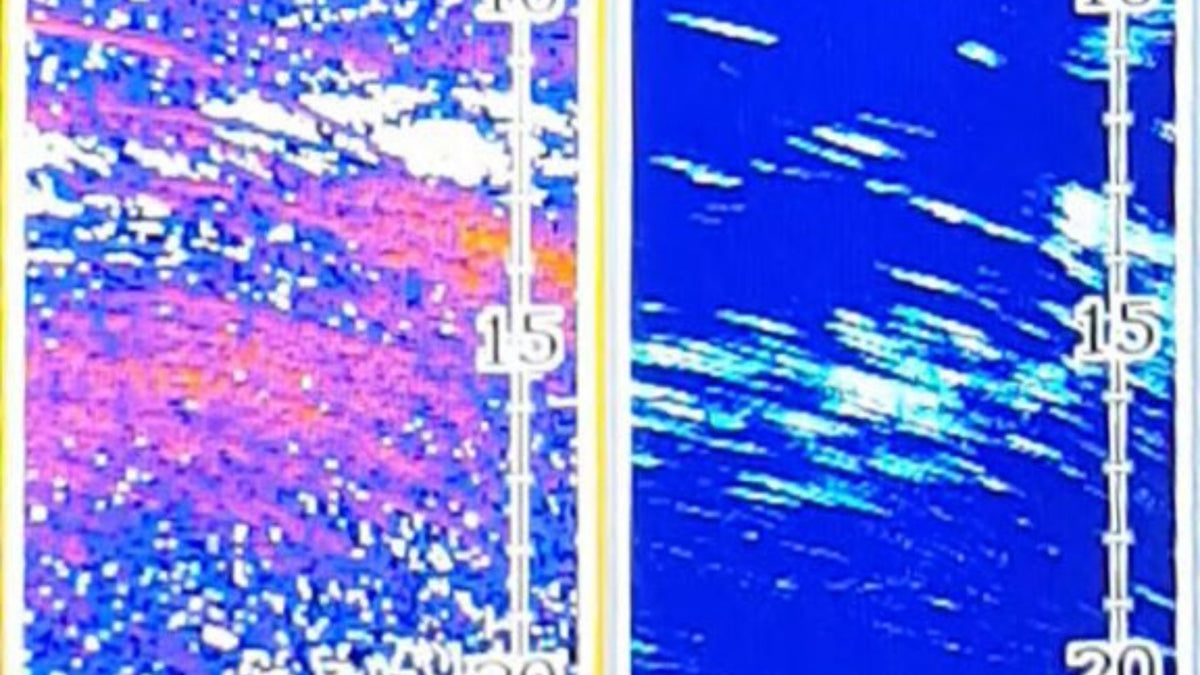










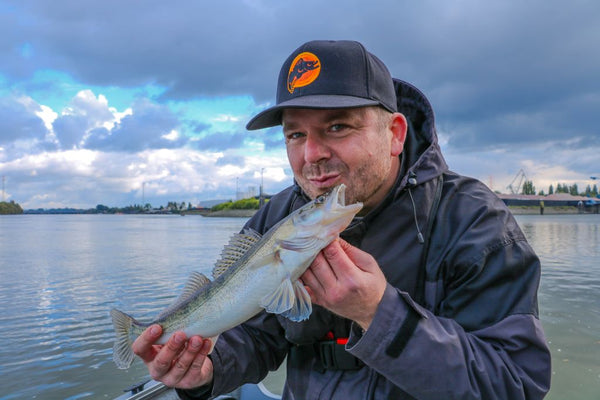
You know those fishing days when you get only a handful of bites — and even those come to nothing because whatever's down there is being infuriatingly cautious? Proper frustrating, that. Zander are especially guilty of this, often to a truly demoralising degree. Fair enough, if you were a zander you'd probably behave the same way. That said, I'm absolutely hooked on the hard, heavy takes you get from big zander — especially here on the Elbe. The answer, more often than not, is a stinger (that's Stinger in English — because we do love a bit of borrowed jargon). Zander, pike and occasionally perch are the predators that bite so tentatively you need to reach into your tackle bag for a treble hook as backup — and on that note:
'A cactus is really just a heavily armed cucumber.'
How to Build a Stinger
Materials for the Stinger Rig
Here's your shopping list first. After all, you need to know exactly what you're working with before you can follow the instructions.- Fluorocarbon line — diameter 0.50 to 0.60 mm. That way you can use it for other things too, and you won't end up buying 1.8 million different lines.
- Crimps for the fluorocarbon line — a simple rule of thumb: use crimps at twice the diameter of the line, because you need to pass the line through twice.
- Wire line — what matters here isn't the diameter but the breaking strain. To make sure the stinger holds against a big fish, I use wire with a minimum breaking strain of 15 lbs, the same as I'd use for a wire trace.
- Crimps for the wire line — for the pike version, follow the same rules as with fluorocarbon. Wire is essential for pike; otherwise your wire trace wouldn't make any sense either.
- Crimping pliers — if you don't have a pair yet, get ones with two crimp slots and at least 4 pressure points per slot.
- Tape measure or ruler — so you can measure the correct length accurately.
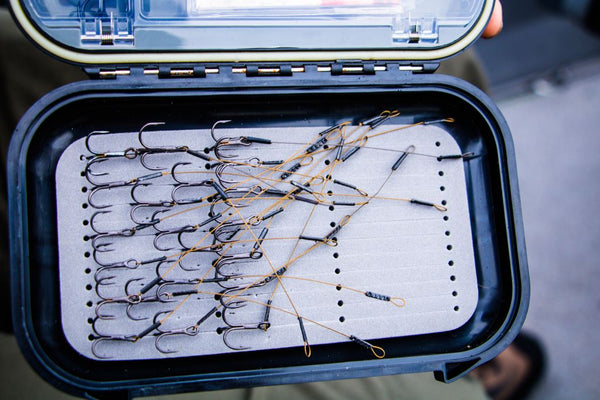
A small lure box for your finished stingers is a brilliant way to stay organised.
Step-by-Step Guide to Building a Stinger Rig
Preparation
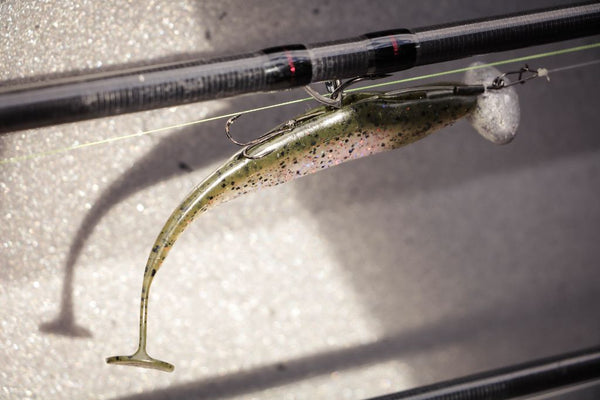
Here's how to do it:
-
Determine the stinger length
Use the formula above and note down the length for the soft lure you've chosen. -
Start with the treble hook, then the loop
Pull some line off the spool. I always take a bit more than I think I'll need, because I'm not cutting yet — first I attach the treble hook. - Take the end of the line and thread the appropriate crimp onto it.
- Then thread the eye of the treble hook onto the line.
- Now take the end of the line and pass it back through the crimp from the same side you just came out of — this forms a simple loop with the treble hook eye sitting inside it. I like to leave a tiny bit of play so it's easy to position the treble hook in the soft lure later, and so the indentation caused by the stinger isn't too pronounced.
- Take the crimping pliers and place the crimp and line into the correct slot. Apply light pressure so the crimp can no longer slide but isn't fully compressed yet.
- You can still adjust the line slightly at this point — this matters so that only a very small tail of line sticks out of the crimp afterwards. You need that as a reference so nothing goes wrong.
- Once everything is positioned correctly, increase the pressure on the pliers until you feel it won't go any further — essentially a firm but not extreme squeeze.
- With the treble hook now secure, you need to form the loop at the front end, which will later clip onto the eye of the jig head. The same rule applies here: make the loop just large enough to pass over the clip of the jig head. Too large and the line may slide past the clip — it'll still be attached to the leader, but it'll be far more visible in the water.
- Now you need the tape measure or ruler to measure the total stinger length — take the length you noted down, add 20 mm, measure that distance from the end of the treble hook along the line back to the spool, and cut there.
- Thread the second crimp onto the line.
- Take the free end of the line and pass it straight back through the crimp from the other side — this already forms the loop.
- Take the crimping pliers and place the second crimp into the correct slot. Apply light pressure, as you'll need to make a small adjustment to the line here:
Important: what counts now is the total length. It doesn't matter if a few millimetres of line stick out of the crimp towards the treble hook — you'll trim those in a moment. - Once everything sits correctly, increase the pressure on the crimp as described above.
- Your stinger is almost finished — trim the protruding ends from the crimps and you're done!
Summary
Building your own stinger really isn't that difficult — and it can save you a good few predators!
- By Chris from Tideritter.deAbout the author: The whole thing started more than 30 years ago when my father took me to Ireland to go fishing. He showed me how to catch pike and I was instantly hooked. Since then I've been chasing predators — and when it comes to non-predatory species, it's the carp of our local waters that get my attention.