









In this blog post, I want to give you a closer look at float tube fishing in general — and at float tube fishing for cod in the Baltic Sea in particular.
What Is a Float Tube?
A float tube is an inflatable ring shaped like a mini dinghy, where your legs hang in the water and you propel yourself with fins attached to your feet. You typically wear waders and fins that strap onto the wader boots. I'll introduce you to the different types of float tube and show you the additional gear you need on the water — and I'll also tell you what to look out for when buying one.
What Makes Float Tubes So Appealing to Anglers?
In some ways, a float tube is comparable to a rowing boat: in both cases you use muscle power to reach spots that are difficult or impossible to access from the bank. A proper fishing boat has the obvious advantage of letting you bring friends along, stand up, change position and stretch — none of which is possible in the single seat of a float tube.
Fast and Comfortable
That said, a float tube gets on the water incredibly quickly, offers a surprisingly comfortable seat, weighs no more than 10 kg and fits in any car — all of which makes it worth thinking about which option actually suits you better. When it comes to transport, float tubes even beat conventional inflatables. The biggest advantage, however, is how manoeuvrable and flexible they are, and how much less noise you make compared to a rowing boat or motor boat.
Where Does the Float Tube Come From?
The float tube (from the English 'belly boat', combining 'belly' and 'boat') originated in the early 1920s, when American anglers used car tyres to get closer to the fish. As the benefits of such an inflatable ring became apparent over time, the first purpose-built float tube appeared on the market in 1947 — though it bears little resemblance to what you'd buy today.
For my own float tube fishing in the Baltic, I use the Fishcat 4 by Outcast. At 6.4 kg it is exceptionally light, which was the deciding factor for me, as I have to carry it quite a distance from our house to the beach.
What Should You Look for in a Float Tube?
When buying a float tube, pay close attention to whether it has separate, independent air chambers and/or a highly durable material such as vinyl.
The Fishcat 4 also features a black PVC base, which is particularly important for predator fishing: fish in the water only see the underside of the float tube, so a dark base makes it virtually invisible to them.
Two large storage pockets and a recess behind the backrest for stowing the anchor round off this compact inflatable.
What Should You Bring When Float Tube Fishing?
Here are the most important items you should always have with you as a float tube angler on the Baltic Sea:
- Fast-setting superglue, in case a hook ever punctures the material
- Life jacket
- Wading belt to prevent water from entering your waders
- Anchor or drogue (only necessary on the Baltic or other waters with strong currents)
- Magnesium tablets and water (in case of cramp)
- Mobile phone
- Compass
Currents as a Hazard
If it's your first time on the Baltic and you don't know the spot and its currents, ask a local. Never underestimate the currents at sea, and only head out in light wind conditions — otherwise the whole venture can become life-threatening.
Safety tip: If you're heading out on the float tube alone, always arrange a fixed check-in time with someone onshore. That way, if something goes wrong, there's someone who can call the emergency services — you often have no signal on the water, and sudden fog or a strong current can catch you off guard.
Lures for Float Tube Cod Fishing
On the float tube in the Baltic, I fish with much the same lures every time. My go-to is the bright orange soft lure 'Möhrchen' by Lieblingsköder, which has proven to be a genuine cod magnet for me. With a jig head in size 3/0 or 4/0, a stinger is unnecessary on the 10 cm and 12.5 cm versions of this soft lure. I occasionally add pirks and spoons by Hansen into the mix — though you can of course also tempt a cod with a simple Japanese-red worm imitation.
Tackle for Float Tube Fishing
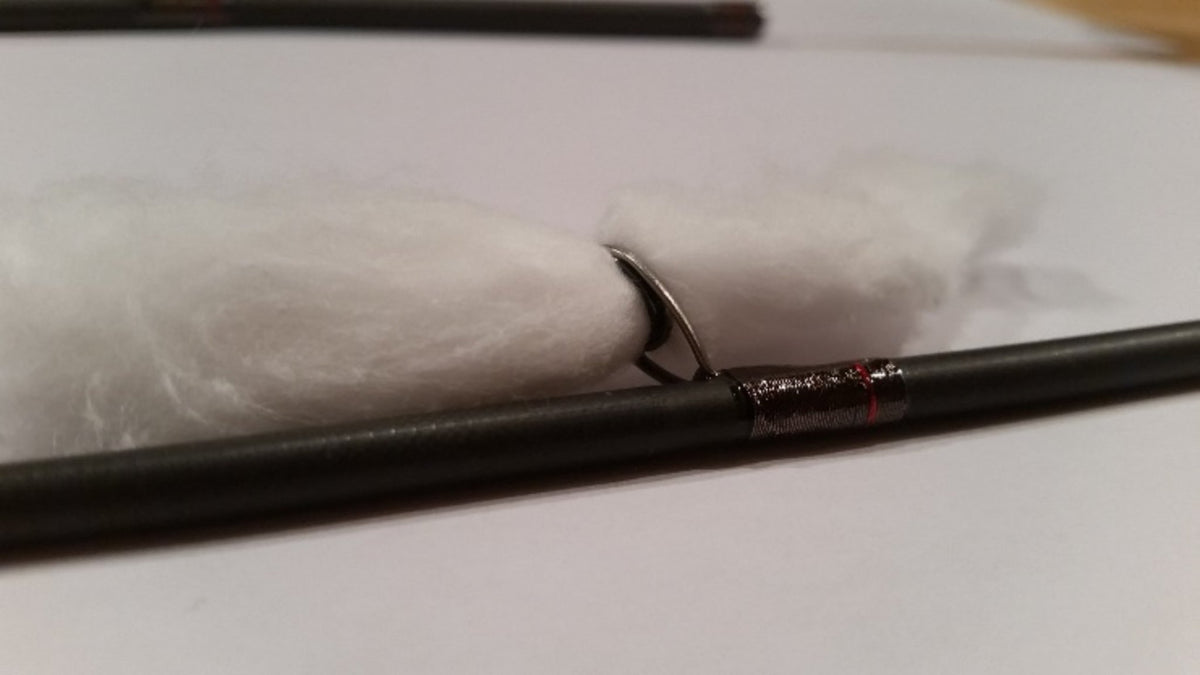
I currently use a straightforward Shimano Vengeance at 2.10 m. On one occasion I had the pleasure of borrowing the #LMAB Custom Rod from Toni for the weekend, and I was absolutely blown away by it. With a casting weight of 5–35 g it is perfectly suited to float tube cod fishing, and at just 1.98 m it is exactly the right length — shorter rods are a real advantage on a float tube.
My reel is a Shimano Sienna 2500FD loaded with 0.15 mm braid.
Tips for Float Tube Fishing on the Baltic Sea
When I head out with my cod lures, I fish in water depths of 8–15 m. To reach those depths off the coast near Ahrenshoop, I position myself at least 80 m and no more than 180 m from the shore. The fish don't always hold at the same depth, so the best way to find them is by drifting slowly — a drogue works brilliantly for this. In light wind and weak currents, though, you're better off without one: the less gear you have trailing behind you, the better.
Summary
I hope you've taken something useful away from this post! Either way, I'd love to hear your feedback so I know what to do better next time.
Until then — Josef!