







Dear fellow anglers,
It's summer, and the scorching heat doesn't just make us feel sluggish and drained — most fish species become inactive in high temperatures too, seeking out the shaded corners of the water and losing interest in feeding.
Most anglers call this the summer slump, a time when catches are hard to come by and you often go home empty-handed. There are, however, ways to target our scaly friends even on hot days — floating bread being one of the most effective.
What Is Floating Bread Fishing?
It's a method that offers not only tremendous excitement and tension, but is also hard to beat for sheer effectiveness. Once you get the fish feeding in the spot, you have the chance to target bigger fish quickly — and you can watch the whole thing happen on the surface!
The idea is simple: a piece of dry bread or a roll is fixed to the hook, floats on the surface, and draws carp in.
The Right Tackle
You really don't need much for this relatively straightforward style of fishing:
- a rod,
- a landing net,
- and bread
— that's it. Quite unlike typical carp fishing, where you're used to hauling vast amounts of tackle to the water.
When it comes to rod choice, keep it short. A short stalking rod of 10–11 feet is ideal. The rig couldn't be simpler either: just tie a larger carp hook directly to the main line with a universal knot, and you're ready to go.
The Perfect Spot
Don't overthink your spot selection. In intense heat, fish seek out shaded, well-oxygenated areas. Carp tend to sit beneath or right up against trees, which offer cover, food and shade. Inflows are also well worth investigating, as they channel fresh oxygen into the water. The key is to identify several spots to rotate between throughout the day.
Ideal Conditions
Weather plays a big part. The best days are warm, sunny and — above all — calm.
Wind-free conditions matter because you need your free offerings and hookbait to stay put. Even a light breeze can make this method frustratingly difficult, as the bread quickly drifts away from the spot on the surface.
You can try throughout the day, though fishing with floating bread after dark is obviously not an option.
Early morning and evening are the most productive windows, as the relatively cooler temperatures bring the fish up and they typically come to the surface fairly quickly.
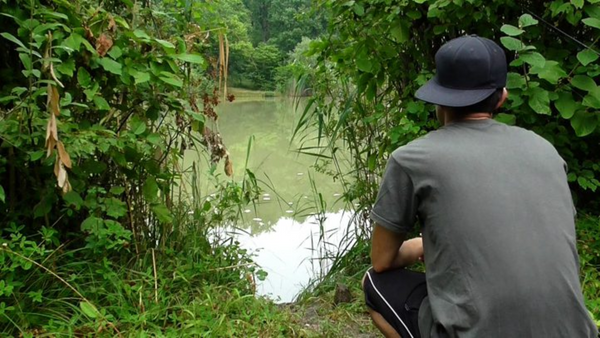
Watching the surface is an essential part of floating bread fishing
Loose Feeding and Observation
Once you've picked your spots, start introducing a modest amount of bread flakes to each one. Ordinary supermarket white bread works perfectly well. If nothing shows straight away, resist the urge to pile in more feed. It often simply takes a while before the first curious carp discovers the floating bread. From here, staying calm and watching carefully is everything.
The Attack
Keep all your spots in view — your polarised sunglasses will help enormously here. When the first fish start taking bread off the surface, it's time to thread a piece of roll onto the hook and present it where the carp are feeding. In most cases it won't be long before the bite comes and you strike. Then begins the typically powerful fight with a fish that simply doesn't give up — a carp, after all.
Once you've landed and cared for your first fish, expect the spot to go quiet for the next 30–60 minutes, as the commotion will have spooked the feeding fish. That's exactly why it pays to prime several spots at the start of the session.
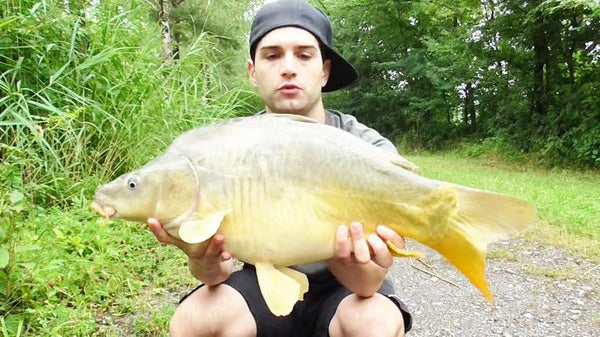
Once the first fish has fallen for the floating bread, it's time to move to another spot
Rotating Spots
Move to the next spot: mirror carp, common carp and the rest may well be feeding hard at one of your other primed locations.
You'll occasionally pick up bonus fish — roach or rudd, for instance — and on a tough day those are more than welcome. Grass carp are also a frequent visitor when fishing this method in summer; they're extremely active and feed with abandon. Your chances of hooking a genuinely impressive specimen are quite good.
Once you've worked through all your baited spots, there will come a point where the fish gradually withdraw and lose interest in the floating bread. It can then take several hours before another carp shows itself.
Summary
Here are the key tips for floating bread fishing, brought together:
- Don't forget your polarised sunglasses
- Prime several spots at the same time
- Keep all your baited spots in view at all times
- Stay calm and inconspicuous
- Use a firm roll as hookbait rather than sliced white bread
- Consider adding an attractant to the hookbait for extra appeal
- Dip the bread briefly in the water to add a little weight for longer casts
Floating bread fishing is genuinely addictive. For me, it's simply part of a good summer's angling. Watching the fish feed on the surface, the tension building as the carp close in on the bread, and the powerful fights that follow — it all adds up to an experience you won't forget. You really do have to give it a try.
From now on I'll be writing more articles on non-predatory species, and I'd love to hear your thoughts and suggestions for future topics in the comments below!
Tight lines!
Your Flo