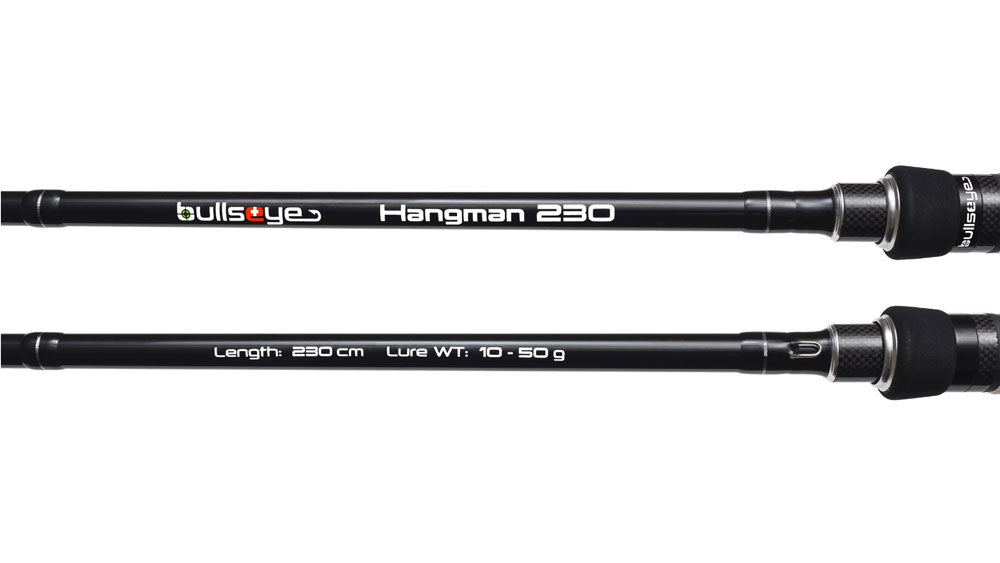
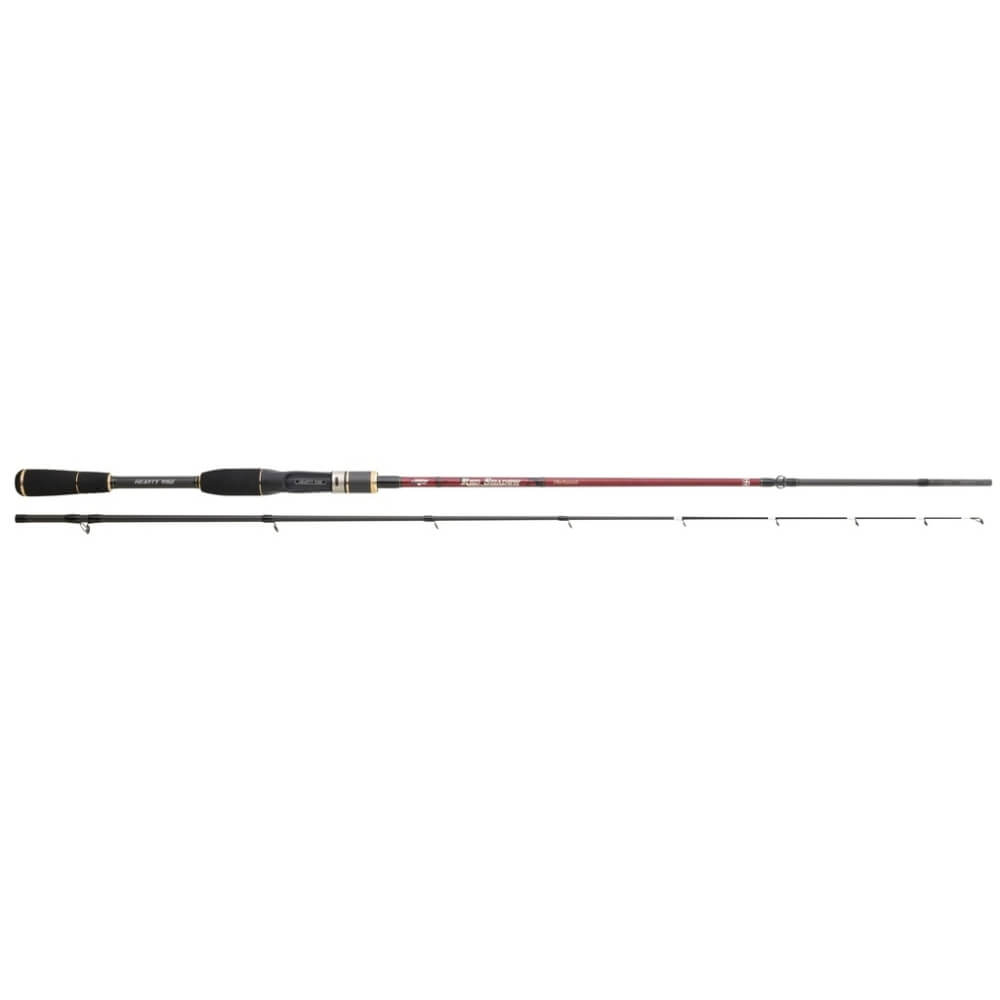
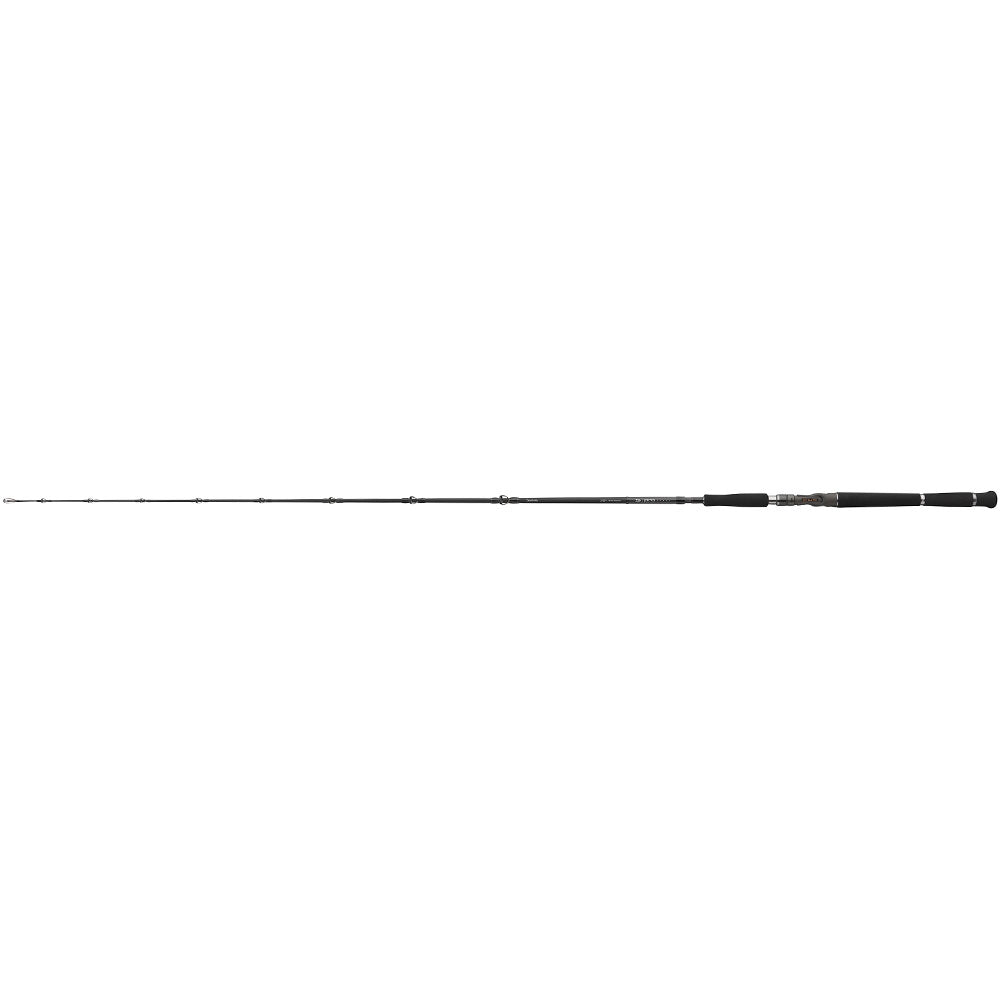
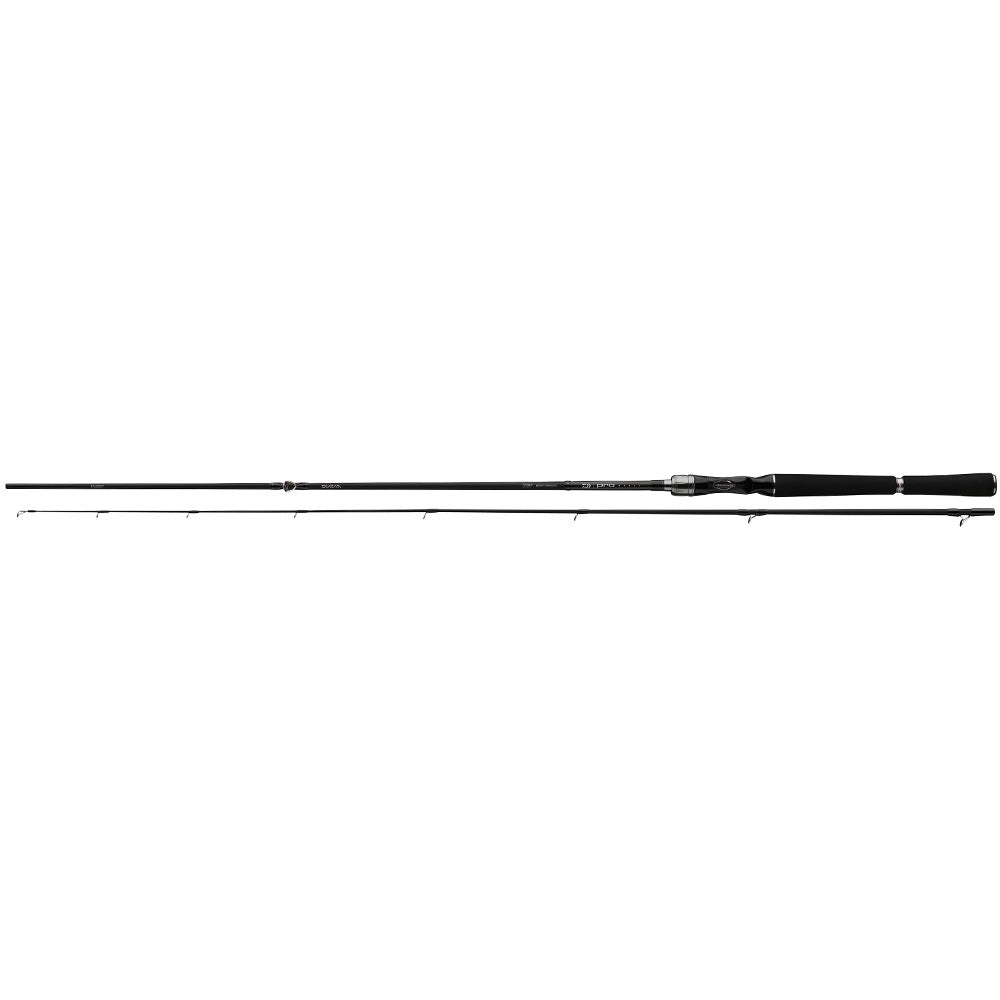
<h2>Buying Guide for Vertical Rods</h2><p>In vertical jigging, as the name suggests, you fish with the <strong>line pointing straight down</strong>. When the target is <strong>fish suspended in open water</strong>, this specialist approach is called <em>pelagic fishing</em>. When the goal is fish holding close to the bottom, it is simply classic vertical jigging.</p><h2>Which Lures Are Suitable for Vertical Jigging?</h2><p>In principle, all <strong>soft lures</strong> work for this technique, though pintails and V-tails are the preferred choices.</p><p>The key difference from classic <strong>jigging or slow-rolling</strong> soft lures is that the lure is not hopped along the bottom in jumps. Instead, it is presented weightlessly suspended, in direct contact, <strong>vertically beneath the rod tip</strong>. You breathe life into it with <strong>minimal twitches</strong> of the rod tip, pausing it completely for extended periods in between. Bites therefore arrive mostly as a direct pull straight into the rod.</p><h2>What Matters in a Vertical Rod?</h2><p>This specialised technique dictates the demands you should place on a good <strong>vertical rod</strong>. The right choice naturally depends a great deal on the target species and the lure weights you plan to use, but it is worth first looking at some <strong>general characteristics of vertical rods</strong>.</p><h3>Length</h3><p>Vertical rods should always be short. The optimum length is 190 cm. The reason is that you want to present your <strong>lure as accurately as possible within the fish finder cone</strong>. A longer rod works against you here, as it would force you to position yourself too far from the fish finder or the side of the boat. You also have to hold sometimes quite heavy <strong>jig heads</strong> throughout the session. If the rod is already top-heavy, that only makes things harder. A longer blank also creates more leverage forward, meaning the lure pulls more. A short rod lets you present the lure <strong>far more easily and precisely</strong>, and lets you react more quickly to bites or movement from the fish. A rod between 170 and 200 cm is therefore the right starting point for <strong>vertical jigging</strong>.</p><h3>Weight & Weight Distribution</h3><p>A rod for this application needs further qualities beyond length. It should be as light as possible - again, this comes directly from the technique. A rod that must be <strong>held static</strong>, together with the weight of the lure, simply cannot be too heavy, or even strong anglers will tire quickly. The weight distribution matters just as much. A nicely balanced or even <strong>slightly rear-heavy rod</strong> is ideal.</p><p><strong>Vertical rods should not have too stiff a tip</strong>. As already described, bites come directly beneath the rod tip, often at very short range. If the tip is too hard, the predator frequently cannot take the lure properly into its mouth and hooking is poor. A slightly softer tip makes it easier for the fish to inhale the lure and improves your bite-to-catch ratio.</p><p>At the strike, a powerful backbone is essential. The lure must be moved in two directions to set the hook, as the line runs virtually at a right angle to the predator's mouth. If the rod is too soft, even the most forceful strike is absorbed before it reaches the jaws of <strong>pike and zander</strong>.</p><h3>Spinning Rod or Baitcasting Rod?</h3><p>Another decision to make is whether a <strong>baitcasting rod</strong> or a spinning rod suits you better. Again, looking at the <strong>technique</strong> points the way. Because you constantly need to adjust <strong>fishing depth</strong> when vertical jigging, the trend is clearly towards the baitcasting rod. You simply press a button to free the line, whereas with a <strong>fixed spool reel</strong> you are constantly <strong>flicking the bail arm</strong> open. Precise line release on the baitcaster is then controlled with your thumb, and the moment you turn the handle, the spool locks immediately and the reel is ready for the strike. There are now even <strong>baitcasters</strong> developed specifically for vertical jigging.</p><p>Some specialists swear by the spinning rod because it simply sits better in their hand. Objectively, though, the baitcasting rod has clear advantages.</p><h3>Casting Weight: It Depends</h3><p>There is no single correct casting weight for a vertical rod. A <strong>vertical rod for perch and zander</strong> in still or slow-moving waters can be very light. If the plan is to fish <strong>pelagically for large pike and zander</strong> with big soft lures, the rod needs to be considerably more powerful - though it will then also be noticeably heavier and simply too much for lighter work.</p><p>It therefore makes sense to think through in advance where and how you intend to use the rod. Light vertical rods are usually rated with <strong>casting weights up to 30 or 40 g</strong>. <strong>Rods for pelagic fishing for pike and large zander</strong> can carry <strong>casting weights of 80 g</strong>.</p><p>Here it is more about the overall power of the rod than the actual casting weight, since no casting takes place in vertical jigging.</p><h3>Think About the Handle</h3><p>A secure, comfortable grip is equally important. Vertical jigging is often practised in the cold months. When your fingers are cold and stiff, a reliable hold on the rod is essential. Bites can come out of nowhere and <strong>with brutal force</strong>. If the rod is not firmly in your hand, the entire <strong>vertical combo</strong> can end up overboard - an expensive lesson.</p><h3>Guides on Vertical Rods</h3><p>The same guidelines apply to guides as with other rods. Only fine <strong>braid</strong> is used for this technique. The guide inserts should therefore be as smooth as possible and of the highest quality to protect the fine lines.</p><p>Keep these points in mind when choosing your vertical rod, and nothing will stand between you and confident predator fishing straight below the rod tip.</p><h2>Summary of Key Features for Vertical Rods</h2><ul><li>Length between 170 and 200 cm (190 cm is optimal)</li><li>as light as possible</li><li>as well balanced as possible</li><li>not too stiff a tip</li><li>very strong backbone</li><li>ideally a baitcasting rod</li><li>high-quality guides</li></ul>