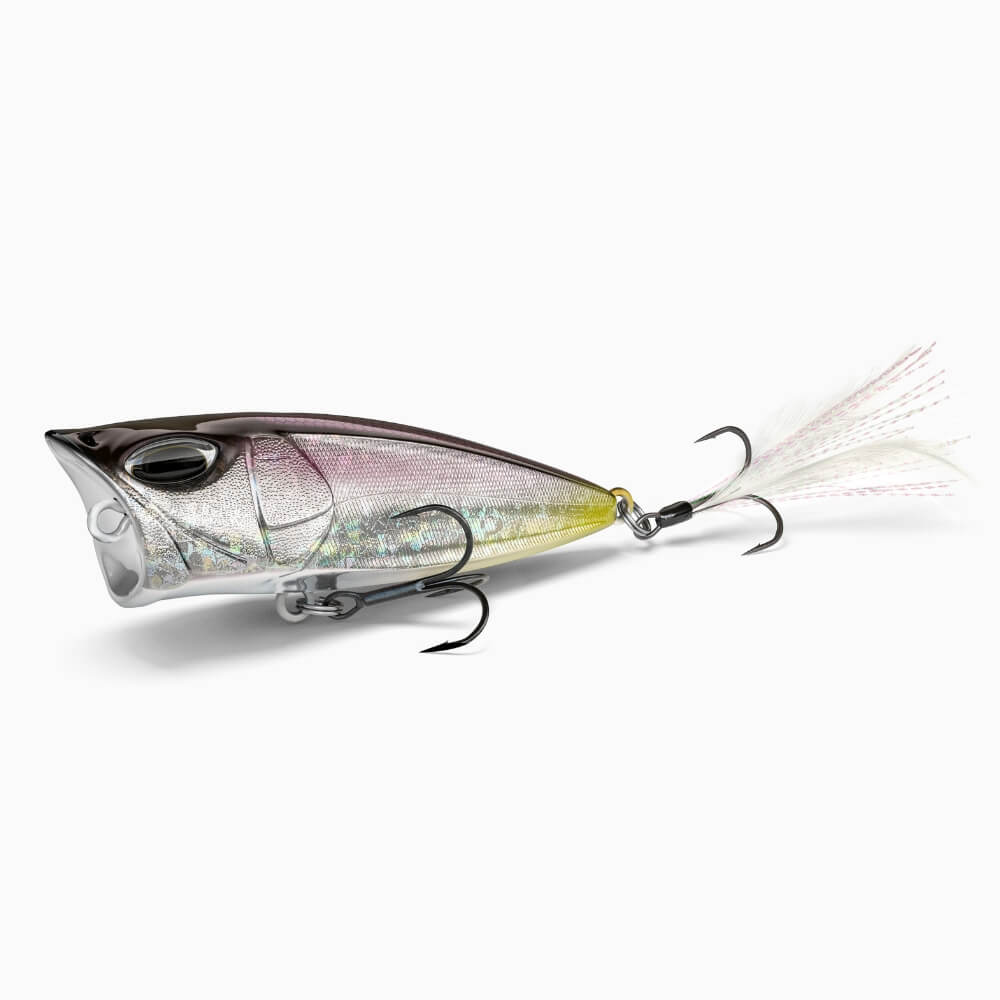
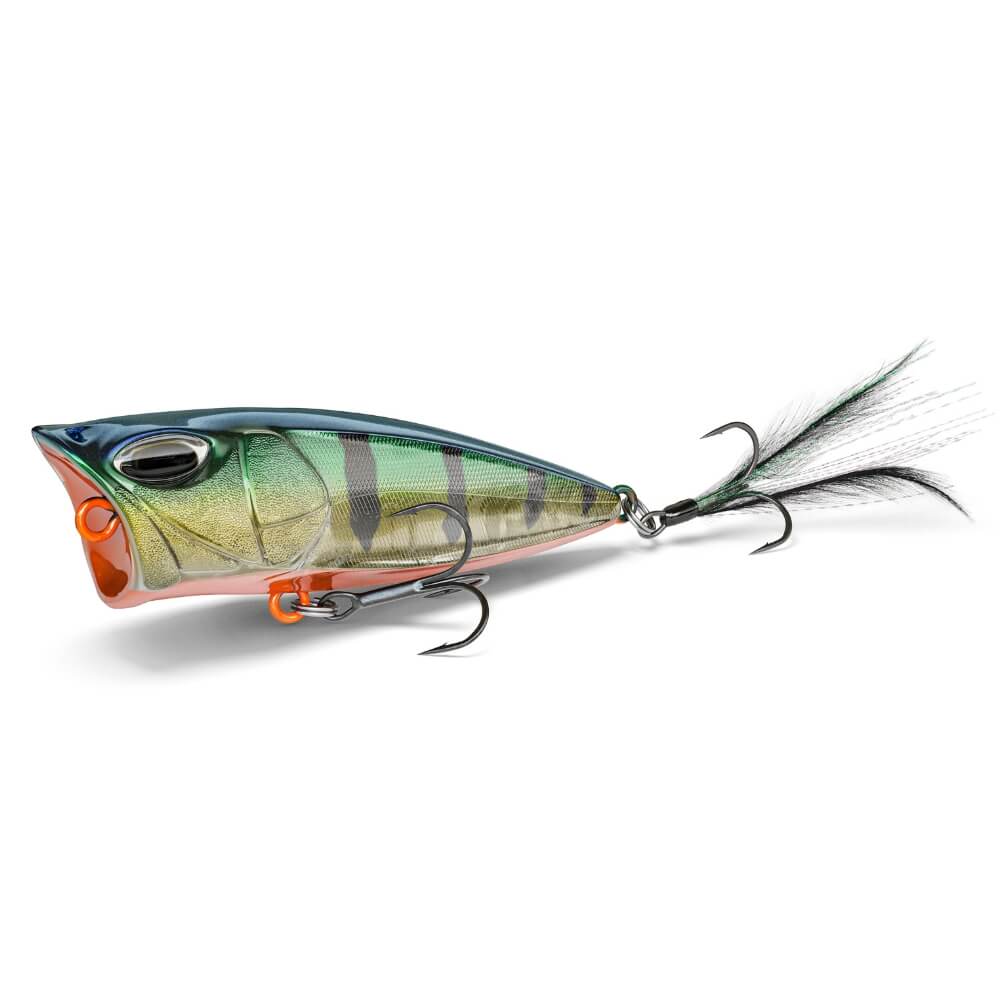
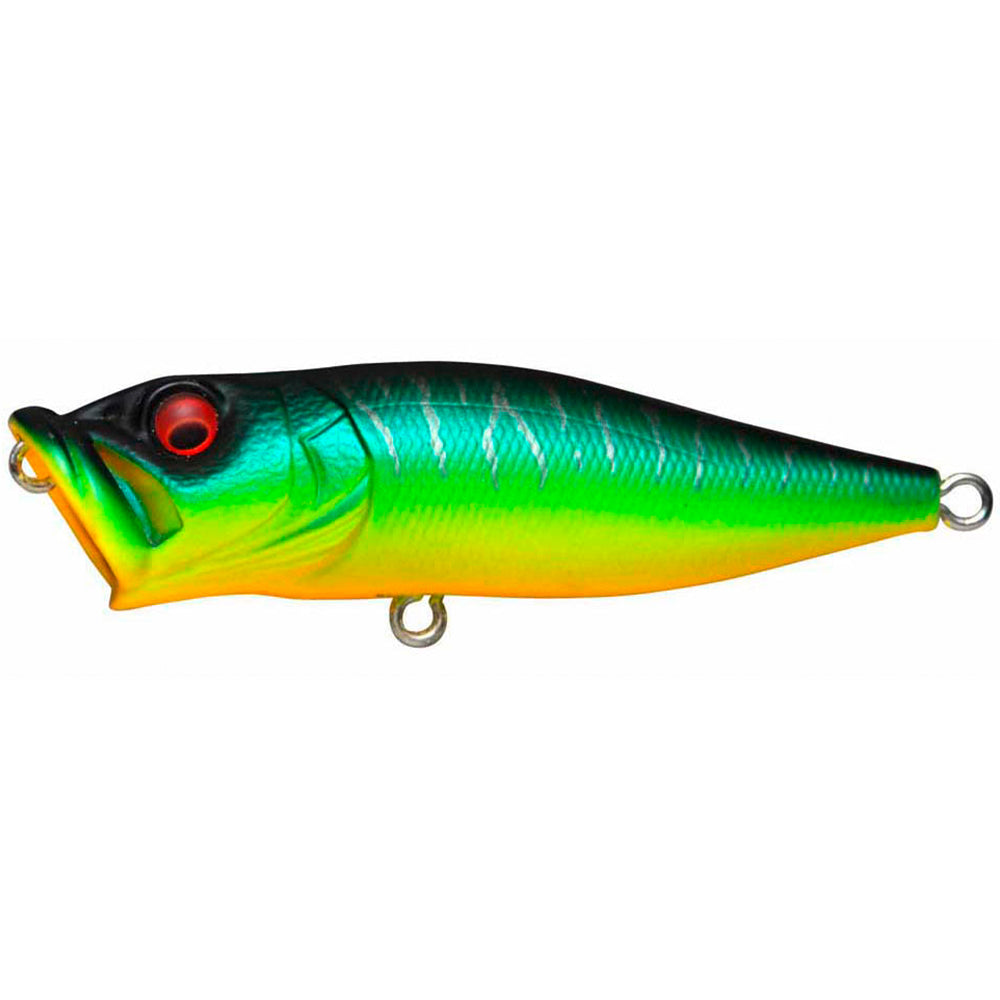
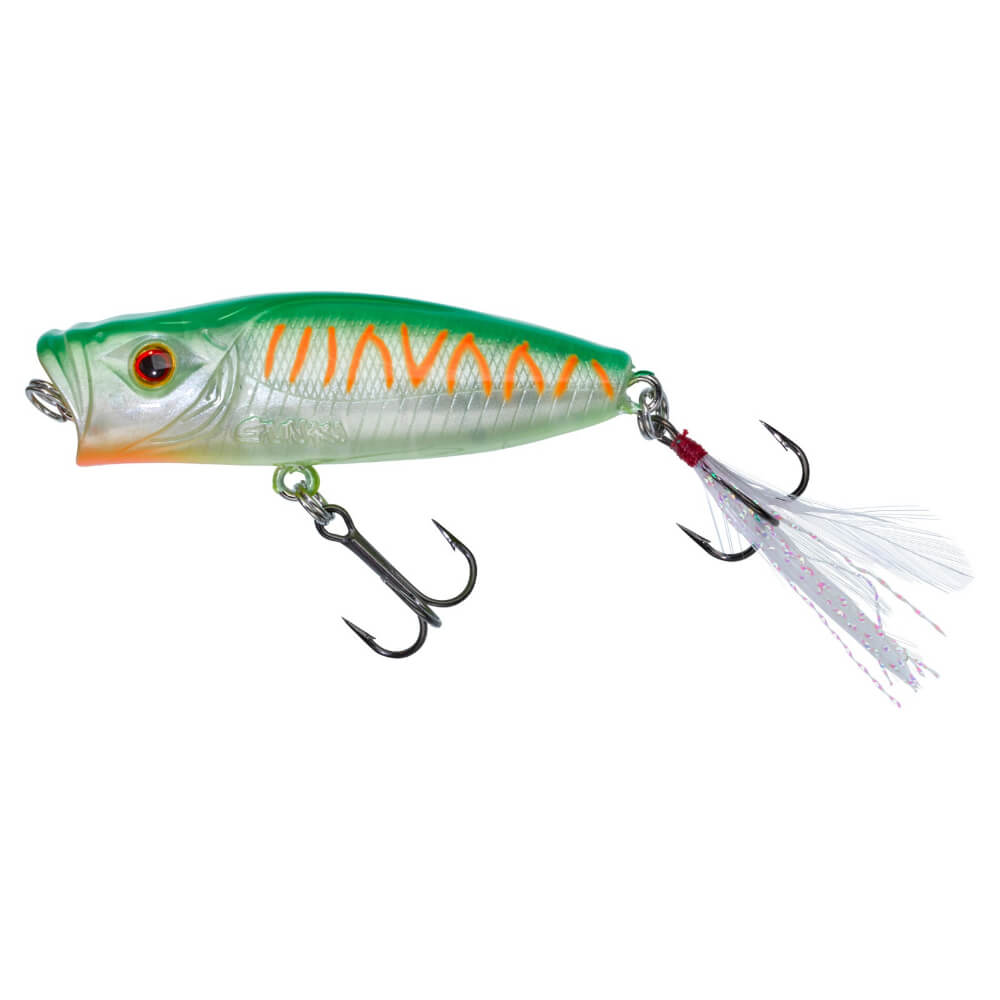
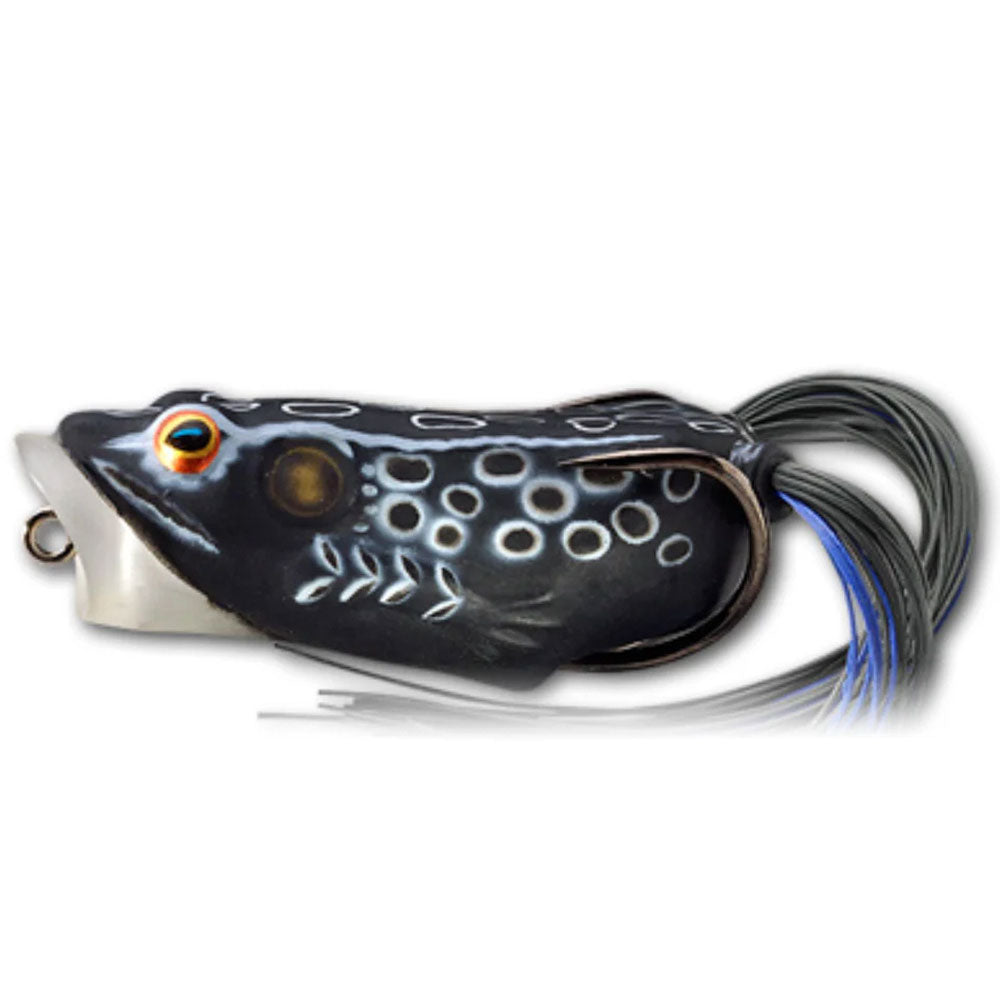
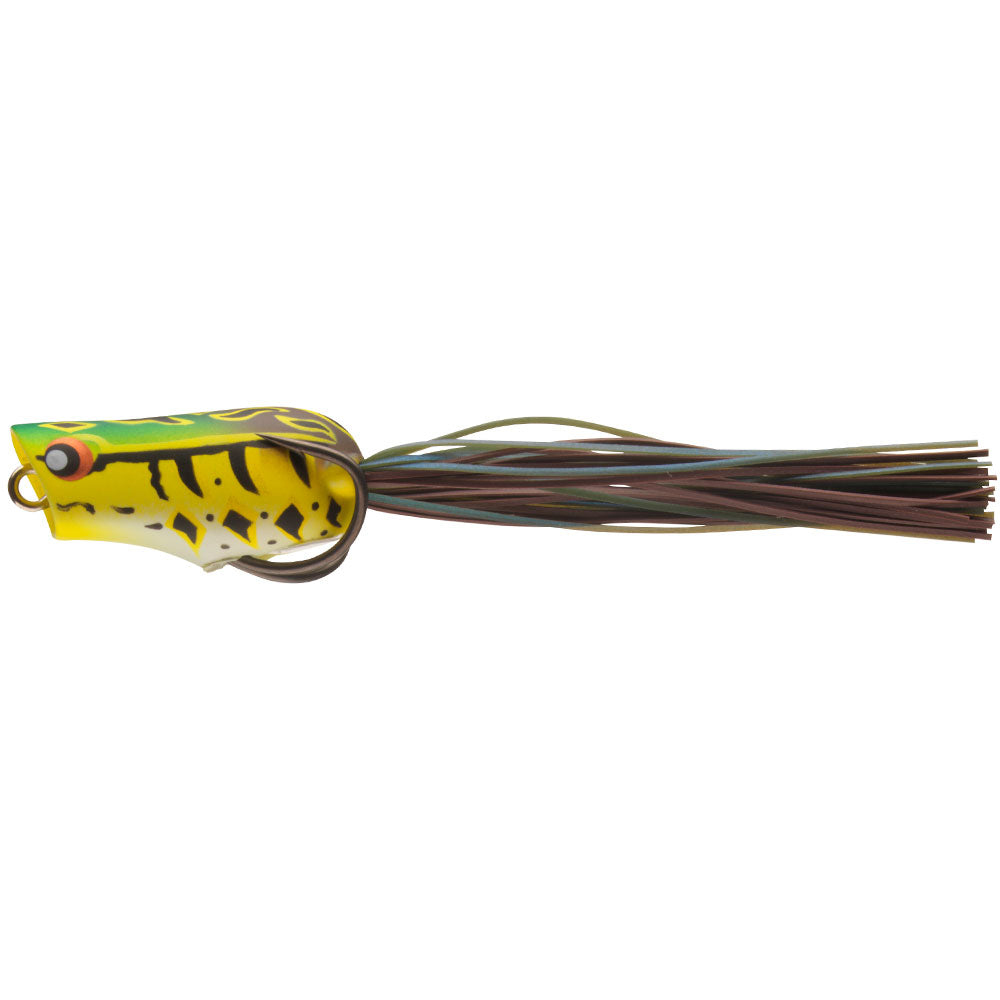
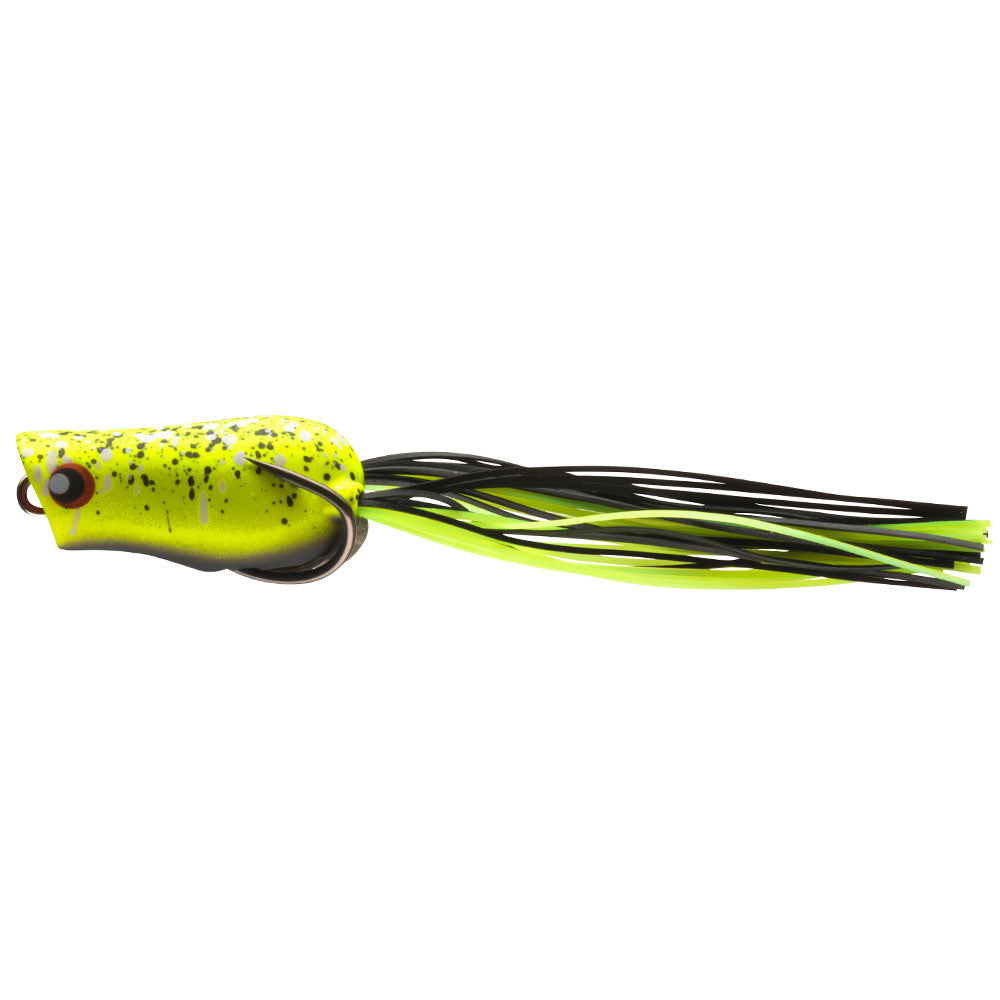
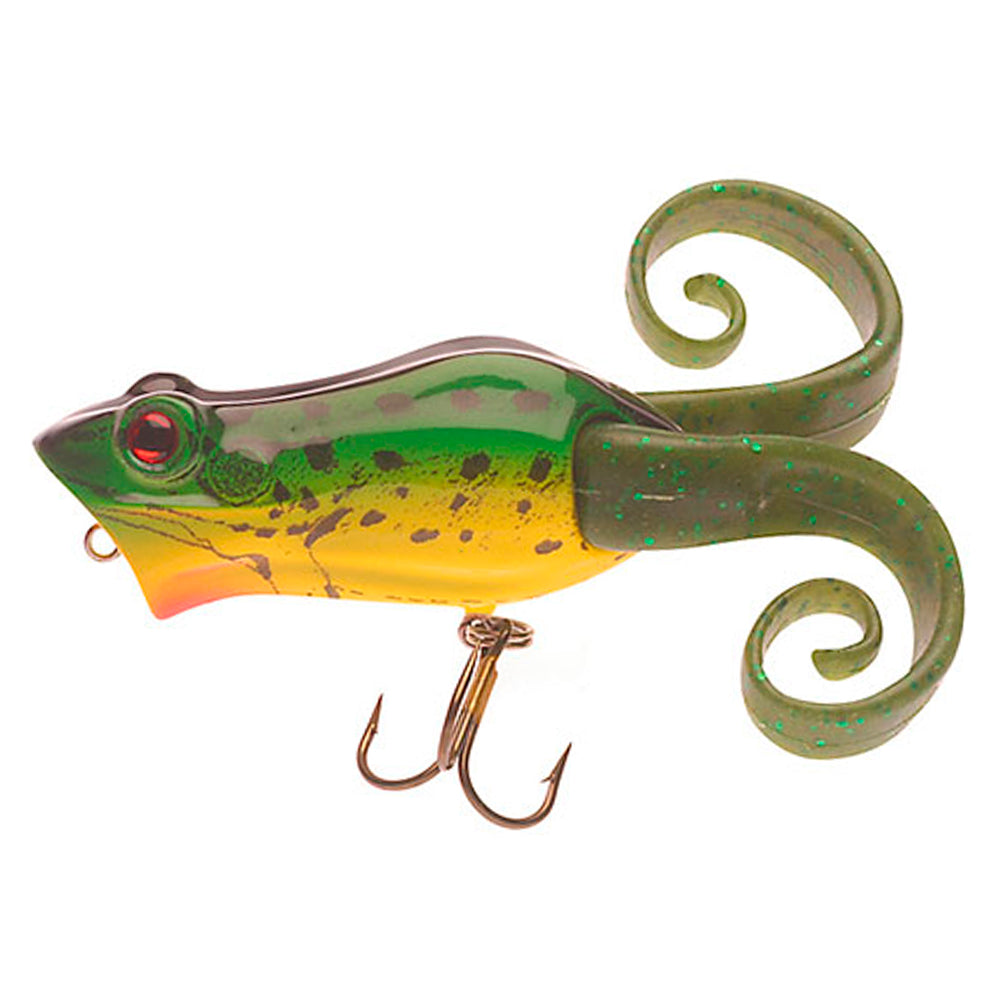
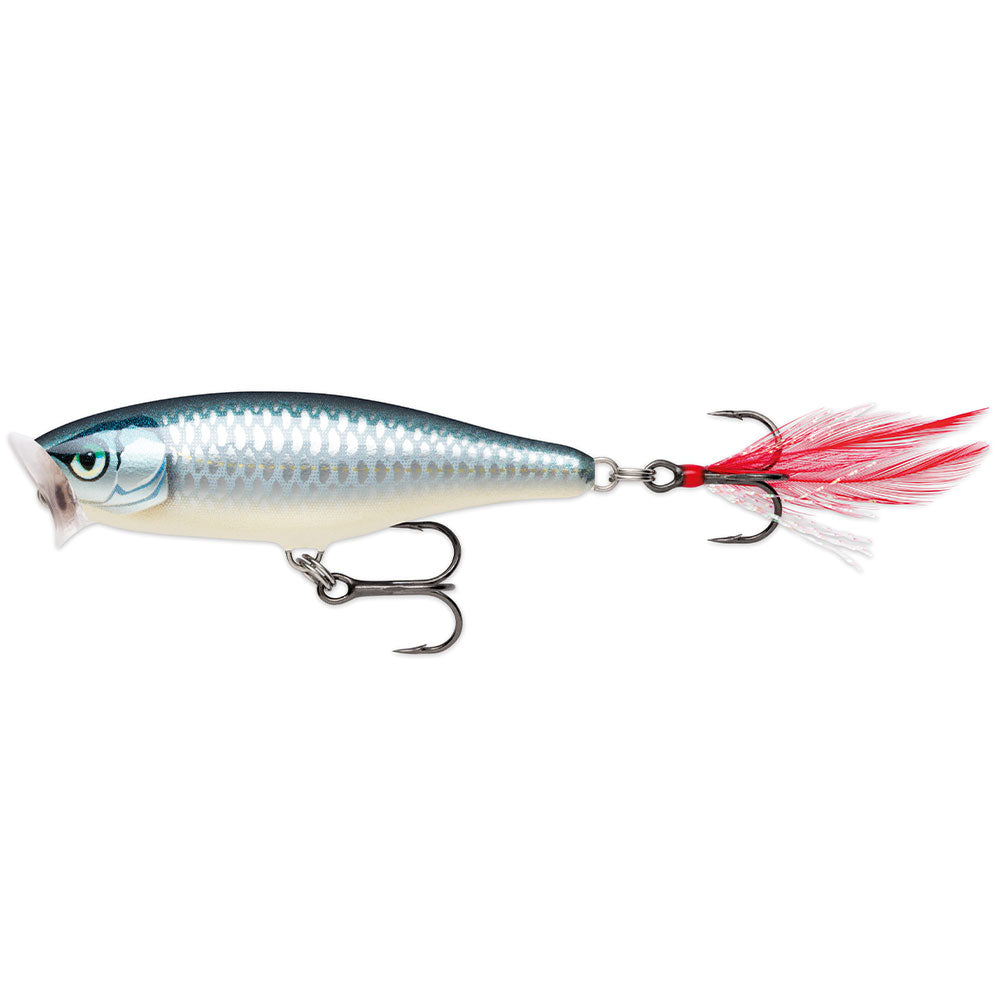
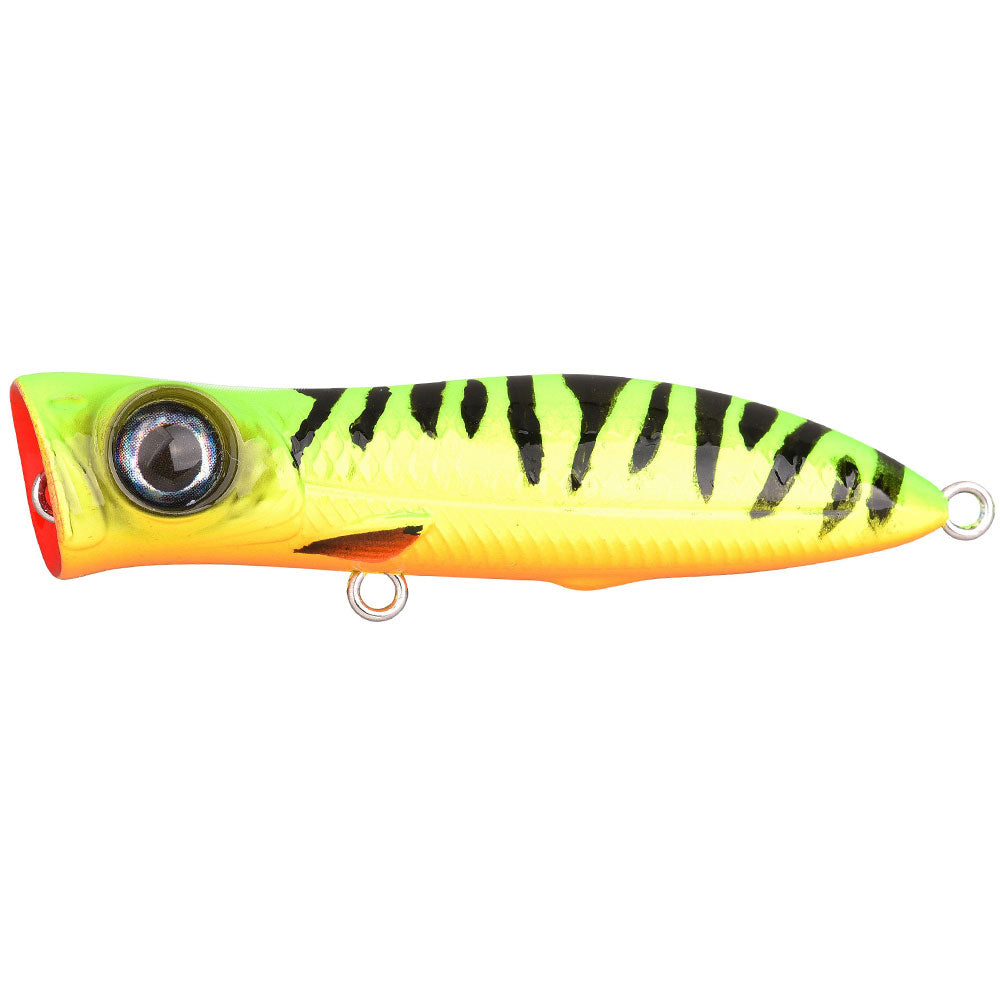
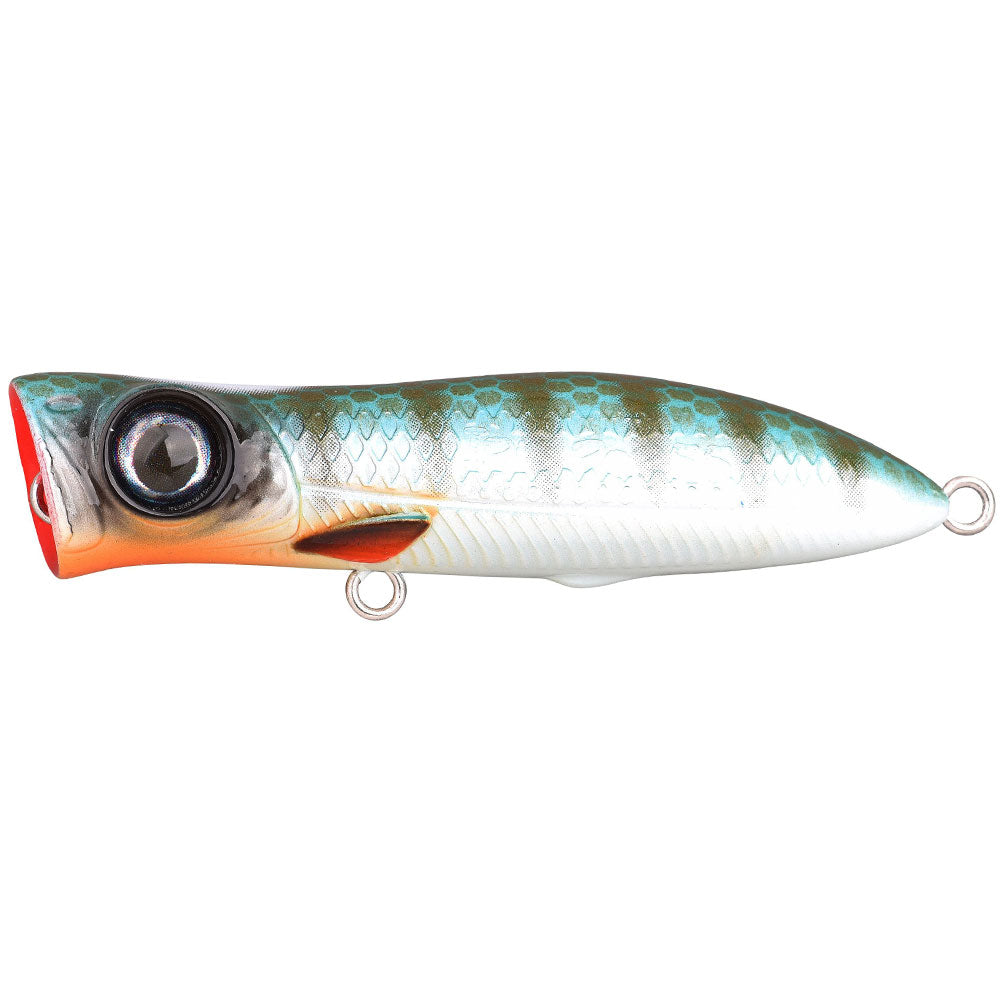
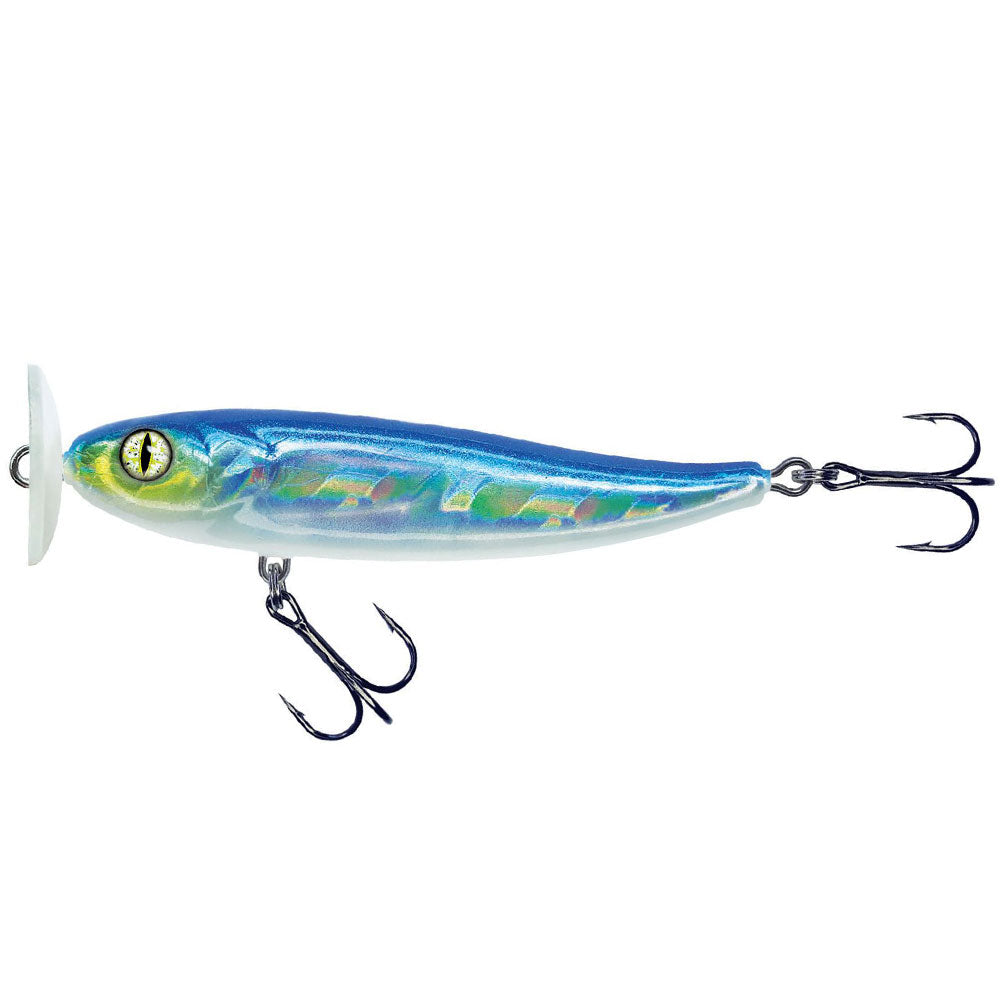
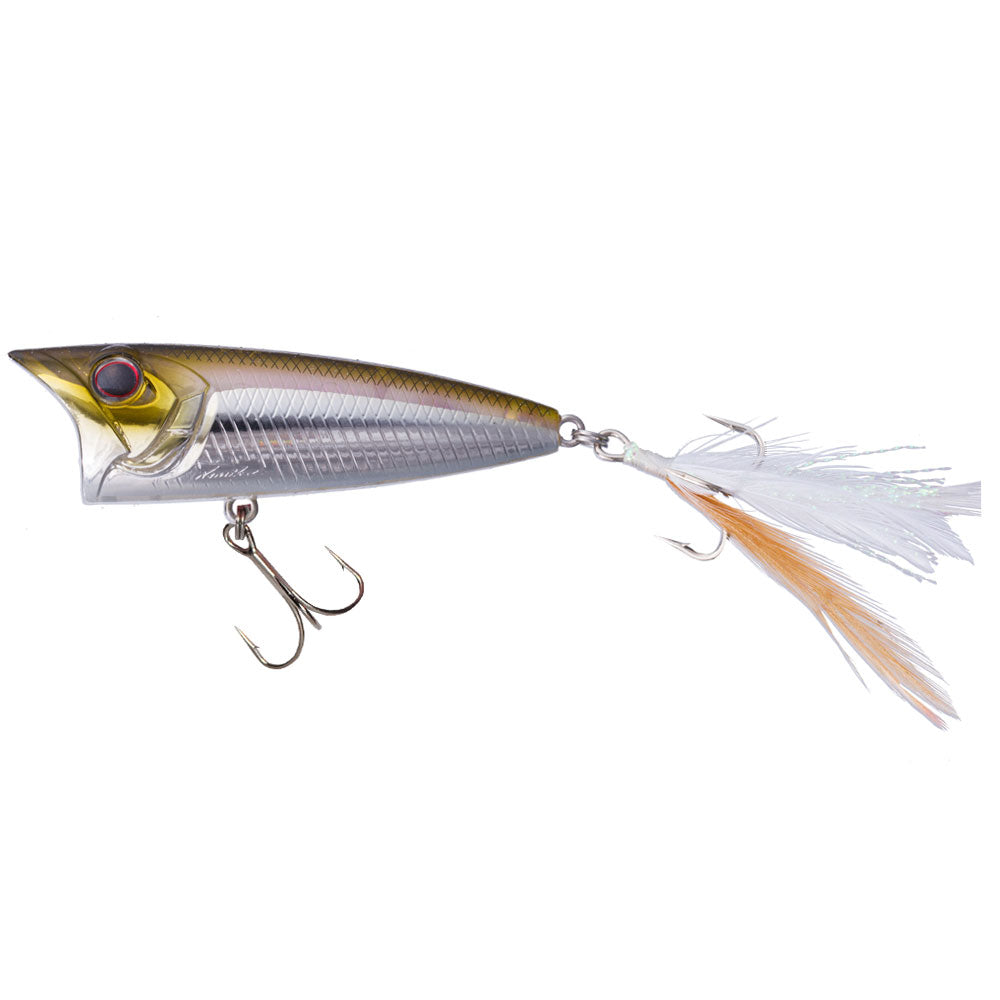
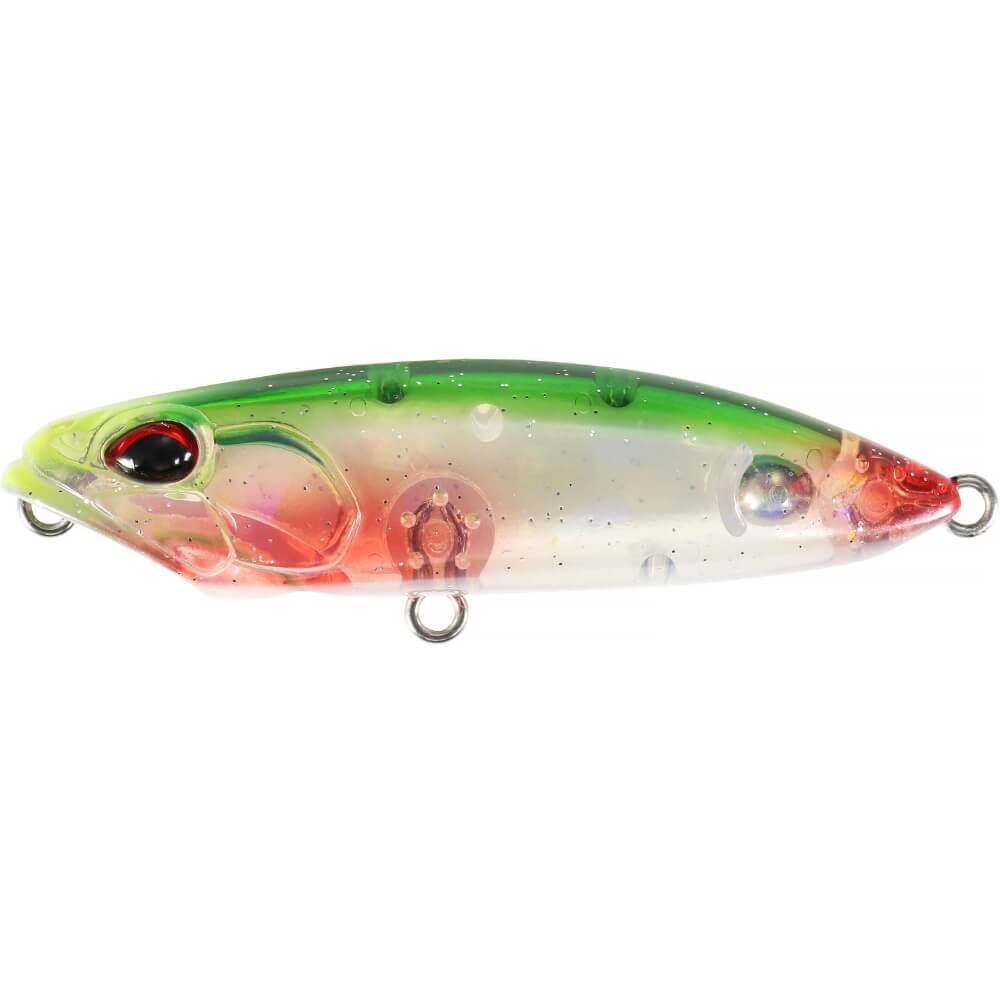
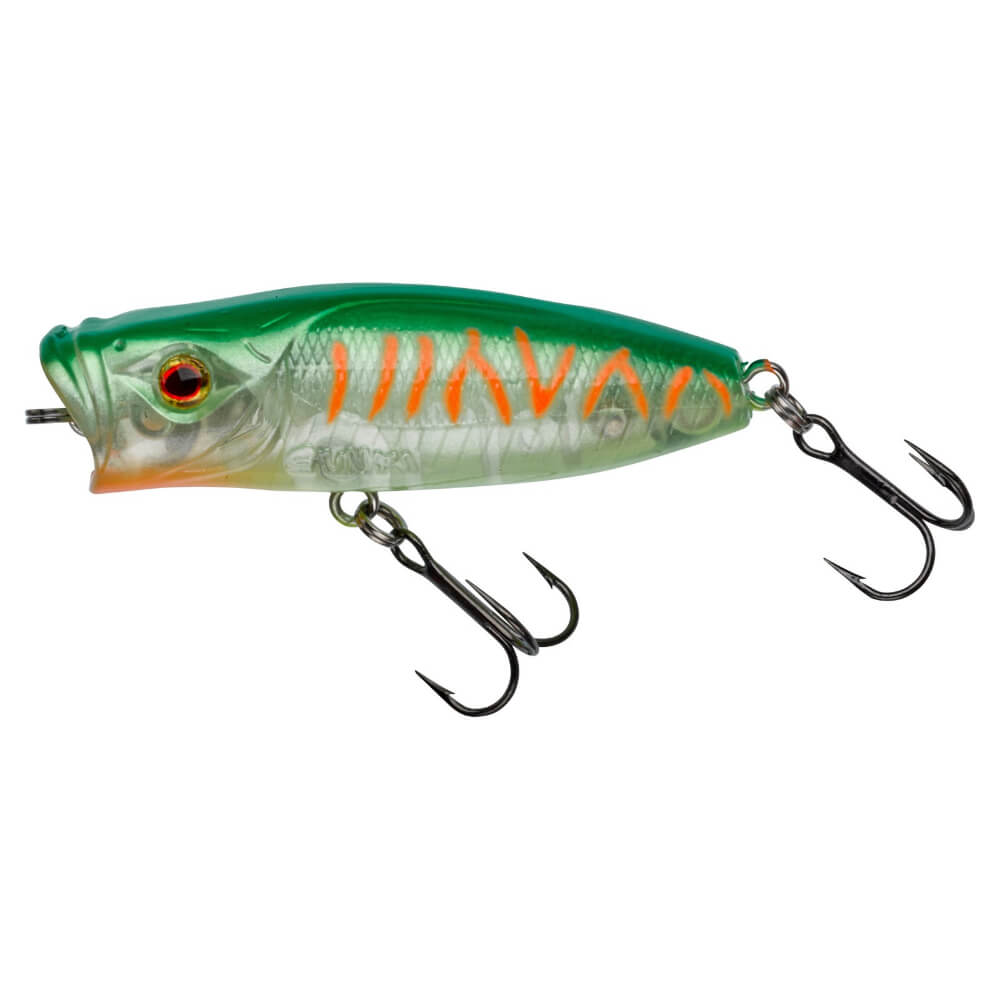
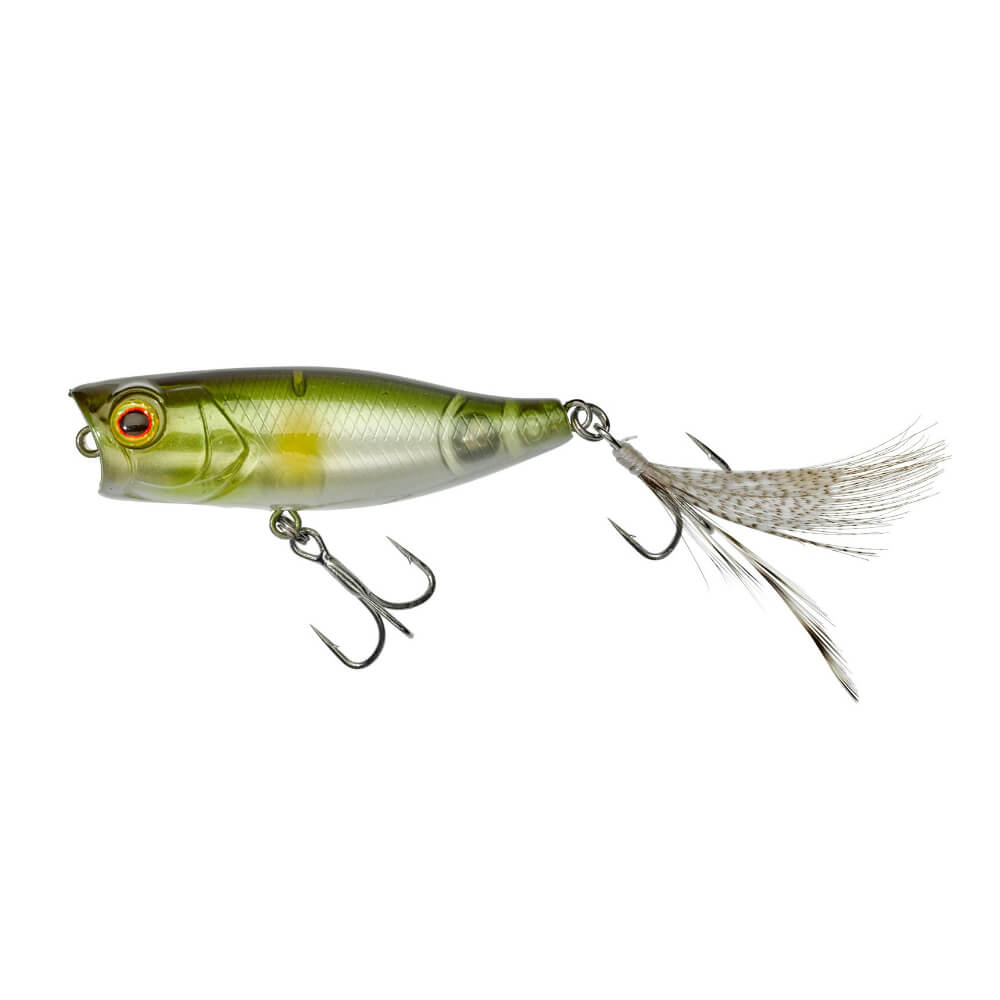
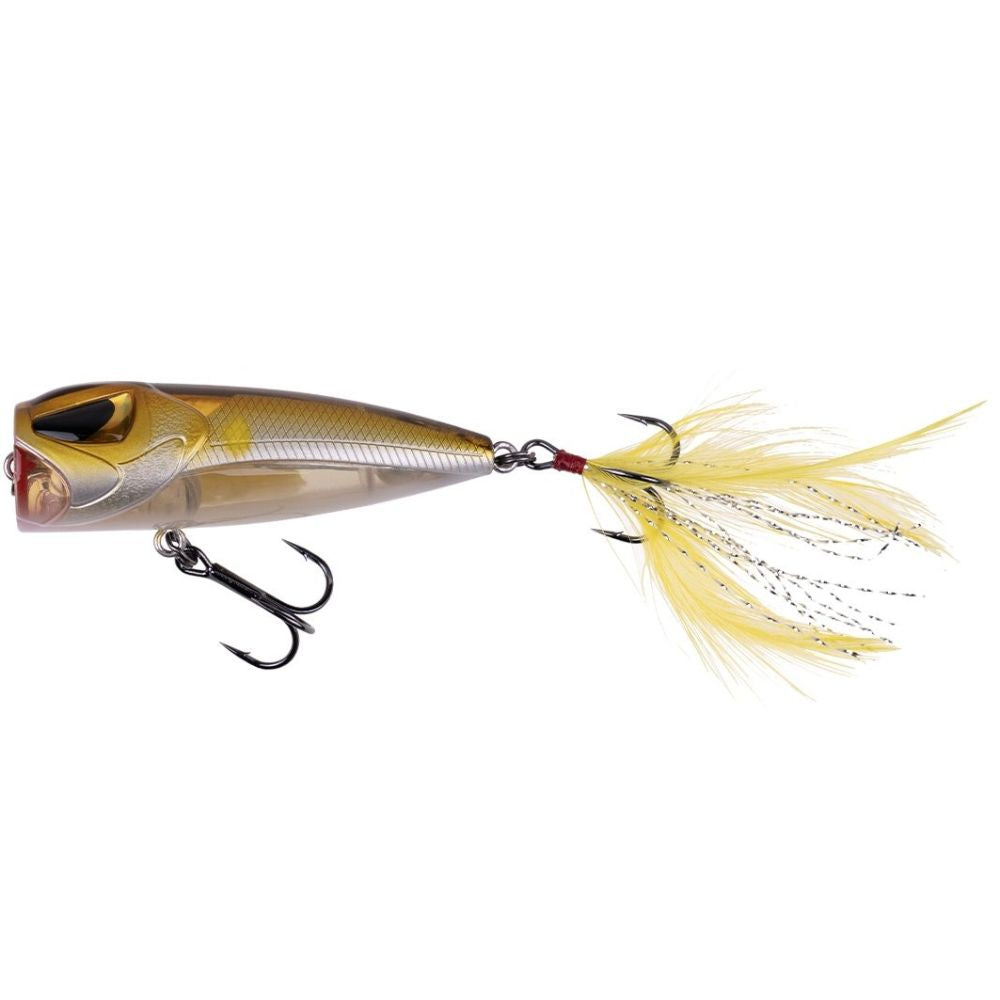
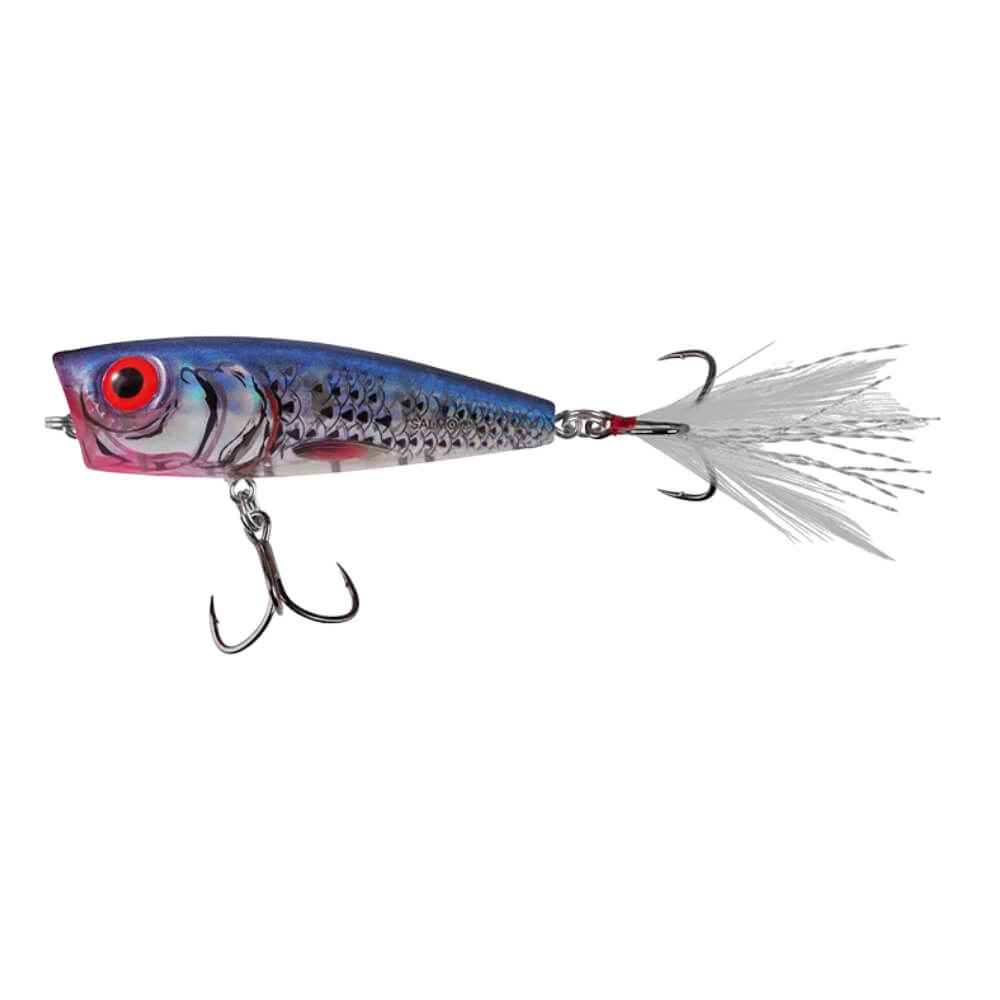
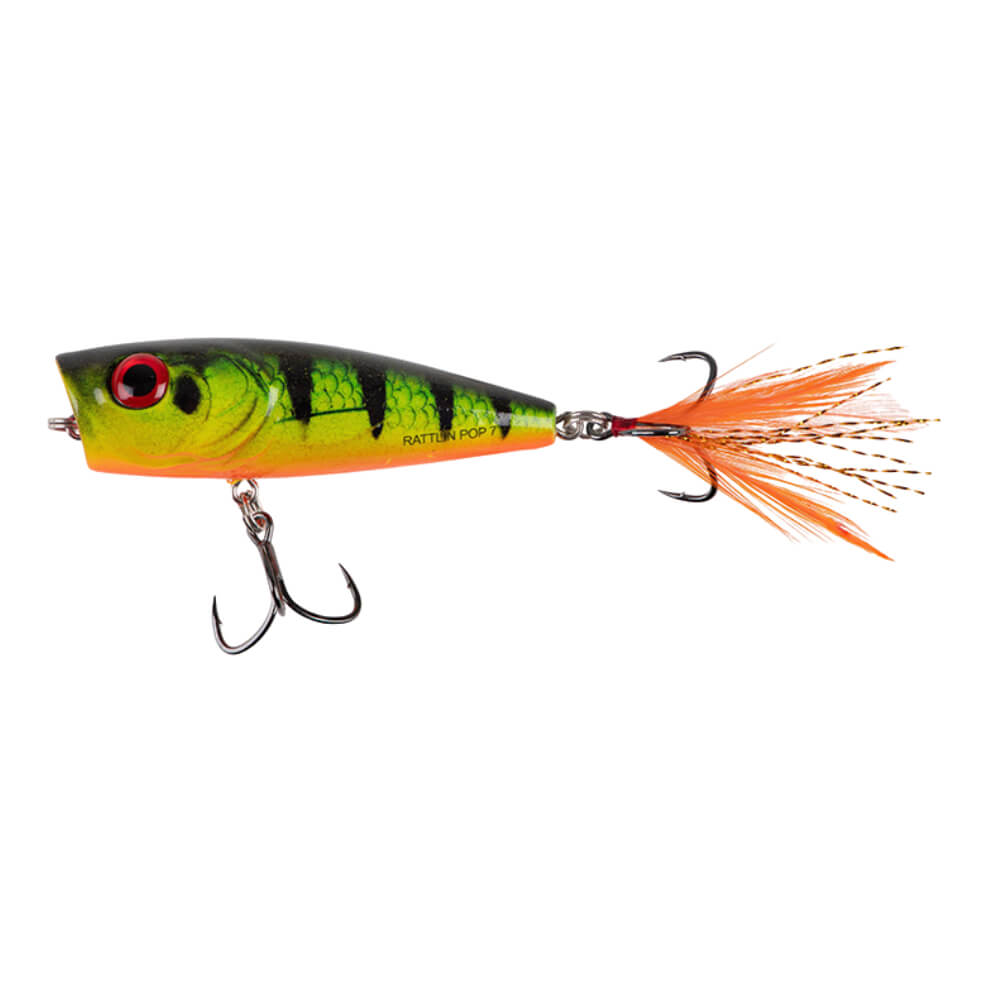
<h2>Buying Guide: Poppers</h2><p>Poppers are <strong>hard lures</strong> made from plastic or balsa wood and form one of the most extensive and important groups within the growing family of <strong>surface lures</strong>. They all share a fairly cylindrical body that ends in a concave, sometimes greatly enlarged head section. The centre of gravity sits in the rear of the lure, which means poppers cast long distances with good accuracy and the head section typically sits well above the water surface. Many models also contain internal rattle balls that stabilise the flight path and generate additional attraction.</p><p><strong>Target species:</strong><ul><li>Pike</li><li>Perch</li><li>Asp</li><li>Wels catfish</li></ul></p><h2>Action and Retrieve</h2><p>A popper produces its characteristic action when you animate it with short, sharp rod strokes. The concave mouth creates a loud popping sound and the lure draws a trail of air bubbles behind it. Many models also roll onto their side between strokes for a moment - an irresistible action known as the <em>dog-walk</em>. The easiest way to work a popper is standing up, either from the bank or from a boat. Hold the rod in front of you with the tip pointing towards the water surface. Give a short snap away from the lure and, as you return the rod to the starting position, take up any slack with the reel so the line stays taut.</p><p>A second retrieve style uses the reel rather than the rod, which works particularly well with a baitcaster. Here you also point the rod towards the water, but instead of animating the lure through rod strokes, you retrieve line in short jerks with pauses. This style is a little easier to execute and has the added advantage in shallow areas that the popping is more subtle. Depending on the model, rod-stroke animation can be very loud and may spook fish in shallow sections. The reel-driven approach avoids this, and the gentler popping drives perch and pike wild.</p><p>Pike in particular tend to attack on the pause, which in cooler water can comfortably last two to five seconds. Perch prefer a brisk, regular cadence of strokes, while asp favour the fastest retrieve you can manage.</p><h2>When to Use Poppers</h2><p>You should not limit poppers to situations where you can see predators actively feeding at the surface. They are also highly effective in the following scenarios:</p><ul><li>To draw fish in or hold them at a spot through sound.</li><li>To match the natural feeding behaviour at moderate water temperatures.</li><li>During midsummer in the early morning or late evening hours.</li><li>Shortly before a storm or severe weather.</li><li>When high-growing weed prevents fishing the water column beneath it.</li></ul><p style="text-align: center;"><iframe frameborder="0" src="https://www.youtube.com/embed/hGK82Exfw1o" width="560" height="315" allowfullscreen=""></iframe></p><h3>Models</h3><p>Depending on the model, these characteristics - which together imitate an injured fish no longer able to swim, in its final moments - are combined with more or less water being thrown forwards. Two types of popper are distinguished:</p><ul><li><p>Spitters: Spitters are the newer variant of the popper. You recognise them by a comparatively small head section with no lateral enlargement; the upper part of the head protrudes slightly forwards. As a result, these lures displace a large amount of water forwards, producing a shower of droplets around the lure. The popping sounds and bubble generation are somewhat quieter by comparison. Because of their lower water resistance, spitters allow a significantly faster retrieve when needed than <em>Chugger</em> models and are therefore the preferred choice in warmer water. Alongside pike, they are particularly well suited for perch and asp.<br><br><img src="https://cdn.shopify.com/s/files/1/0548/9197/0669/files/Duo-Popper1gs6Vj9r2BpiT.jpg" alt="Spitter Popper Köder"></p></li><li><p>Chuggers:<br>Chuggers are poppers with a large, sometimes extremely oversized head section. This causes these lures to produce air bubbles that in some cases momentarily engulf the entire lure, along with extremely loud popping sounds. Chuggers come into their own for pike and wels catfish, as they attract predators from greater depths and distances and allow for longer pauses in the retrieve.</p></li></ul><h2>Suitable Tackle</h2><p>To use poppers as effectively as possible, a stiff, relatively short rod with a fast action is recommended, ideally paired with a low-stretch <strong>main line</strong>. This transfers the short strokes to the lure efficiently and does not sag too much. Small snaps also help maintain the buoyancy of the lure. Ideally, you stand slightly elevated on the bank or on the boat and hold the rod in front of you with the tip lowered so that it finishes just above the water surface. You then make short strokes towards yourself and pick up the remaining slack with the reel. As a leader material, a floating option is recommended; for smaller poppers, low-stretch mono is the first choice. We have also had <strong>good results with fluorocarbon or thin wire trace</strong>. The latter is difficult to avoid on waters holding pike. If your popper then sits too deep in the water, you can temporarily remove the front treble hook to compensate for the weight of the leader.</p>