







I get asked more and more often where and how I catch my trout — and who doesn't know the feeling? You're out and about, you drive over a small bridge, glance down to see if there's water below. If there is, my first look goes straight to the vegetation and the flow rate. On the rare occasion that it's not an overgrown ditch but a small, fast-flowing stream, I check whether fishing is permitted there. These little waters often hold beautifully marked fish. Here's how I go about it.
How to Approach a New Water
First things first: decide which method you want to use to outwit those red-spotted beauties. The best approach is to focus on ultra-light (UL) lure fishing. There simply isn't enough room for fly fishing or heavier lure tactics on most small streams.
I'd strongly advise against fishing with bait. When a trout takes bait, it does so with enormous aggression and swallows it almost instantly. Too many fish end up deeply hooked that way.
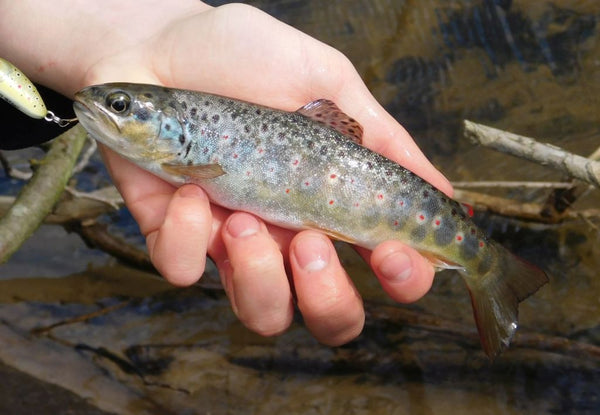
Tackle for UL Lure Fishing
I use UL rods around 2.00 m in length, with a casting weight range of 1–8 g. Pair that with a fixed spool reel in size 1000 or 2000.
Tip:
Match the reel to your rod — sizing varies between manufacturers, so check carefully.
Spool it with 100 m of braid in a diameter of 0.08–0.12 mm, and use a fluorocarbon leader that isn't too light.
Summary:
- Rod: Ultra-light rod around 2.00 m, casting weight 1–8 g
- Reel: Size 1000 or 2000 fixed spool reel
- Line: Braid (0.08–0.12 mm)
- Leader: Fluorocarbon
Lure Selection
Think about what brown trout naturally feed on in this kind of water. Their diet consists mainly of insects and their larvae, plus small fish such as minnows. It's also worth remembering that our target fish is a highly territorial creature that will defend its spot aggressively — something you can use to your advantage, but more on that shortly.
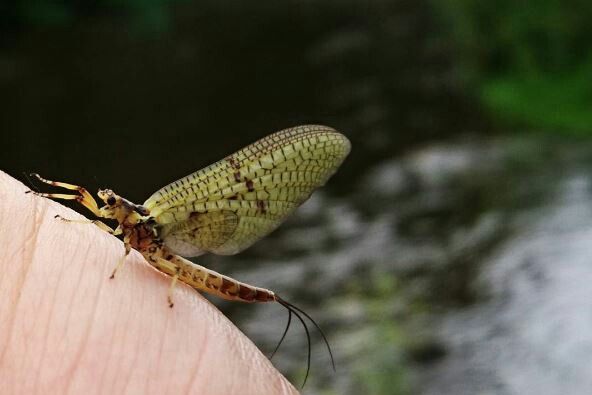
My preferred lures are floating plugs — minnows, crankbaits and twitchbaits between 3 and 7 cm. I also wouldn't want to be without a classic spinner in my tackle box. On tough days, small soft lures have served me extremely well.
For soft plastics, I particularly like the Blaze Whale Shad by Doiyo, the Micro Fry by Fox Rage, or the classic small Kopyto on a plain jig head (1–3.5 g). No-action shads like the Bony Shaker by Spro or the Fin S Fish by Lunker City also produce well. With soft lures, my best results have come with sizes between 4 and 8 cm.
Tip:
Fit your lures with barbless hooks, or at the very least crimp down the barbs on the original treble hooks.

Finding the Right Spot and Working Your Lure
There's no point flogging a single spot for hours on end. Cover ground — on some days you'll walk several kilometres. Work the stream from downstream to upstream, against the current. If you spook a fish, it will almost always bolt downstream, sending every other fish it passes into a panic.
Look for large boulders, channels, riffles, pools and bends — these features create deeper pockets where the current eases and food accumulates. Work your lure through these spots fairly briskly with the flow; a bite often comes on the very first cast. If the fish doesn't connect, cast again — as long as it hasn't spotted you, it will attack the lure several more times.
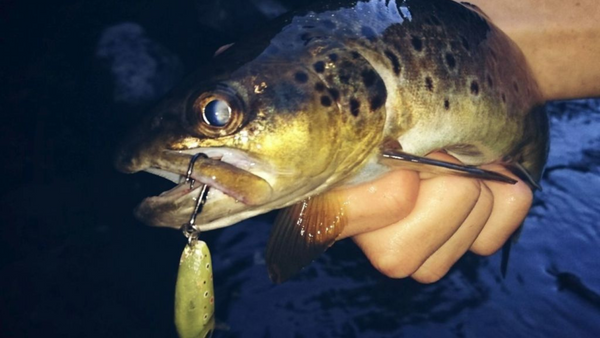
A lure change can sometimes tempt a fish that has gone off your current offering. When the fish aren't responding to the usual lures, I switch to soft lures or — by small-stream standards — deeper-diving plugs. This lets you provoke lazy fish right on their lie, and as I mentioned, trout defend their territory with real aggression.
Landing Your Fish Properly
Keep the fight short — even with fine tackle you can bring a good trout to the net quickly if you apply steady pressure. Land your fish with a rubber-mesh landing net or by hand. If you go by hand, always wet your hands first and avoid the gill grip. If you haven't got a net and a bigger fish turns up, a tail grip is the right approach.
Summary
- Short, light UL rods
- A fluorocarbon leader that isn't too fine
- Use reaction lures
- Target the deeper sections
- Handle the fish with care — trout are highly sensitive
Fishing for salmonids in often near-pristine surroundings is probably the finest form of angling there is.
Have you seen our fly fishing series 'Come Fly with Us!'?