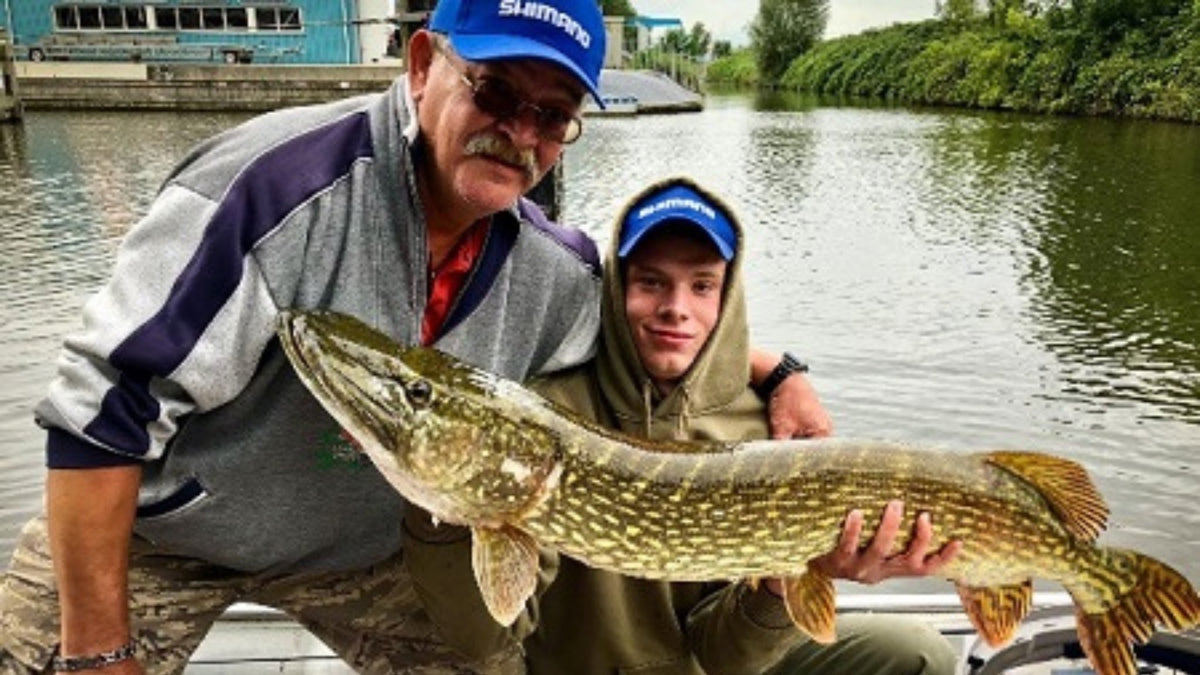
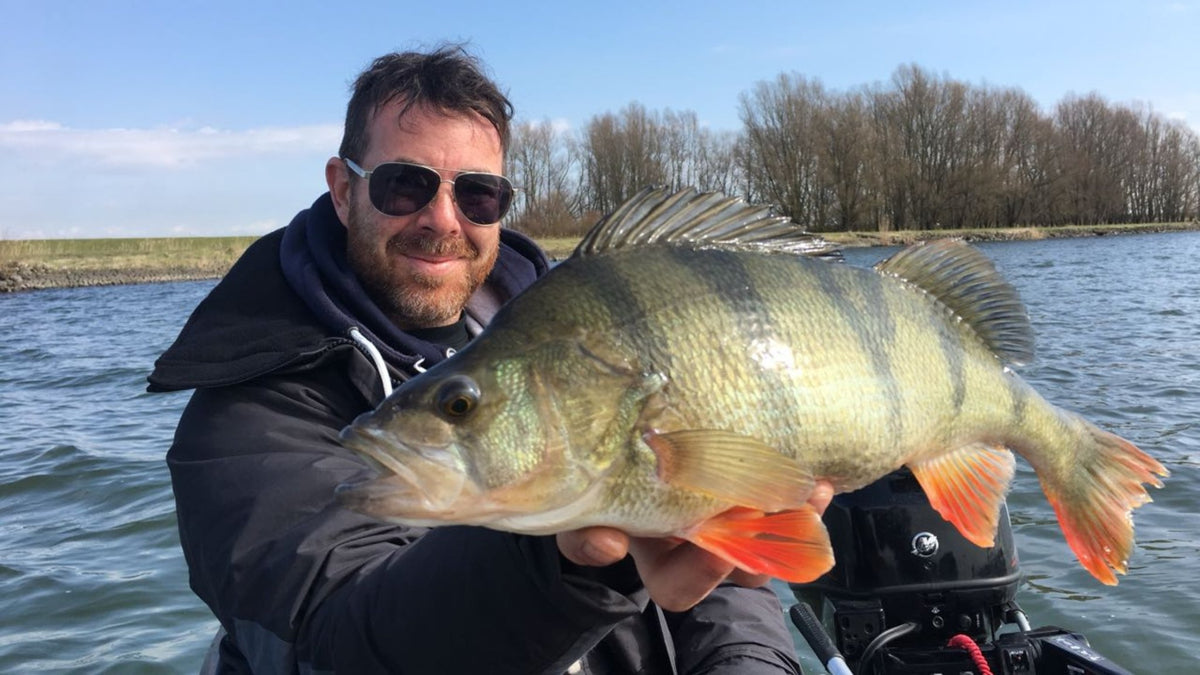
Club exclusions, threatened legal action over released fish on one side — overfished waters and pressing ecological and ethical questions on the other. Few topics have divided the angling community in recent years as sharply as whether caught fish should always be kept or whether returning them (at least in part) ought to be standard practice. Non-anglers, too, tend to hold firm opinions on the matter and often wade into the debate with considerable energy. An angling community that already struggles to speak with one voice now faces enormous legal, ecological and political pressure. Sooner or later, every angler has to weigh these competing perspectives and take a position on this fundamental question.
What This Article Covers
But what happens when you strip emotion from the discussion around animal welfare and fishing, and approach the subject with a scientific eye instead? Where do things stand on the legal requirements, the ecological and ethical obligations, and the familiar stories of returned fish that supposedly succumb to fungal infections and die in agony? As a biologist and environmental scientist, reviewing the relevant literature and peer-reviewed papers is the most natural starting point for me — a way to test my own assumptions and shape my behaviour at the water accordingly. I used the closed season this year to work through the available sources and look at what the data actually shows, and I want to share those findings with the community here.
After a brief and certainly not exhaustive overview of the legal and conceptual framework, I will focus primarily on the ecological and biological evidence that can be drawn from the available studies for our target species. Those who prefer to skip the theory will find clear, practical handling recommendations at the end, drawn directly from the data.
Catch and Release: What Are We Actually Talking About?
To appreciate why this topic matters, it helps to start with the socioeconomic significance of recreational fishing (Finch, 2006). A few centuries ago, fishing served one purpose: putting food on the table. As society grew more complex and prosperous, it gradually gave rise to fishing as a leisure and recreational pursuit.
Angling as a Sport with Economic Weight
Today, recreational fishing has grown into a substantial economic force. In 2017, around 46 million people fished in the USA, generating an economic output of $115 billion and channelling $1.7 billion into conservation projects (cf. Southwick Associates, 2017). In Germany, the number of active anglers has risen steadily over the past two decades — by 2017, around four million people were pursuing the hobby at least occasionally.
Fishing clubs rank among the most popular membership sports in Germany, second only to football and tennis clubs (Bundesministerium für Binnenfischerei, 2016).
A telephone-based random survey of 474 active anglers (Arlinghaus, 2004) produced the following figures: in 2002, roughly 52,000 jobs depended directly on anglers, with an annual economic benefit of approximately 6.4 billion euros. Anglers also removed an average of around 13 kg of fish per year, adding up to a total catch of 45,000 tonnes.
Notably, the study rated respondents' environmental awareness as moderate — largely because of their attitudes towards the 'negative impact on aquatic ecosystems'. The majority stated that overfishing should be addressed through improvements in water quality or increased stocking, rather than by changing their own behaviour.
Returning Fish Is Growing in Popularity
The earliest documented practice of deliberately returning caught fish dates back over a century in England. As a fishery management tool, the first 'no-kill' zones appeared in Michigan state waters in 1952. In Germany, wels catfish and carp anglers have long led the way — they were engaging with relevant international studies decades ago, driven by an interest in the recapture of large fish that were considered undesirable for the table (cf. Finch, 2006). Intentional catch and release has been part of German predator fishing for well over a decade, but its significance has grown considerably in recent years.
The Legal Picture: Is Catch and Release Illegal?
While almost all of our European neighbours have established year-round catch and release for certain species and sizes, anglers in Germany are largely confronted with an obligation to kill and keep any fish that has reached the minimum size limit. The argument in favour of this is often made at the most basic level — along the lines of 'that's how we've always done it and that's how it'll stay'.
In my home waters, for instance, simply carrying an unhooking mat can be grounds for exclusion from the club, since it implies an intention to return fish. Any attempt to discuss the sense or nonsense of such rules tends to go nowhere quickly, usually shut down with claims that current legislation makes catch and release illegal.
The Animal Welfare Act in Germany
So let's take a proper look at the legal reality:Recreational fishing is governed first and foremost by Germany's federal Animal Welfare Act. §1 TierSchG establishes that animals are to be understood as fellow creatures whose life and wellbeing must be protected, and that no one may cause an animal pain, suffering or harm without reasonable justification (TierSchG). § 17 goes further, stipulating that anyone who kills a vertebrate without reasonable justification, or inflicts sustained or repeated significant pain or suffering on one out of cruelty, faces a custodial sentence of up to three years or a fine.
It is these two provisions that underpin the legal claims against anglers that have become more frequent in recent years. No court would deny that hooking, playing and landing a fish causes it stress, pain or suffering — so the key battleground is what counts as 'reasonable justification', and that remains genuinely difficult to interpret.
Intent to Consume — or Stewardship?
Looking at current case law, the intent to eat the fish is the factor most likely to constitute such reasonable justification and thereby legitimise angling (cf. Arlinghaus & Jendrusch, 2005).
But what happens when someone fishing for perch or trout with intent to eat catches a pike over the minimum size that they have no wish to keep? Things quickly become considerably more complicated. Those who hold fishing rights also carry a statutory duty of 'stewardship and care' for the water they fish — they must manage it in a way that maintains, promotes or at least approximates a natural or near-natural state, including population structure (ibid.: 49).
Regional Fisheries Legislation
Beneath the federal Animal Welfare Act, individual German states implement their own fisheries legislation, which governs the rights and restrictions for both commercial and recreational fishing. These laws cover the handling of fish and lampreys, their spawn, crayfish, mussels, and in some cases fish food organisms — and crucially, they set out the closed seasons and minimum size limits most relevant to us as anglers.
As far as I am aware, some of these minimum sizes are not ecologically grounded but originate from an era when fish were classified by weight in round kilogram increments. A pike of 50 cm has an average weight of — well, you can probably guess — exactly one kilogram. This can be calculated using what is known as the condition factor.
The same applies to carp at 35 cm, which is the legal minimum size in some states. Whether fish at the minimum size have already reproduced successfully remains an open question — the relationship between age and length varies considerably depending on the specific water.
When Must You Return a Fish?
But let us stay with the legal perspective:Returning caught fish carefully is expressly permitted — and in some cases required — for example when a fish is caught during its species-specific closed season or has not yet reached the minimum size.
The same applies where species are protected year-round (such as reintroduced salmonids). Some states, however, have enshrined a mandatory retention obligation for fish that are in season and above the minimum size, meaning that returning such fish outside the closed season is technically an offence.
Avoid Trophy Fishing
Fishing purely for trophies or photographs is also viewed very critically by the courts, and successful prosecutions are a real risk. Bearing in mind § 17 TierSchG cited above, the law requires that the duration and intensity of suffering — the fight, the landing, the unhooking and so on — be kept to an absolute minimum. Deliberately targeting large, hard-fighting fish with light tackle, drawing out the fight for the experience of it, or making the fish wait while you get the camera angle right are all legally precarious and should be avoided without question.
There is also documented evidence that public acceptance of angling among non-anglers is directly linked to the perceived intention behind it (cf. Arlinghaus & Riepe, 2014). Returning fish for sound ecological reasons does not conflict with broader societal values — but fishing with no intention of eating the catch does.
What counts as a sound ecological reason? And what actually happens to fish after they are returned? These are the questions we turn to next.
The Ecological Case: Catch and Release as Stewardship?
The Müritz fisheries in Germany offer a working model: across many waters managed under the Müritz-Plau GmbH fishing rights, a so-called retention or 'kitchen' window has been introduced for pike (and carp). Fish must be above the minimum size (currently 60 cm) but also below a defined maximum size (90 cm for pike) to be kept — those above the upper limit must be returned, in the interest of protecting breeding fish.
On the assumption that large fish pass on genetically desirable traits — both ecologically and in terms of angling quality — to their offspring, this approach seems well-founded. It is to be hoped that other regions follow this lead, though it ultimately depends on every single one of us playing our part.
The Ethical Angle
The question most of us really want answered is: what happens to a fish after it is returned? Do they survive the whole process? How should we handle them to keep mortality as close to zero as possible? Many anglers rely on gut feeling here, and while tips and advice appear regularly in the fishing press, they are usually well-intentioned but not evidence-based — partly because too few returned fish are ever recaptured and examined. And even when a previously returned fish is caught again or found dead, that does not establish a causal link, nor does a single case constitute reliable evidence. For most people, watching a returned fish swim away strongly is all the reassurance they need.
Internationally, the body of research on catch and release has grown considerably, though data on native predator species can be harder to come by. In a recent article, the magazine 'Blinker' reviewed 'over 100 studies' on native and closely related species and reported an average mortality rate of 15.6 per cent among returned fish (Blinker, 03/2018). These figures vary substantially between species, and survival rates are influenced by a wide range of additional factors. The probability of a fish surviving is primarily determined by the depth at which it was caught, the handling it receives before release, and the environmental conditions of the water — under ideal conditions, survival rates approach 100 per cent (ibid.).
In what follows, I will present these data by species and, where possible, expand on them by drawing on the underlying studies and other sources available to me.
Pike
For esocid species, an average survival rate of 90.4 per cent has been recorded — meaning that under variable conditions, roughly one in ten returned fish dies. Where fish were uninjured apart from the hook wound and handled carefully, however, the survival rate was 100 per cent.
Arlinghaus et al. (2009) investigated the physiological effects of catch-and-release stress on pike in a combined field and laboratory study. The focus, alongside muscular lactate concentrations and cellular energy reserves as indicators of intense exertion, was primarily on the restoration of normal behavioural patterns. The study found that pike exposed to air for handling periods of up to 300 seconds had returned to normal behaviour within a few hours at most (ibid.). Baktoft et al. (2013) reached similar conclusions, though water temperature appeared to influence recovery time — meaning that handling time should be reduced significantly in summer. The same applies to the duration of the fight, which should never be longer than strictly necessary for any species (Finch, 2006).
Studies examining hook position in the pike's mouth and the severity of injury have also shown significant correlations with lure type and size (Arlinghaus et al., 2011). Smaller and softer lures (under 75 mm) are more likely to lodge in the gills or throat, causing more serious injury, while larger lures tend to hook in the jaw (ibid.). This naturally affects both the handling time and the severity of injury, with corresponding effects on survival rates.
Zander
Zander appear to be the most sensitive species when it comes to catch and release, with handling time (air exposure) and depth of capture again being the critical factors. This species shows a mortality rate of 24.6 per cent; larger-scale studies on the closely related North American walleye put the figure at 18.6 per cent. Mortality rises sharply when fish are caught from depths greater than ten metres (barotrauma), but can be reduced well below the figures above when fish take in shallow water, are cleanly hooked and are attended to as quickly as possible.

Careful release — this fine zander was held at the wrist of the tail to keep it stable in the water during the return
Perch
Although I could not find studies directly on European perch, similar assumptions must apply to this species as to zander, given that both are perciform fish. The anatomy and function of the swim bladder are comparable between the two, so depth of capture plays an equally significant role for perch.
In a study on the closely related yellow perch (Perca flavescens), researchers caught fish using tackle from various depths and measured their recovery time. At a depth of three metres, 90 per cent of fish recovered in under three seconds, whereas at six metres only 37 per cent managed this (Klingsheim, 2016). The author notes that none of the 240 fish in the study died, but that the results must be read as indicators of dramatically increased stress (ibid.). The paper also notes that European perch begin to show signs of barotrauma at depth changes as small as 20 per cent (ibid.).
After netting perch, the widely used 'lip grip' — holding the fish by its lower jaw — should be avoided unless the fish is held perfectly vertical. Tilting the fish horizontal puts enormous strain on the structures of the neck and back and increases mortality.

The lip grip — gentle on both angler and fish, but do support a larger specimen further back along the body.
Salmonids
Trout are widely regarded as particularly delicate, yet various studies show mortality rates comparable to the species examined above (e.g. Ferguson & Tufts, 1992; Brobbel et al., 1996). Water and air temperature are especially relevant here — as temperatures rise, mortality rates increase significantly. Rainbow trout in particular were shown to require very short handling times (air exposure under 60 seconds) to give them a strong chance of survival.
Summary and Practical Guidelines
To sum up: catch and release is legally complex but entirely possible within the law. The available studies also show positive effects on population stability, making a retention window of the kind unfortunately still rare in Germany an ecologically sound and well-justified approach. Data on some of our native target species is limited or absent, and properly controlled experiments in this area are enormously resource-intensive. Even so, some clear practical guidance can be drawn from what we know.
The following points apply across all species if you want to give returned fish the best chance of surviving the release without lasting harm:
- Keep injuries to a minimum — use fewer additional hooks where possible, derig lures if appropriate, and crush barbs down.
- Keep the fight as short as possible — the right tackle for the job is not optional.
- Landing in a rubberised net is preferable; the fish can also be unhooked in the net, kept in the water throughout. Wet unhooking mats are the next best option to protect the fish's mucous layer.
- Hand landing is also fine if done with care — no contact with the gills, and support under the belly for larger fish.
- Air exposure must be kept as brief as possible — ideally avoided altogether.
- Small fish are more vulnerable than large ones — undersized fish are best released while still in the water.
- When returning a fish, hold it at the wrist of the tail in the water until it swims away under its own power.
- Deeply embedded hooks are best cut rather than removed — prolonged attempts at extraction increase mortality significantly, even compared to leaving the hook in place.
- Avoid fishing in extreme water temperatures, whether hot or cold.

Careful release: the trout is held at the wrist of the tail until it swims off on its own.
I hope you've taken something useful from this article for the season ahead — I'd love to hear your thoughts. If you have suggestions for other topics that deserve a closer look from a scientific perspective, please do leave a comment.
Tight lines, Ihno
Sources:
- Arlinghaus, R. (2004): Angelfischerei in Deutschland – eine soziale und ökonomische Analyse. Abgerufen unter: https://www.researchgate.net/profile/Robert_Arlinghaus/publication/285343697_Recreational_fisheries_in_Germany_-_A_social_and_economic_analysis/links/56c58fba08ae736e7047bfbd.pdf
- Arlinghaus, R.; Jendrusch, K. (2005): Catch & Release – Eine juristische Untersuchung. In: Agrar- und Umweltrecht, Heft 2, 48-51.
- Arlinghaus, R.; Cooke, S. J.; Gingerich, Andrew; Klefoth, Thomas; Suski, Cory (2009): Physiological and behavioural consequences of catch-and-release angling on northern pike (Esox lucius L.). In: Fisheries Research Vol. 93/3, 223-233.
- Arlinghaus, R.; Klefoth, T.; Kobler, A.; Cooke, S. J. (2011): Size Selectivity, Injury, Handling Time, and Determinants of Initial Hooking Mortality in Recreational Angling for Northern Pike: The Influence of Type and Size of Bait. In: North American Journal of Fisheries Management Vol. 28/1.
- Arlinghaus, R.; Riepe, C. (2014): Einstellungen der Bevölkerung in Deutschland zum Tierschutz in der Angelfischerei. In: Berichte des IGB, Heft 27.
- Baktoft, H.; Aarestrup, K.; Berg, S.; Boel, M.; Jacobsen, L.; Koed, A.; Pedersen, M.W.; Svendsen, J.C.; Skov, C. (2013): Effects of angling and manual handling on pike behaviour investigated by high-resolution positional telemetry. In: Fisheries Management and Ecology Vol. 20/6.
- Brämick, U. (2015): Jahresbericht zur Deutschen Binnenfischerei und Binnenaquakultur. Abgerufen unter: http://www.bmel.de/SharedDocs/Downloads/Landwirtschaft/EU-Fischereipolitik-Meeresschutz/JahresberichtBinnenfischerei.pdf?__blob=publicationFile
- Brobbel, M.; Wilkie, M.; Davidson, K.; Kleffer, J.; Bielak, A.; Tufts, B. (1996): Physiological effects of catch and release angling in Atlantic salmon (Salmo Salar) at different stages of freshwater migration. In: Canadian Journal of Fisheries and Aquatic Sciences 53 (9).
- Ferguson, R.; Tufts, B. (2011): Physiological Effects of Brief Air Exposure in Exhaustively Exercised Rainbow Trout (Oncorhynchus mykiss): Implications for 'Catch and Release' Fisheries. In: Canadian Journal of Fisheries and Aquatic Sciences 49 (6).
- Finch, O. (2006): Catch and Release – wissenschaftlich betrachtet. In: carp connect, Heft 26/2006, 36-39.
- Klingsheim, B. J. (2006): Influence of Depth and Retrieval Speed on Yellow Perch – Barotrauma Recovery Time in Winter. Abgerufen unter: https://pdfs.semanticscholar.org/7dfc/f59cecb1940185d422a4cc8d21f6601ac635.pdf
- Southwick Associates (2017): Economic Contributions of Recreational Fishing: U.S. Congressional Districts. Abgerufen unter: http://asafishing.org/wp-content/uploads/ASA-Congressional-District-Fishing-Impacts-Report-115th-Congress.pdf