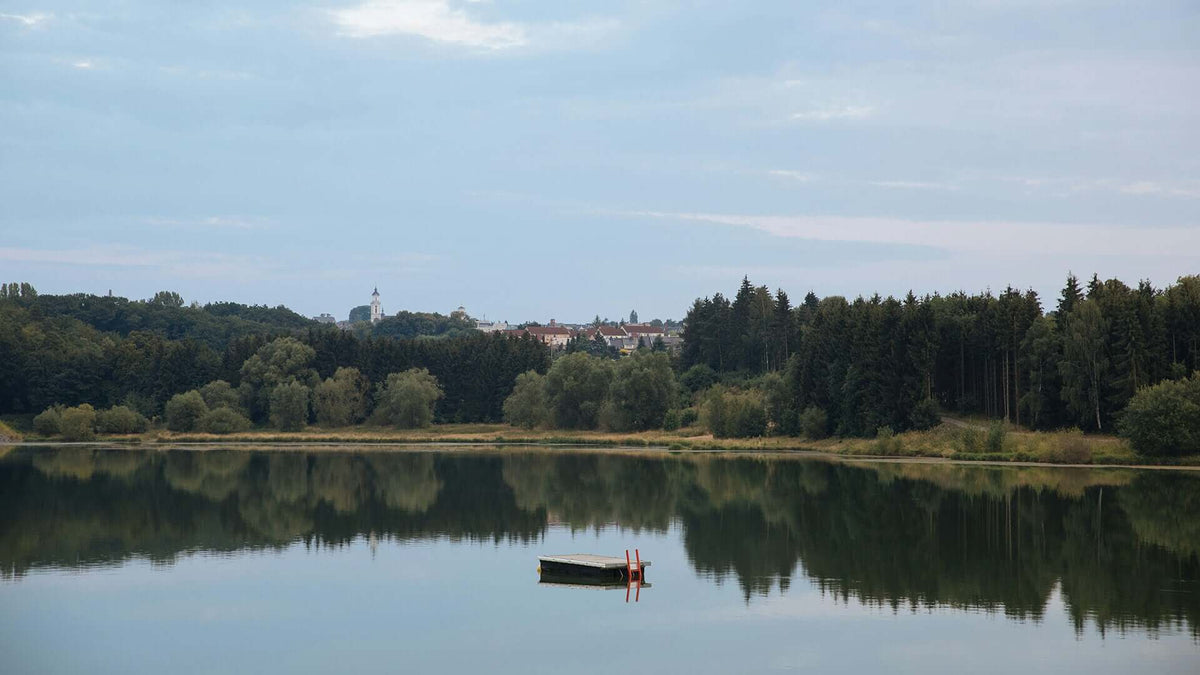
Flat land, Brunswick and Hanover — is that all? Lower Saxony has far more to offer. With waters like the Ems, Elbe and Weser, the Dümmer lake and the North Sea coastline to the north-west, it's a genuinely exciting region for anglers too!
In this article you'll find out how to get your fishing licence in Lower Saxony — including everything you need to know about requirements, documents and costs. You'll also learn how best to prepare for the fishing licence exam.
If you want a quick overview of the most important facts about the fishing licence in Lower Saxony, you'll find them in the summary table below. The full details follow in the text afterwards.
Key Facts at a Glance:
|
Responsible regional association |
|
|
Is there a difference between the fishing licence and the fishing permit? |
The fishing licence (Fischereischein) is proof of your personal competence under state law and is normally obtained by passing the fishing examination. A fishing permit (Fischereierlaubnisschein), on the other hand, is the authorisation to fish at a specific water or stretch of water. The fishing licence is generally a prerequisite for obtaining a fishing permit. So if you want to fish in Germany, you will need both documents at almost all waters. |
|
What are the requirements for sitting the fishing examination in Lower Saxony? |
Minimum age: you may sit the exam from age 12; the licence is issued from age 14 Examination fee of 70 € Certificate of attendance for the preparatory course Passport or national ID card Ballpoint pen with blue or black ink |
|
Are there any special provisions for people with disabilities? |
There are no special provisions in Lower Saxony. |
|
Is there a junior fishing licence in Lower Saxony? |
No, but young people under 14 may fish alongside a licensed licence holder. |
|
Where do you register for the fishing examination? |
Registration for the fishing examination is handled by the Anglerverband Niedersachsen. |
|
Can you register for the fishing examination in a different region from where you live? |
People with their main residence in Lower Saxony are entirely free to sit the fishing examination in any federal state they choose. |
|
Where and when does the exam take place? What do you need on the day? |
Dates and locations are listed on the Anglerverband Niedersachsen website at https://www.av-nds.de/angler-werden/fischerpruefung-termine/. All dates including venues for the current year are shown there. On the day you'll need to bring your national ID card or passport, a ballpoint pen with blue or black ink, and your invitation to the examination. |
|
How often does the fishing examination take place? |
That depends on the location. In Beverstedt OT Wollingst, for example, the exam takes place only every 2 months, whereas in Hanover it runs 3 times a month. In every case, there must be at least 20 participants for the session to go ahead. |
|
Are preparatory courses compulsory for the fishing examination in Lower Saxony? |
No, you don't have to attend a course before sitting the exam in Lower Saxony. That said, for newcomers to the sport, it significantly improves your chances of passing. |
|
How long is the fishing licence valid in Lower Saxony? |
The fishing licence in Lower Saxony is valid for life. It does not need to be renewed and no further fees are payable. |
|
Is it possible to fish in Lower Saxony without a fishing licence? |
Yes! At certain coastal waters, fishing without a licence is permitted from age 14. The same applies at some commercial trout fisheries, provided a member of staff is present to handle the humane dispatching, stunning and killing of fish. |
|
How is the fishing examination in Lower Saxony structured? What does it cover? |
The fishing examination in Lower Saxony consists of a written and a practical section. The written section uses a multiple-choice format. You receive 60 questions drawn from a pool of 360, and you have 60 minutes to answer them. The 60 questions are split into blocks of 10, one for each of the 6 subject areas. To pass, you must answer at least 45 questions correctly overall and at least 6 correctly in each subject area.
The 6 subject areas are:
In the practical/oral section you must correctly identify 3 fish images. You must also demonstrate on a large rubber fish model that you are able to dispatch a fish humanely. Finally, the examiner may ask 1 to 3 additional questions from the 6 subject areas covered in the written exam. The examining panel then decides whether you have passed. |
|
What costs should you expect for the fishing licence in Lower Saxony? |
Course prices for the fishing examination vary considerably in Lower Saxony, particularly between in-person and online options. A preparatory course with Anglerschmiede currently costs 129 €, though there are regularly attractive vouchers or lure packages available that let you pick up your starter tackle and claw back a good chunk of the cost.
The examination fee is 70 €, payable to the Anglerverband Niedersachsen.
Once you have your exam certificate, you take it to your local municipality or town and apply for the lifetime fishing licence for a fee of 45 €. |
Table of Contents:
I.) Fishing in Lower Saxony
a.) Fishing in the Water-Rich North
b.) Fishing Licence and Fishing Permit
II.) The Fishing Licence in Lower Saxony
a.) Requirements for the Fishing Examination
b.) Registering for the Fishing Examination
c.) Structure and Content of the Fishing Examination
(1) How Is the Fishing Examination Structured?
(2) What Exactly Is Required in the Written Section?
(3) What Exactly Is Required in the Practical Section?
d.) Exam Preparation
(1) What Is the Best Way to Prepare?
(2) Online Fishing School: Get Your Licence from the Sofa?
(3) What Do Preparatory Courses for the Fishing Examination Cost?
(4) What Do You Learn at (Online) Fishing Schools?
e.) How Do You Obtain Your Fishing Licence After Passing the Exam?
III.) Obtaining Fishing Permits
IV.) Fishing Without a Licence — Fines
 Lüneburger Heide
I.) Fishing in Lower Saxony
a.) Fishing in the Water-Rich North
Lower Saxony offers an exceptional variety of fishing opportunities. With the North Sea coast, the major rivers Elbe, Weser and Ems, a host of smaller rivers, ditches and canals, and still waters ranging from tiny village ponds to the expansive Steinhuder Meer, there really is something for every angler. Whatever your target species, you'll find a spot to chase it.
One big bonus is that you can fish the coast without a licence. If you want to fish inland freshwaters, though, it pays to do your homework first. Many waters have lease holders from whom you'll need to purchase a permit — and for that, in most cases, you'll need a fishing licence.
So, as in most federal states, you'll need the following documents for inland freshwaters:
- the fishing licence, which requires passing a state examination
- a fishing permit for the water you want to fish (usually available to purchase)
b.) Fishing Licence and Fishing Permit
To purchase a fishing permit for a specific water or region in Lower Saxony, you will generally need a fishing licence first — colloquially known as an 'Angelschein'. You only receive this after passing the fishing examination. It might seem odd that you have to sit an exam before you can even buy a permit, but it makes a great deal of sense.
Why a licence examination makes sense:
- Minimum size limits, closed seasons and year-round protection of rare species only work if anglers can actually recognise and distinguish those fish.
- Basic hydrology knowledge helps anglers spot ecological problems such as impending fish kills, fish diseases and other environmental threats more quickly — and report them.
- A solid grounding in the basics makes it easier to get started and speeds up your first catches.
- You learn how to handle caught fish humanely.
Fishing licence vs fishing permit
The two terms sound similar, but the distinction matters.
- The fishing licence (also known as 'Angelschein') is proof of your personal competence and is normally obtained by passing the fishing examination. In that exam you demonstrate, both in theory and in practice, that you are able to fish in compliance with the relevant legal requirements and codes of conduct.
- The fishing permit (also known as a fishing licence, fishing authorisation, day ticket or water permit) is the private authorisation for an individual to fish at a specific water or stretch of water.
To obtain a fishing permit you generally need to show your fishing licence as proof of competence — whether you contact the lease holder directly, pick up a permit at a tackle shop, or use an online platform such as Hejfish.
Lower Saxony is a special case in that neither a fishing licence nor a fishing permit is required on the coast. Commercial trout fisheries are also exempt from the licence requirement, provided a member of staff is permanently on hand to ensure fish are dispatched humanely. For inland freshwaters, a fishing licence is generally required before you can obtain a permit.
Important! There is a significant legal difference between fishing without a fishing licence and fishing without a fishing permit. Fishing without a fishing licence is treated as a regulatory offence and can, in some federal states including Lower Saxony, be punished with fines of up to 5,000 €. Fishing at a water without a fishing permit — that is, without the permission of the owner or lease holder — constitutes the criminal offence of poaching (§ 293 StGB) and can result in a fine or even a custodial sentence of up to 2 years.

II.) The Fishing Licence in Lower Saxony
(Exam requirements, registration, the fishing examination, exam preparation, applying for your fishing licence, obtaining fishing permits)
In almost every federal state*, state law requires a fishing licence ('Angelschein') for angling. Wherever in Germany you want to fish, you won't get far without one!
|
*Technically that's not the case in Lower Saxony, but in practice lease holders and water owners issue fishing permits exclusively to people who hold a fishing licence. |
In Lower Saxony you must pass an examination demonstrating your knowledge of fish, waters, tackle and fisheries law. There are a few requirements you need to meet before you can sit it.
a.) Requirements for the Fishing Examination
-
Minimum age
The minimum age to sit the fishing examination is 12, but the licence itself is not issued until you are 14. -
Place of residence
Your place of residence must be in Germany. -
Attendance at a preparatory course
Attendance at a course is not compulsory, but it is strongly recommended.
b.) Registering for the Fishing Examination
You can register by e-mail at ang.schmoll@av-nds.de via the Anglerverband Niedersachsen. You'll need to fill in a registration form.
Exam dates and locations are listed on the Anglerverband Niedersachsen website: https://www.av-nds.de/angler-werden/fischerpruefung-termine/ Registration must be submitted at least 21 days before the exam date.
Once you've registered, you'll need to pay the examination fee of 70 €. Only once this has been received by the Anglerverband will your place be confirmed, at which point you'll be sent a preparation booklet containing the exam questions. Bear in mind that a minimum of 20 participants is required for a session to take place.
Depending on the location, there may be several exam dates per month or just one every 2 months. Check the link above and plan ahead. Even though a course isn't compulsory, newcomers to fishing are strongly advised to do one — it helps the material sink in and gives you every chance of passing confidently.
c.) Structure and Content of the Fishing Examination
(1) How Is the Fishing Examination Structured?
You choose your preferred date and location when you register. Make sure the exam fee is paid on time so your place is secured.
Important! You must show ID before the exam, so bring your national ID card or passport. Also bring a ballpoint pen that writes in blue or black.
The fishing examination in Lower Saxony consists of a written and a practical section:
- The written section with 60 questions across 6 subject areas
- The practical section with a short demonstration, fish identification and 1–3 oral questions
The written section uses a multiple-choice format. You receive 10 questions from each of the 6 subject areas, drawn from a pool of 360. You have 60 minutes to answer them, which is generally more than enough.
In the practical section you must demonstrate that you can stun and dispatch a fish humanely, and that you can identify fish species. Additional questions may be asked.
Once you've passed, you receive your exam certificate. You then take this to your local municipality, collective municipality or independent town and apply for your fishing licence.
(2) What Exactly Is Required in the Written Section?
Written section: The fishing licence exam draws on a fixed question catalogue of 360 questions across 6 subject areas:
- General fish biology: mainly questions on body structure, organ functions, diseases etc. in fish, crustaceans and lampreys
- Species-specific fish biology: mainly questions on the characteristics of individual fish families and species: reproduction, preferred habitat, physiognomy etc.
- Hydrology: mainly questions on types of water and their properties
- Animal, nature and environmental protection: mainly questions on threatened species, vegetation in and around water, the angler's responsibilities and their role as a guardian of nature
- Tackle knowledge: mainly questions on the tackle and accessories used in fishing
- Fisheries law: mainly questions on state fisheries legislation, protected species at waterways, and anglers' rights and obligations
For the exam, 10 questions are selected from each of the 6 subject areas, giving 60 questions in total. You have 60 minutes to complete them. To pass, you must answer at least 6 questions correctly in each subject area and at least 45 correctly overall. Questions are in multiple-choice format — for each question, several answers are given and you must tick the correct one.
(3) What Exactly Is Required in the Practical Section?
Compared with the written section, the practical section is considerably shorter. You're no longer asked to assemble rod set-ups and the like — tackle knowledge is covered in the written section. What you do need to demonstrate is that you can stun and dispatch a fish humanely. This is usually shown on a large rubber fish model. You then need to correctly name 3 out of 54 possible fish images. Finally, the examiner may ask 1 to 3 additional questions based on the 360 written exam questions.
Exam Preparation: How Long Do I Need to Study?
There's no one-size-fits-all answer — it really depends on your prior knowledge, how quickly you absorb new information, and how much time you have available. That said, planning for around 4–6 weeks is a solid approach. Don't worry though: the scope of the exam is clearly defined, and the sections below will walk you through the best ways to prepare.
d.) Exam Preparation
(1) What Is the Best Way to Prepare?
Attending a preparatory course is not compulsory in Lower Saxony — you can register for the exam without one. Whether that's a sensible approach is another matter. If you're starting from scratch, signing up for a course or purchasing a flexible online course such as the one from Anglerschmiede.de is strongly recommended. Beyond the flexibility, an online course offers further advantages: you can focus on the subject areas you find hardest, and you get support right through to your first catch. A course doesn't just boost your chances of passing — it also improves your success on the bank once you finally get there.
(2) Online Fishing School: Get Your Licence from the Sofa?
If you can't spare several weekends in a row for in-person courses, you'll appreciate the flexibility of online learning. Whether it's work, family or anything else eating into your time, free slots are often short — and online courses let you use them whenever they come up. It's a modern, convenient, family-friendly and efficient way to get ready for the exam.
---> Our tip: Die Anglerschmiede <---
Learn at your own pace, from wherever you like! The online fishing academy prepares you thoroughly for the fishing licence examination — and it's tailored to your specific federal state. To guarantee an exceptionally high standard of instruction, Anglerschmiede works with well-known fishing experts including Marc Ptacovsky, Enrico di Ventura, Marc Voosen and Stefan Seuß — and also offers expert courses on topics such as pike, wels catfish, perch and carp fishing, as well as rod building!

(3) What Do Preparatory Courses for the Fishing Examination Cost?
In Lower Saxony you can choose between in-person courses, offered for example by angling clubs, and online courses from various providers. In-person courses are often cheaper at 30–100 euros, but the trade-off is a fixed schedule. You also learn at the group's pace, regardless of your own knowledge level or preferences. Online courses are more expensive at around 130–170 euros, but they're extremely flexible and let you decide how deeply you want to work through each topic. Some providers also offer bundle deals that include fishing tackle, at which point the price advantage of in-person courses largely disappears.
|
SAVING TIP! Anglerschmiede offers the preparatory course for the fishing examination in Lower Saxony for 129 € (https://anglerschmiede.de/produkt/online-vorbereitungslehrgang-auf-die-fischereipruefung-in-niedersachsen/). The big extra: every course — whether a preparatory or expert course — comes with an exclusive LMAB lure package worth 80 € thrown in for free! |
(4) What Do You Learn at (Online) Fishing Schools?
So what can you actually expect from each type of course?
Preparatory courses cover all the topics relevant to the exam, but vary in depth — since there is no mandatory curriculum in Lower Saxony, there's also no minimum number of course hours. In-person courses typically use textbooks compiled by the course instructor, supplemented by diagrams, short video clips and other teaching aids.
In-Person Courses
|
pros |
cons |
|
- Company while studying - Direct questions possible - Cheaper |
- Linear structure - Fixed class times - Group learning |
Most online courses follow a similar structure but are far more flexible. The learning units are self-contained, so you can work through them in whatever order suits you. You can also decide how often and how intensively you revisit individual units. Content is updated regularly — which is quicker and easier with digital material than with printed resources, and the same applies to the instructional videos. Many online fishing schools track your individual progress automatically, so you can see at a glance where you still need to put in more work. Practice exams are just as flexible as the rest of the learning. Once you've completed the course, you can usually register directly for the fishing examination through the provider's platform.
Online Courses
|
pros |
cons |
|
- Extremely flexible preparation - Pause and replay individual units at any time - High-quality instructional videos - Automatically generated progress statistics - Questions can be submitted at any time by e-mail or within the course
|
- No direct questions possible - No company while studying |
Even though in-person courses make it a little easier to practise the practical elements of the exam, most online fishing schools also offer digital tackle-assembly tests and highly detailed instructional videos that answer every question. It does take a certain amount of self-discipline to sit down and teach yourself things like knot tying — but with a bit of motivation, that can actually work better than a classroom, because the instructor is always there when you need them.
e.) How Do You Obtain Your Fishing Licence After Passing the Exam?
After preparing with an online course such as the one from Anglerschmiede, the exam should be well within reach. Once you've passed, you receive your exam certificate. Take this to your responsible municipality, collective municipality or independent town and apply for your fishing licence. Alongside the certificate you'll need an official ID document (national ID card or passport) and a passport photo. There is also a fee of 45 euros. Since the fishing licence in Lower Saxony is issued for life, no further fees or fishing levies are payable after that. From this point on, all you need is a fishing permit for the water or waters where you want to fish.
III.) Obtaining Fishing Permits
Away from the North Sea coast, fishing permits are the document you need to actually get fishing. You generally obtain one by paying the appropriate fee to the lease holder or owner of the water. Some waters — including the Elbe and the Dümmer lake — are managed by the Anglerverband Niedersachsen, and permits for these can be purchased through them. An overview of which waters belong to this association is available on their website: https://www.av-nds.de/angeln/verbandsgewaesser/ Other waters belong to angling clubs or private individuals.
IV.) Fishing Without a Licence — Fines
Fishing without private authorisation — that is, without a fishing permit — is no minor matter. It is classified as a criminal offence (§ 293 StGB, poaching) and carries not just a fine but potentially a custodial sentence of up to 2 years.
There are also other violations that fall outside criminal law but still constitute a regulatory offence, punishable by fines of up to 5,000 €. Any tackle you're carrying can also be confiscated as a result of such violations.
Regulatory offences (source: https://www.bussgeldkatalog.org/angeln-ohne-angelschein/niedersachsen/)
Among others, the following regulatory offences are listed, all of which can be punished with fines of up to 5,000 €:
- Carrying fishing tackle ready for use at waters for which you have no authorisation
- Harvesting mussels from coastal waters without the required permit
- Fishing using prohibited methods or equipment
- Releasing fish or crayfish that were diseased or suspected of being diseased
- Fishing at fish passes or adjacent stretches of water
- Failing to carry your fishing permit, ID document or fishing licence, or refusing to show them on request
- Removing mussels from a mussel cultivation area and damaging or destroying that cultivation
- Failure to observe closed seasons and/or minimum size limits
Note: this list is not exhaustive and is intended only as an example and a rough overview.