





Laura Tau is a guest author on our blog who fishes primarily in the tidal waters of Schleswig-Holstein and in and around Hamburg. In this article, she introduces you to fishing these so-called tidal waters, drawing on her own experience and the spots she knows in Schleswig-Holstein.
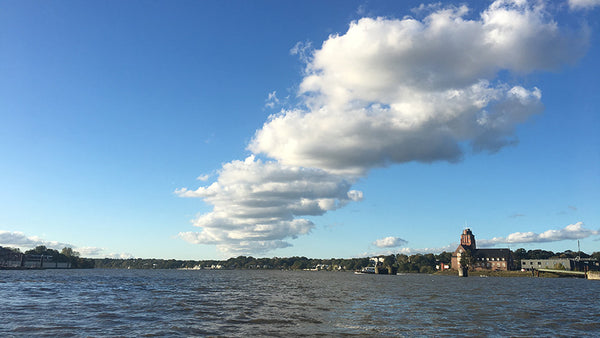
Photo: Florian Penno
What exactly are tidal waters? How do you find the right spot? What do you need to watch out for? And which tackle and lures work best on these waters? Laura answers all of these questions in the article below, based on her own experience and a range of facts.
What Are Tidal Waters?
Schleswig-Holstein offers a wide variety of interesting waters that are subject to tidal influence. These include the Elbe, the Pinnau, the Stör and the Krückau — all tributaries of the Elbe, and therefore tied to the ebb and flow of the North Sea. The strong fluctuations in water level and current set these rivers apart from ordinary rivers, and they offer genuinely exciting, varied fishing for our native predators. The water is often coloured, and in estuarine areas it is referred to as 'brackish water'.
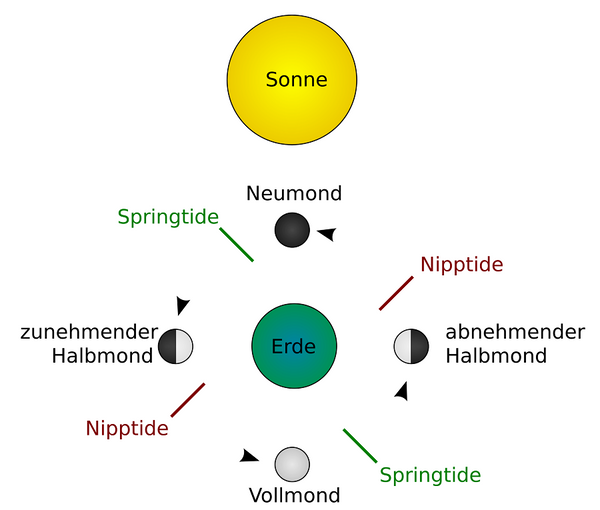
Photo: Wikipedia
What Causes the Tides?
The tides are the movements of the world's seas and oceans, driven by the gravitational pull of the moon and the sun. The moon exerts the strongest influence, which is why there are two high tides and two low tides roughly every 25 hours.
Fish Species in Tidal Waters
As on many other German waters, zander, perch and pike are well established in the tidal rivers and respond excellently to lures. The zander is undoubtedly the main target fish on the Elbe, but great catches of perch, pike and wels catfish are equally possible. Plenty of cyprinids are present too, and they will happily take soft lures. The smelt also plays an important role as a food source for predators — every year it runs in from the North Sea into the Elbe, providing a real feast for the predators that follow.
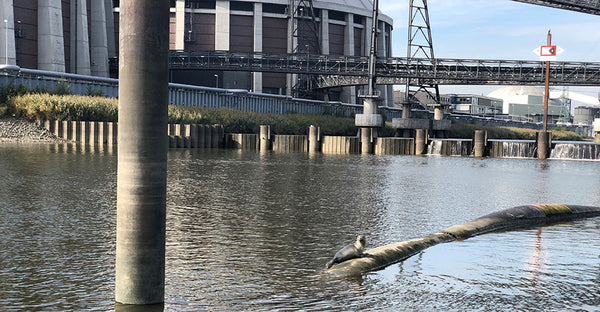
Photo: Florian Penno
Permits and Documents for Tidal Fishing in Schleswig-Holstein
Before you head out, there are a few things to sort out so you stay on the right side of the rules. Anyone wishing to fish in Schleswig-Holstein needs a valid fishing licence and a fishery levy stamp (Fischereiabgabemarke) for the state of Schleswig-Holstein. You can pick these up at some tackle shops, local councils and administrative offices, or online at www.service.schleswig-holstein.de for ten euros. An additional day permit is not required on most stretches of water.
Free fishing in Schleswig-Holstein is only permitted on coastal waters — that is, the parts of the North Sea and the Baltic Sea that fall within the state's territory. Exceptions apply in the Schlei and in the city of Lübeck, where historic fishing rights are in force. Make sure you get the relevant information locally, and check the website of the http://angelgewaesser.lsfv-sh.de/ for the rules that apply.
The tidal sections of six rivers in Schleswig-Holstein that count as coastal waters are:
- Eider: downstream of the Nordfeld sluice, located at Eider-km 78.280.
- Stör: downstream of the road bridge carrying the B 77 in Itzehoe.
- Krückau: downstream of the former Piening watermill at Mühlendamm in Elmshorn.
- Pinnau: downstream of the road bridge carrying the B 431 in Uetersen.
- Trave: the connecting line between the heads of the Süderinnenmole and Norderaußenmole.
- Elbe: the state boundary between Hamburg and Schleswig-Holstein at Wedel.
Finding the Right Spot
Once you have chosen a stretch of water, the next step is finding your spots. To locate good spots on tidal waters, I recommend Google Maps, as well as walking or driving the banks and harbours at both high and low tide. That way you can work out some really productive spots that fish well at both water levels. Stone revetments that lie underwater can only be accessed and fished at low tide — they are often exceptionally productive spots for tidal predators.
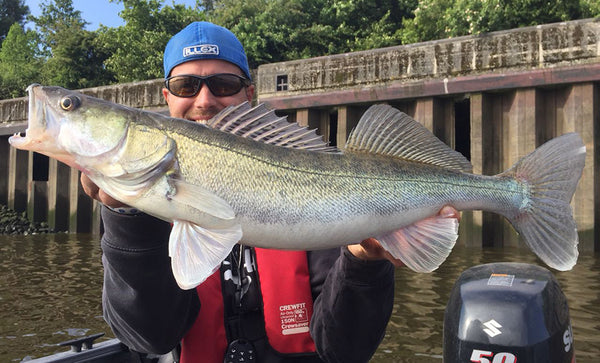
Florian Penno with a beautiful zander.
The Effect of Tides and Time of Day
Unlike on non-tidal waters, you can fish tidal rivers successfully for all species at any time of day. The strong fluctuations in water level and current mean that predators which are normally active at night or in low light are often feeding during daylight hours too — which works very much in your favour. You can head to the water at any time without having to worry about the time of day. The only thing that really matters is the state of the tide.
Fishing in harbours? Go for the flooding tide to get among the fish. They love to move into harbours and basins on the flood, and from there you can fish them beautifully from sheet-pile walls or jetties. This approach is particularly productive in winter, when fish tuck into the sheltered, slack-water areas of harbours to conserve energy.
If you prefer fishing out in the open or from stone revetments, the ebbing tide and low water are the conditions for you. The groynes and rock edges are exposed, you can get right up close to the current lines, and you have fantastic structure directly at your feet — in summer this makes for brilliant fishing with zander, pike and perch feeding aggressively.
To check the tide state, use the Nautide app. It gives you all the information you need on tidal levels, air pressure and moon phase. Simply enter your chosen water and check before you set off — you don't want to arrive and find your favourite spot has gone under.
Which Lures Work Best on Tidal Waters?
When you get to the water, you will quickly notice that you have some seriously coloured soup in front of you. Strong currents and constantly changing flow directions churn up a huge amount of sediment from the bottom. Visibility is rarely more than 30 cm. That is why you should reach for lures that offer strong contrast in the water — either very bright, UV-active colours (firetiger, motoroil, green/orange, yellow and so on), or lures with a pale belly and a dark back. Most importantly, fish with lures you trust. Use the colours that have already caught you good fish on your home waters — you only fish with real focus and purpose when you have confidence in what's on the end of your line.
Getting the Weight Right
When it comes to jig heads and jig weight, pack everything from 5 g to 35 g so you are ready for any situation. And do yourself a favour — bring plenty of lures. A tidal water takes as much as it gives. Strong currents and plenty of underwater structure are the sworn enemies of any soft lure rigged on a jig head.
If you prefer to fish with plugs, bring everything from shallow runners to deep divers. Bold and natural colours, with and without rattles, calm and erratic action — in short, everything your heart desires. Given the ever-changing conditions, you need to be willing to experiment, and that means having enough in your lure boxes to do so. Personally, I fish very little with hard lures on these waters — the risk of snagging is relatively high, and they would fill up my lure box too quickly.
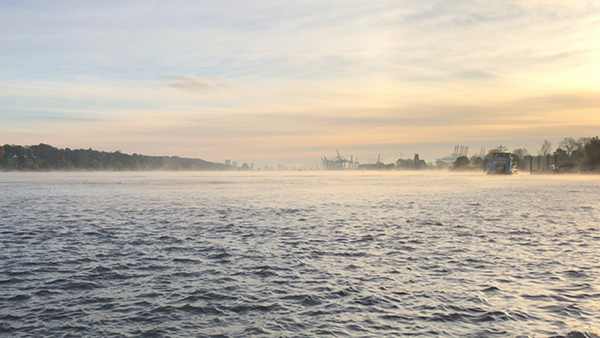
Photo: Florian Penno
Summary
I hope this has given you a taste of what fishing tidal waters is all about, and that you are now keen to give this type of venue a go. If you have any questions, just leave them in the comments — we are always happy to help. We are just as glad to hear your feedback and your own experiences, so share them with us. Until then, tight lines and tight lines, and enjoy your time on the water!
Laura