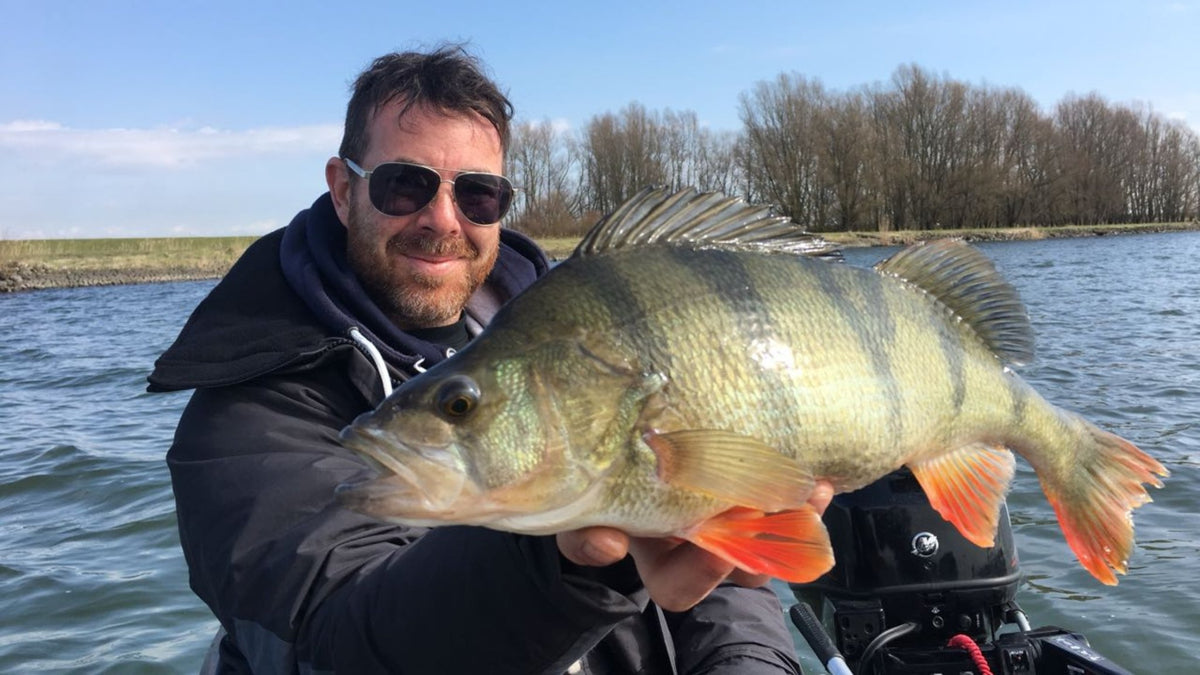
This article was written by Pike & Perch support team member Markus Götzinger.
Denmark is a favourite destination for anglers and non-anglers alike. Whether you prefer the rugged North Sea coast or the calmer Baltic shores, there is something for everyone. But rather than dwelling on the country's scenery, this article focuses on what Denmark has to offer you as an angler. With over 7,000 km of coastline, countless rivers and lakes, Denmark gives you a wealth of opportunities to pursue your passion. Fishing at trout lakes — the so-called 'Put & Take' venues — is also hugely popular there. Below is a brief summary of the rules and regulations you need to be aware of when fishing in Denmark.
Fishing Licence in Denmark
Every angler between the ages of 18 and 65 needs a state fishing licence — the Fisketegn — for both fresh and saltwater fishing. You can pick one up at virtually any Danish tackle shop, at tourist offices, at post offices, or online. Unlike in Germany, there is no course to attend and no exam to pass — you simply buy the licence and get fishing.
Exception: 'Put & Take' lakes are exempt — no fishing licence is required at these venues.
Personally, I find buying the licence online by far the most convenient option. At www.fisketegn.dk it takes only a few minutes, and the site is available in German as well. The only requirement for purchasing online is that you have a credit card.
Day Permit, Weekly Permit or Annual Permit
When filling in the form shown above, you can choose between a day, weekly or annual permit.
There Are Three Types of Fishing Licence in Denmark:
- Day permit: approx. 5.36 €
- Weekly permit: approx. 17.42 €
- Annual permit: approx. 24.79 €
The annual permit already makes financial sense if you plan to fish in Denmark for longer than one week per year. The weekly and monthly permits can be post-dated by up to 30 days, so you can sort everything out well before your holiday. The annual permit starts on the day of purchase.

The Danish fishing licence
If you opt for the annual permit, you can have your licence sent to you in credit-card format — at a cost of 15 DKK (approx. 2 €) — under the option 'Angelschein hoch qualität schicken'. This simply means that around 2 weeks after purchase you will receive a letter from the Danish Ministry of Environment and Food containing a wallet-sized licence card.
If you choose not to receive a card, you can simply print your licence at home:

Fishing licence for self-printing
Because I visit Denmark very regularly and because all revenue from licence sales goes directly towards fish conservation, I buy an annual permit almost every year. Another benefit is that you receive a reminder email 3 weeks before your licence expires, prompting you to renew. You can then renew your licence online in just a few clicks.
Worth knowing:
Unlike in Germany, you do not need to carry your fishing licence on you while you are out fishing.
It is sufficient to know your Lystfiskernummer — your licence number. What you must carry at all times, however, is a photo ID showing your name and address. During an inspection, this document combined with your licence number is used to verify the validity of your licence online.
For anglers under 18 or over 65, the ID is simply used to confirm that no licence is required.
Saltwater Fishing
Once you have your fisketegn, you can head straight out onto the salt. No additional licences or permits are needed. One important point to note, however, is that protected zones exist at the mouths of rivers, streams and wetland channels where they meet the sea. Fishing is only permitted from a distance of 500 m from the mouth. Since minimum sizes and close seasons can vary considerably depending on the area (North Sea, Kattegat/Skagerrak, Baltic Sea), the key regulations for the most important species are listed below.
Species |
Area |
Minimum Size |
Close Season / Conditions |
Cod |
North Sea |
35 cm |
No close season; in the western Baltic (between Skagerrak and Bornholm) a bag limit of 5 fish per day applies, reduced to 3 fish per day between 1 February and 31 March. |
Cod |
Baltic Sea |
35 cm |
|
Cod |
Skagerrak, Kattegat |
30 cm |
|
Flounder |
Skagerrak, Kattegat, North Sea |
25.5 cm |
|
Flounder |
Baltic Sea |
23 cm |
Female fish from 1 February to 30 April. |
Brill |
Denmark |
30 cm |
|
Herring |
North Sea |
20 cm |
|
Herring |
Skagerrak, Kattegat, Baltic Sea |
18 cm |
|
Dab |
Denmark |
25 cm |
|
Saithe (Pollock) |
North Sea |
35 cm |
|
Saithe (Pollock) |
Skagerrak, Kattegat, Baltic Sea |
30 cm |
|
Salmon |
Denmark |
60 cm |
Close season for fish in spawning colours from 16 November to 15 January; in the Wadden Sea a general close season applies from 15 September to 28 February; salmon are protected year-round in the Ringköbing, Nissum and Stadilfjord fjords and in the Von Au. |
Mackerel |
North Sea |
30 cm |
|
Mackerel |
Skagerrak, Kattegat, Baltic Sea |
20 cm |
|
Sea trout |
Denmark |
40 cm |
Same as salmon. |
Haddock |
North Sea |
30 cm |
|
Haddock |
Skagerrak, Kattegat, Baltic Sea |
27 cm |
|
Plaice |
Skagerrak, Kattegat, North Sea |
27 cm |
Female fish from 15 January to 30 April. |
Plaice |
Baltic Sea |
25 cm |
|
Turbot |
Denmark |
30 cm |
|
Whiting |
North Sea |
27 cm |
|
Whiting |
Skagerrak, Kattegat, Baltic Sea |
23 cm |
|
Sea bass |
Denmark |
42 cm |
In the North Sea south of Hanstholm, catch and release only from 1 January to 30 June; outside this period only one fish per day may be kept. |
Freshwater Fishing
If you want to fish in freshwater, you will need an additional fishing permit on top of the obligatory fisketegn at most venues. While buying the state licence is straightforward, obtaining a freshwater permit can be more involved, as different waters require different permits. It is well worth researching the venues you plan to fish and the permits required well before your trip.
Permits are available from local tackle shops, tourist offices, or online at www.danskfiskekort.dk or www.fiskekort.dk. Overview of minimum sizes and close seasons for common freshwater species in Denmark:
Species |
Minimum Size |
Close Season / Conditions |
Eel |
45 cm |
|
Brown trout |
30 cm |
16 November – 15 January |
Pike |
60 cm |
1 April – 30 April |
Salmon |
40 cm |
16 November – 15 January |
Sea trout |
40 cm |
16 November – 15 January; only silver, uncoloured fish may be kept. |
Lake trout |
40 cm |
16 November – 15 January |
Zander |
50 cm |
1 May – 31 May |
Close seasons and minimum sizes for the most important freshwater species in Denmark
Catch and Release
Catch and release is actively encouraged in Denmark. There is no obligation to kill every fish you catch and take it home. That said, there is absolutely nothing wrong with keeping fish you genuinely intend to eat.
Put & Take Lakes
Put & Take lakes deserve a brief mention, even though they tend to appeal more to occasional anglers than to dedicated ones. These are privately run fisheries where the owner stocks fish — predominantly trout — which anglers can catch for a fee.
No fishing licence is required at these venues. You simply purchase a day ticket directly from the operator at the lake, which entitles you to fish that water.
There are generally two different types of Put & Take fishery:
- You pay for a set fishing session (e.g. 3 hours) and may keep everything you catch within that time.
- You pay a small entry fee and settle up at the end based on the weight of fish you have kept, charged per kg.
Many Danish Put & Take operators have their own websites where you can find directions, information about stocking levels and the rules for that particular venue. Various dedicated websites list Put & Take lakes across Denmark, and from there — or simply by searching the name of the venue — you can usually find the relevant website quickly.
Summary
I hope this brief overview of the rules and regulations for fresh and saltwater fishing in Denmark has been useful. Tight lines and good catches on your next trip to Denmark!
I would love to hear your feedback and any further tips in the comments below. Tight lines — Markus
PS: For anyone who has not yet seen our videos from Denmark, we have embedded them below :)
Sønderborg:
Møn: