An article by Pike & Perch founder Toni Wehn
In December 2017 I spent nearly three weeks in Costa Rica with my girlfriend and went fishing on several days. This article brings together researched information, tips from friends and acquaintances, and my own personal experiences. I fished almost exclusively on the Pacific coast, but I've also gathered a few notes on freshwater fishing and the Caribbean side that are well worth including here.
Fishing Licence
You don't need a fishing licence in the same way as you would in Germany, but you do need a fishing licence of sorts. You can buy one online from the fisheries authority INCOPESCA — rather confusingly, the 'Sport Fishing License' is also referred to as a 'sport fishing card from boat'. Honestly, I can't quite imagine that this means you're not allowed to fish from the bank, but I can't say for certain. It also isn't clear from the texts whether this licence is valid for freshwater fishing. The local Ticos I asked just laughed when I brought up the subject of licences. If you want to be on the safe side, head to the relevant office armed with some Spanish or a dictionary app.

In Costa Rica you don't need a fishing licence — great for giving fishing a try! Here's my girlfriend Becci with a small snook caught on a spoon.
Pacific Coast: Mal Pais / Santa Teresa
On the Pacific side we stayed in Santa Teresa, a genuinely beautiful and rather special surf town. Even though the village clearly lives off tourism, there's something pleasantly sleepy and unspoilt about it. The fishing harbour is in the neighbouring village of Mal Pais. Whether you want to head out by boat or kayak, pick up a useful tip, or simply buy some fresh fish for dinner, just follow the only road all the way south past the football pitch and you can't miss the small harbour.
Potential Target Species
The Pacific Ocean is almost unrivalled in terms of species diversity. Off the coast of Costa Rica you can target a huge range of interesting fish, and for most of them you don't even need to venture far offshore. That said, your chances can vary considerably depending on the time of year, so I've put together the table below to show when each species is at its best.
| Target Species | Best Chances |
| Mahi Mahi (Dorado) | November – December |
| Marlin | January – April |
| Sailfish | January – April |
| Roosterfish | Year-round |
| Yellowfin Tuna | Year-round |
| Wahoo | June – July |
| Red Snapper | June – July |
| Cubera Snapper | Year-round |
| Jack Crevalle | November – April |
| Snook | November – April |
Table 1: Target species on the Pacific side of Costa Rica
Bank Fishing
In the right conditions you can catch well from the bank — the key factors are your choice of spot, paying attention to the tide, and keeping an eye on the swell.
Choosing Your Spot
When I was there, I had real difficulty casting into fishable water from the beaches at Santa Teresa and Mal Pais. The main reason was an extremely heavy surf that made it impossible to wade in and close the distance. Things were much better on the eastern side of the Nicoya Peninsula near Montezuma, where the waves are generally smaller and wading is comfortable. Another solid spot is the mouth of the Rio Bongo north of Manzanillo — this one was recommended to me by Veit Kazimiersch, a Shimano team angler. To reach it you drive along the beach for a while, as there's no road leading there.
Keeping an eye on the tide is absolutely essential — the beach can't be driven along at high tide, so don't lose track of the time while you're fishing or you'll have a serious problem getting home. As a general rule, river mouths where fresh and salt water mix are always worth a cast.

Drunk Bait catches on the Pacific too: a cubera snapper taken on a Champagner Steffi with a 10 g jig head
Rod, Reel & Lures
When it comes to tackle, opinions vary. A rod of 240 cm or longer paired with a saltwater-rated 4000-size fixed spool reel makes sense in any case.
Some anglers fish almost exclusively with 25 g sea trout spoons, while others hurl casting pirks up to 150 g.
There's no single answer, but it's fair to say that most fish are caught at the surface, just below it, or in the mid-water column.
Jigging on the bottom is not only less productive — it's also rocky ground that snags constantly, and those snags are very hard to free from the bank.
Lures that worked well for me included:
- silver spoons,
- surface lures of various kinds (poppers, stickbaits, Whopper Ploppers),
- shallow-running plugs with good casting properties,
- and lightly weighted soft lures, which also produced well.
The local Ticos are a great reminder that know-how is worth more than expensive tackle. They first locate the baitfish being pushed to the surface by the sardines (pelicans and other seabirds are a reliable giveaway), then they lasso-cast a paternoster rig made from nothing more than mono, small silver hooks with no bait, and a pear-shaped weight into the shoal. Once they have a live sardine, they switch it onto a larger hook and lasso-cast it back out with a second handline. Snook in particular love sardines and the Ticos catch them this way remarkably often. You can of course do exactly the same thing with a rod.
Leaders work much as they do in freshwater: heavier fluorocarbon (>60 lb) is sufficient in most situations, but if you want extra peace of mind, a wire trace or titanium leader will still get you plenty of fish.
Here's a video I put together about bank and kayak fishing on Costa Rica's Pacific coast:
Kayak Fishing
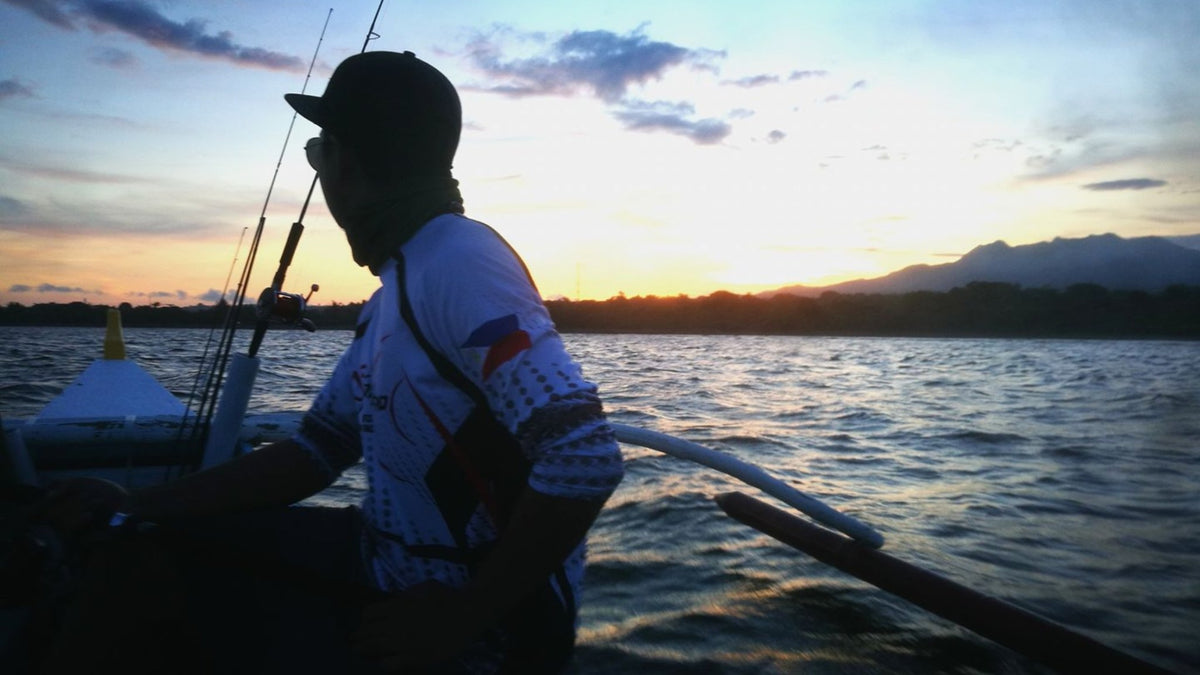
Fishing from a kayak isn't just brilliant on freshwater — the Pacific coast delivers some truly memorable sessions too, and I had exactly that kind of day. When kayak fishing it's absolutely essential to protect yourself from the sun. Long-sleeved clothing, sunglasses, a cap or hat, and if necessary a face shield are all worth having. As with bank fishing, you need a launch spot where the waves aren't too big — the small river mouth at Manzanillo works well, as does the more sheltered harbour at Mal Pais. You won't paddle particularly far offshore (around 2 km on average), but you can still target virtually everything out there — sailfish have even been hooked from kayaks. The most common targets, however, are jack crevalle, cubera snapper, yellowfin tuna, roosterfish and snook.
Guides and Kayak Hire
I went kayak fishing in Playa Hermosa with a genuinely skilled lure and fly angler. He charges $120 for a morning kayak trip (minimum 3.5 hours, maximum 6 hours on the water) and also runs bank sessions:
- Daniel Philip, Facebook: Fly Cast Costa Rica, Phone: +506 8603 2109, Email: danirascr@gmail.com
- Another option is SEA KAYAK Adventures — friends of mine went out with them and came back happy.
Rod, Reel & Lures
You can use almost the same tackle as for bank fishing (see above) — the rod can just be a little shorter. Ideally I'd go for a rod of around 2.10 m with a casting weight up to 40 g, paired with a 4000-size fixed spool reel, and focus mainly on surface lures and plugs. If you book a guided trip you don't really need to bring any tackle at all, as the guide will have everything you need.

Jack crevalle on a topwater lure with a light spinning rod from the kayak — absolutely brilliant!
Boat Fishing
Even though the chances from the bank and especially from a kayak are genuinely good, fishing from a boat is of course the most productive and comfortable option overall.
Guides
- There are several small guiding outfits at Mal Pais harbour — it's a little unclear exactly who works with whom. Someone who knows all the guides is Josue Mora Valerio (Facebook: Jungle Boy Tours, Phone: +506 8688 7092). He can put together a tailor-made fishing trip for you and, if needed, also arrange alternative activities for the family (such as hiking, diving, surfing or horse riding).
- I can also recommend the guiding outfit that Josue connected me with: Miguel and Marlo Barrios Wilson from Costa Rican Tropical Tours. The two of them took over the family business from their father and grandfather and know exactly when and where to target each species. Pricing, as with Josue, depends on the duration and target species and is somewhat negotiable. A standard rate is, for example, $200 for a 3-hour mahi mahi trip (in season).
Tackle
I brought my own casting tackle, but the local guides — especially when trolling — trust their own gear and, in my experience at least, aren't particularly keen to switch to someone else's. From the boat most fish in Costa Rica are caught trolling, but the guides also have everything you need for casting and vertical jigging. Since I couldn't bring a different rod for every possible scenario anyway, I was genuinely glad the guides were well set up.
I spent 2×3 hours targeting mahi mahi and roosterfish and put the whole experience together in this video:
Caribbean & Freshwater Fishing
Fishing conditions and fish stocks on the Caribbean side aren't quite as strong as on the Pacific. The main target species are snook, king mackerel, wahoo, cobia, barracuda, albacore, mahi mahi, grouper, various species of snapper, and above all tarpon. Tarpon are the main reason many anglers make a point of visiting the Caribbean side during their trip.
There are several camps that specialise in tarpon fishing, for example in Tortuguero and in Manzanillo (Tarponville). These camps offer a well-rounded package for lure and fly anglers, though they're certainly not the most budget-friendly option. Accommodation in Costa Rica is generally affordable and, with a little effort, good guiding can also be arranged independently.
Daniel Philip, the guide I mentioned above, sometimes runs trips in freshwater and on the Caribbean side as well, and can always point you towards a colleague if needed. Most people heading to Costa Rica to fish don't think about freshwater, yet the country's rivers and lakes hold some real gems. The most popular target species are tarpon, guapote (rainbow bass) and machaka, all of which can be caught on lure or fly.
Guides recommended to me in Costa Rica include a local named Chuta, who guides for guapote and machaka on a river near the town of Canas (Email: natural.river.rafting@gmail.com, Phone: +506 8831 3428), and the American Ron Saunder (www.arenalfishing.com), who offers guiding on Lake Arenal.

One of Daniel Philip's tarpon guiding guests on the Caribbean side near Tortuguero
Quick Summary
- Region: If tarpon isn't on your wish list, head to the Pacific. The Nicoya Peninsula is excellent for bank, kayak and boat fishing.
- Licence: Buy the Sport Fishing License online or visit a fisheries office if anything is unclear. You don't need a licence in the German sense.
- Rod: I fished mainly with a Custom Coastal (3-piece, 290 cm, 8–27 g) by Savage Gear and got on brilliantly with it. If I had to pick one rod for both bank and boat/kayak use, I'd go a touch shorter and heavier — something like the Roadrunner travel rod in 2.43 m with a 20–80 g casting weight.
- Reel: I can wholeheartedly recommend the Okuma Ceymar and Okuma Inspira (both saltwater-rated) in size 40.
- Lures: Topwater lures of all kinds, spoons, casting pirks, shallow-running plugs with good casting properties, and soft lures on jig heads of 10–30 g. Silver colour combinations worked best for me. If you want to fish with live bait, bring a few paternoster rigs with small silver hooks to catch sardines.
- Other essentials: Bring pliers/an unhooking tool, gloves, polarised sunglasses, sun cream and an old pair of shoes for wading (sharp rocks and rays in the sand).
Feel free to post any questions in the comments below. I'd also like to take this opportunity to thank Markus, Webi, Leo from Angeljoe Potsdam and Veit from Shimano for their invaluable tips before and during my trip. Without your help I'd have struggled a lot more!
Tight lines! Toni