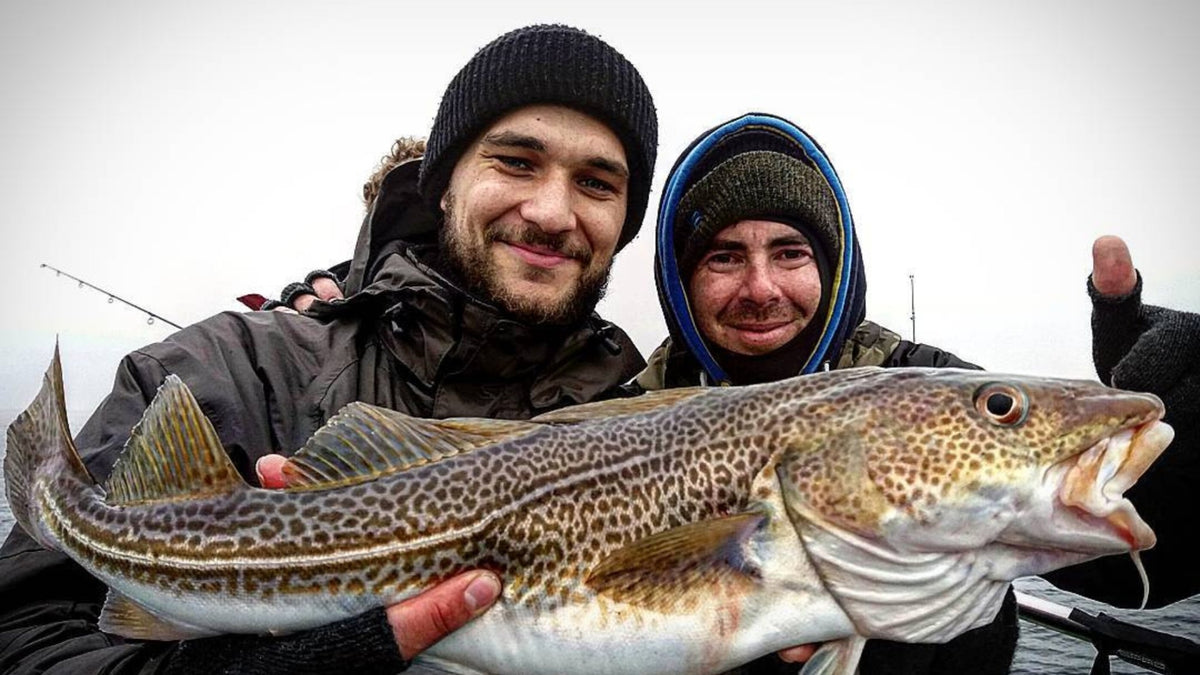
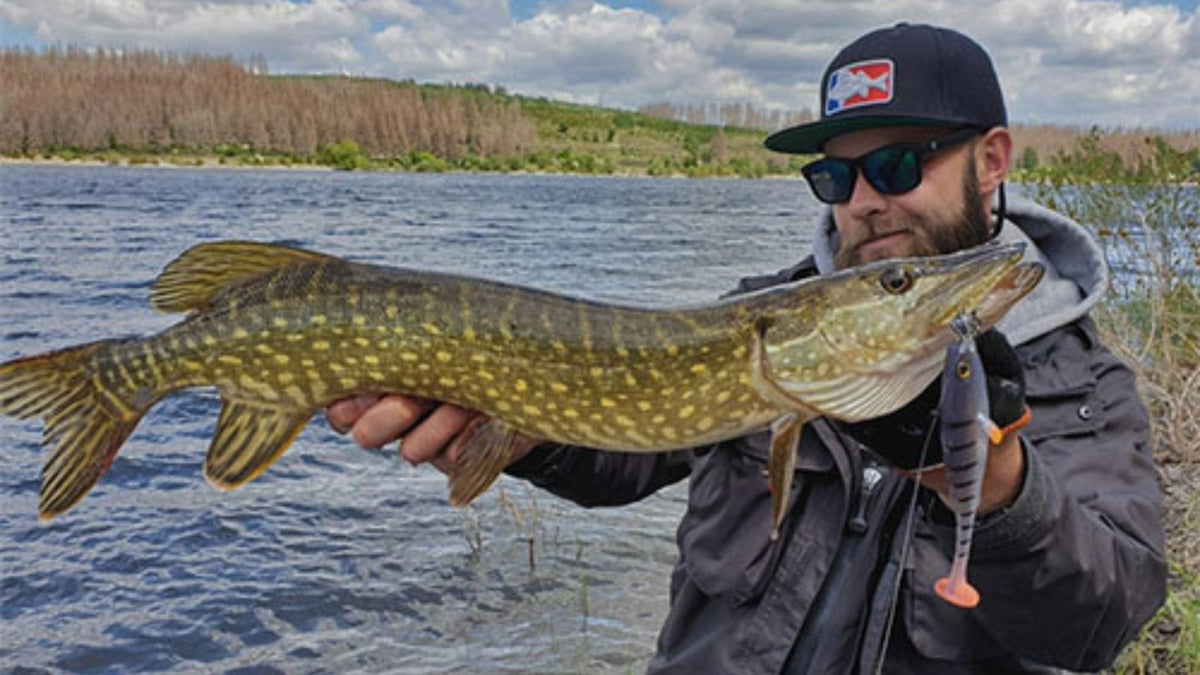
Cliff fishing in northern France is a genuinely exciting pursuit, and one that gets surprisingly little coverage in the angling press. From Crozon to Calais, there are countless cliff faces and rocky coastlines packed with hotspots waiting to be explored. Fishing the English Channel and the Atlantic from the cliffs is a real adventure — and one that rewards careful preparation. Here you'll find essential tackle tips and recommendations for the best spots. The cliffs of northern France are rugged, and the tides are fierce even on calm days. With these insider tips, you'll be fully prepared and ready to do battle with some hard-fighting sea predators.
If you've been following the Pike & Perch blog for a while, you'll have noticed that this post on cliff fishing in northern France continues our ongoing fishing trip series. After covering the polder waters of the Netherlands and Belgium, the blog now arrives in the northern part of France. There is an enormous variety of excellent water here for every lure angler — both fresh and salt. Fishing is hugely popular, and the rules governing sport fishing are refreshingly open and modern. France is a genuine dream destination for any angler.
Do You Need a Fishing Licence in France?
No fishing licence is required for sea fishing from the cliffs in France. Every angler is permitted to fish the sea legally from the shore or from a boat using 1–2 rods. You'll find the exact regulations on protected species and restricted lures and fishing methods further down in a link roundup compiled specifically for cliff anglers in France. A handful of essential items belong in every kit — you'll find a handy tackle checklist further down in the article too.
Getting to the Cliffs
If you're driving from Belgium and approaching via Calais towards the Côte d'Opale, the cliffs and rolling landscape seem to rise out of nowhere. The contrast with the flat lowlands of the neighbouring countries could hardly be greater. Even the sea changes colour, taking on an almost magical appearance. The further south you travel, the more the water shifts from a grey-brown to a turquoise blue. From Wissant, you can make out the first tall cliffs on the horizon. Near Fécamp, there's a fine view of the cliffs too — this is where the truly high rocky coastline of Normandy begins.
In the famous seaside resorts of Berck-sur-Mer, Fort Mahon-Plage, Le Touquet-Paris-Plage and the lovely Boulogne-sur-Mer, you'll find family-friendly sandy beaches — perfect for a great day out. Many visitors exploring Normandy and Brittany for the first time fall in love with these remarkable regions and keep coming back to their favourite spots. You'll encounter families, backpackers, pilgrims and caravanners all sharing the same roads.
If you spot other anglers on your travels, we've put together a handful of language tips to help you out. Even with minimal French, you'll be able to pick the brains of local anglers about the best techniques and lures.
Techniques and Lures for Cliff Fishing
There are several highly effective techniques and lures for cliff fishing. It makes little real difference whether you're standing on a 10-metre cliff with heavy surf crashing below or perched on a few large sheltered rocks near a harbour. The principle is the same: you work the lure over an obstacle and fish potentially many metres straight down in front of you. Combining a float with a lure is not unusual in cliff fishing and often proves very effective. As a rule, you'll want a long, powerful rod and relatively heavy line. Cliff fishing is a very active form of sport fishing — depending on the technique and situation, one rod per angler is enough. You need to keep track of your line at all times and make sure the waves don't wash it onto the rocks. Running a bottom rod alongside a spinning rod is only marginally viable and usually means far too much kit for what can be a demanding approach to the water.
Keep your pack as light as possible, and think carefully about every item. On a tough walk to the spot, every extra kilogram counts — and ideally you want at least one hand free to steady yourself if you slip. Good balance is just as important as good footwear. Place every step with care, and exercise extra caution on slippery ground.
Natural Bait Techniques
The classic cliff angler in northern France relies on local natural baits gathered from the cliffs and rocks themselves. The stony shoreline teems with shellfish, plants and sponges. In France, anyone is permitted — subject to a few simple rules — to collect mussels and similar creatures for personal consumption or as fishing bait. Your best bet is to go out with a local angler who knows the prime collection spots and can instantly identify any protected species.

With a small stock of natural bait, you can start the session and then top up with fresh bait gathered at the actual fishing spot. A good penknife and a lidded bucket are a cliff angler's best friends. A third essential item is binding twine or similar thread, which lets you tie the bait in place without piercing it with the hook.
A simple running float rig with a strong leader and a single hook is the most widely used approach for successful natural bait fishing on the cliff and rocky coastlines of northern France. Sea floats typically have a breaking strain of 50 grams or more. Swivels and hooks should be saltwater-rated and have a relatively high breaking strain. One quirk of cliff anglers in northern France is that many fish a float without a line stop, which allows them to let the bait sink in a controlled manner and work it very actively.
Lure Fishing Techniques
Modern cliff fishing with lures is growing in popularity in France, though it remains far less widespread than in Japan and other countries. It's often younger anglers who head out with jigs and stickbaits to try their luck. Cliff fishing lures broadly divide into surface lures and baits designed to be worked vertically or deep.
Natural Colours
Vertical fishing works particularly well with a float rig as described above. By redirecting the line through the float, you avoid snagging on the rocks at the base of the cliff. In practice, you don't even need to change the leader when switching from natural bait to a lure. A rubber eel has accounted for a great many fish. Pollack and sea bass are drawn to eels and hit them hard. Natural colours work best.
Lures for Surface Fishing
For surface lure fishing, any lure that resembles a baitfish will do the job. Stickbaits or large poppers are ideal and guarantee spectacular action when the fish are really on the feed. Don't be afraid to retrieve quickly.
Saltwater Fly
A real insider tip is a saltwater fly rigged on as fine a leader as possible, attached to a bubble float. This gives you a genuine chance at a wary large mullet or a thick-shouldered sea bass. The technique originally came to France from Ireland, brought by salmon anglers who adapted their lake rigs for coastal waters.
As soon as you spot a flock of birds diving at the surface, or small baitfish leaping out of the water in a panic, you can be fairly certain there are predators working below. Some lure cliff anglers specifically hunt for feeding fish, while others prefer to work all the known hotspots and hope a predator is in residence. Which approach suits you best comes down to personal preference.
Tackle for Cliff Fishing
Cliff anglers always travel light and keep their kit tightly edited. That said, you should be prepared for plenty of snags and break-offs. It's a tricky balance to strike when packing, and one that's always at the back of your mind. A practical solution is to wait until you reach the location before deciding what actually goes into your bag or rucksack. Depending on the spot, you might want a few extra leads or floats; add the relevant lures, and leave everything else in the car. Your legs will thank you for it.

The basic cliff fishing setup starts with a rod of at least 3.50 metres. The rod should have plenty of backbone and a casting weight of more than 100 grams. Alternatively, you can fish a shorter rod — say 2.75 metres — rated up to 90 grams casting weight. Use this one with lures, and especially for speed jigging with braid on the reel. The longer rod is better suited to natural bait fishing and float rigs, or for casting further out with a bottom rig.
In principle, you can use both rods with a single reel, swapping it between them as needed. Having a dedicated reel for each rod is more convenient, of course. One reel is spooled with 0.45 mm mono, the other — depending on preference — often with braid. Braid offers the major advantage of direct contact with the lure. When jigging and using other lure techniques, that direct feel is crucial.
The downside is that rocks can quickly damage braid. Mono, by contrast, offers the benefit of stretch: when a fish is lifted clear of the water and swung up to the cliff top, the hook is less likely to tear free than with stretch-free braid.
Beyond the right reel and rod, there are a few more items that belong in any cliff fishing kit. Further down you'll find a useful link list, and below is our quick overview to make packing for a cliff fishing trip to northern France a little easier.
Cliff Fishing Tackle Packing List:
- 2x rod / 2x reel
- Walking boots
- Waterproof jacket (even in good weather)
- if needed: life jacket
- Penknife
- Pliers for unhooking and rigging leaders
- Leaders and binding twine / thread
- Swivel assortment — extra-strong saltwater grade
- Floats and line stops
- Lure selection:
- Soft plastics for drop shot or similar
- Jigging baits and prop baits
- Flies
- Topwater baits
- Small pirks
- Natural bait — buy locally or collect on site depending on availability
- Torch and head torch, signal light, backup phone
- Landing net for cliffs and harbours, or a gaff with an extra-long handle
- Good polarised sunglasses and sun protection, drinking water
Fishing Spots on the Coast of Northern France
The first spot we'd recommend for your northern France trip is near Yport and can only be fished at low tide. You may have to share the spot with local surfers, but from the rocks here you can reach some excellent areas with a well-placed cast. The impressive cliffs looming behind you serve as a constant reminder to head back to the beach well before the tide comes in.
A short distance away lies the headland of La Falaise d'Amont, where access to the water is relatively straightforward and the fish can often be spotted clearly in the clear water below. The excitement as you arrive and descend the steps is real — especially when you can already see sea bass or mullet circling well within casting range.
From Tréveneuc to Godelins there are numerous good spots. The fishing marks near the cliffs are easily reached from the various beaches, which makes this area a solid recommendation for anyone new to cliff fishing. The water here is very clear, and you can often see fish holding at the spots.
France Fishing Trip Tips
'Salut' and 'Bonjour' should come naturally enough. With a handful of simple phrases, you'll quickly get chatting with the locals in France. It doesn't matter if you only understand half of what comes back — what counts is that you gave it a go and showed willing. The rest you can sort out with hand gestures… voilà.
French |
English |
Très bien, merci |
Very well, thank you |
Je m'appelle… |
My name is… |
En chanté |
Pleased to meet you |
Je suis désolé |
I'm sorry |
Je ne parle pas français |
I don't speak French |
Je ne comprends pas |
I don't understand |
Aidez-moi, s'il vous plaît! |
Please help me! |
Retirer de l'argent |
Withdraw money |
Magasin |
Shop |
Aller pêcher |
Go fishing |
Loup de mer / Bar |
Sea bass |
Mulet |
Grey mullet |
Travel costs in France are high, partly due to expensive fuel and motorway tolls. Small local petrol stations are noticeably cheaper than the big service areas. If you have time on your side, plan your route via the back roads, take in the beautiful countryside, and put the money saved on tolls towards a decent evening meal.
Useful Links for Cliff Fishing in Northern France
To round off this post on cliff fishing in northern France, here are a few practical link recommendations to take with you. If you know of any tips or spots we haven't mentioned, we're always glad to hear from you in the comments below.
- Angling Guide to Cliff Fishing and boat fishing
- Catch Report Brittany and fishing spot information
- Normandy and Brittany travel information and facts
- Minimum Sizes for Sea Fish and Shellfish in northern France
- Official information sheet: .pdf download — Rules for Sea Fishing