In this article, guest writer Laura takes a closer look at the Cheburashka rig — walking you through the set-up and weighing up the pros and cons. If you have any questions afterwards, feel free to let us know. Until then, enjoy the read!
What Is the Cheburashka Rig?
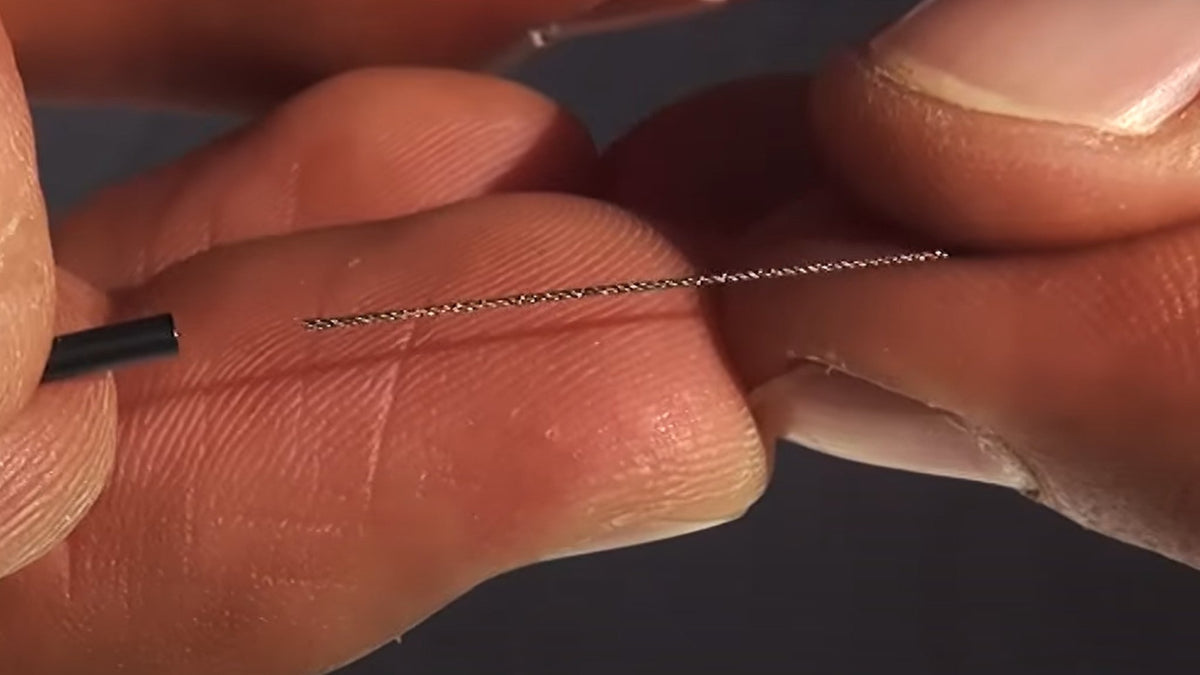
The Cheburashka rig, often shortened to 'Chebu', is essentially a type of flex-head rig. What makes it special is that the weight and hook have no fixed connection, giving the lure greater freedom of movement. The weight ball features a slot through which a stainless steel wire clip is threaded. This clip protrudes from both sides of the weight. The hook is attached to one side, while the other side connects to a snap or directly to the leader. Once the clip is pushed back into the weight, it locks firmly in place and is secured against bending or opening.

Using a snap gives you the option to fish other rigs and switch between them quickly and easily. In this example, the Cheburashka rig has been tied directly to the leader.
When Does the Cheburashka Rig Come Into Its Own?
There are situations where the Cheburashka rig clearly has the edge over a standard jig head. If you want to fish so-called 'no action' shads or crayfish imitations, the Cheburashka rig brings them to life even more. The flexible connection lets the lure dart, roll and tip in every direction — something that is particularly effective at animating no-action shads and gives them an irresistible action.

Orange, chartreuse or simply natural — these Chebu rigs have been built with different components and fished on an offset hook.
Crayfish imitations, on the other hand, can be presented very effectively with a slow, dragging retrieve. The flexible connection between weight and hook also makes it easier for predators to inhale the lure. The Chebu also tends to reduce hook pulls dramatically, as the fish cannot lever the hook out against the weight.

You can clearly see how the lure has deformed on the take. The fish was hooked securely and duly made it into the catch record.
Which Species Suit the Cheburashka Rig?
Personally, I use the Cheburashka rig most often when fishing for perch, though it works equally well for zander. I tend to reach for it on snaggy waters, where you can fish the lure weedless with an offset hook — making it a great alternative to a standard jig when you need to work through branches, weed or similar underwater obstacles to tempt the perch into a bite.

This zander was hooked confidently on the Chebu. A highly polished bottom jig was used as the weight here.
When to Use It
- when you need more action from your lure
- on snaggy spots
- in strong current, when you need more weight that would otherwise hinder a fish from inhaling the lure on a standard jig head
- when you want to drag the lure along the bottom
Components of the Cheburashka Rig
The Cheburashka rig is relatively straightforward to put together. You need fluorocarbon or, where pike are present, wire, a Cheburashka or bottom weight, a suitable hook, optionally a snap and a matching lure. To attach the hook, simply pull the clip out of the weight, connect the hook to the clip and push it back in. The clips on Chebu weights are often asymmetric in shape. The narrower side is attached to the snap or tied directly to the leader, and the wider, rounder side is where you thread on your lure. There is really no way to get it wrong, as the whole thing simply will not go back together properly if you try.

Another key advantage is the enormous number of combinations available. You can adapt quickly and easily to whatever the water demands and stay flexible throughout the session. This is possible because you have a vast choice of lures, a wide range of weights in different colours and the freedom to use virtually any lure fishing technique with the rig.
Components at a Glance
- Leader line (fluorocarbon or wire)
- Chebu weight
- Hook
- Snap
- Lure
- Superglue
Which Hook Works Best for the Chebu?
On snaggy waters, an offset hook is the way to go — it keeps tackle losses and the frustration of constant snags to a minimum. There are dedicated offset hooks with a wide hook eye that give the lure even more freedom to move in all directions. Fishing through branches, weedbeds, lily pad fields and other underwater obstacles with the Chebu is genuinely great fun!
If there is less snagging risk, or if you are fishing in open water, you can switch to single hooks, double hooks or even add a stinger treble hook. This reduces missed bites significantly compared with the offset hook. Single hooks with a wide eye, a long shank and a broad hook gap are ideal for this rig. Personally, I find the Aberdeen single hook set-up my favourite. For jigging in open water with heavier weights, the single hook arrangement is simply hard to beat — you can pair a relatively small lure with a heavy Chebu without worrying that the perch will struggle to inhale it. The greater freedom of movement means the lure breaks away in all directions unpredictably, which tends to grab a predator's attention very quickly.
Chebu Hook Options at a Glance:
- Offset hook
- Single hook
- Double hook
- Optional stinger treble hook
Which Weight for the Chebu Rig?
Cheburashka and bottom weights come in a wide range of materials, colours and sizes. If you prefer to avoid lead, tungsten is a popular option. Tungsten is particularly favoured for ultralight fishing with the Cheburashka, as its higher material density means even small Chebu weights carry a useful amount of weight. This makes tungsten weights more compact and discreet — though they do come at a higher price than conventional lead. That said, lead does the job perfectly well too. Chebu weights are available in vivid colours, subdued tones or the so-called natural finish. You can either match the weight colour to your lure or keep it understated and let the lure do all the talking.
The decisive point for me, though, is the ability to combine particularly heavy weights with small lures. If you want to pair a KØFI Bleak Shad in 11 cm — or even 7 cm — with a 25 g Cheburashka to search open water for perch with sharp, snappy movements, go right ahead. Yes, a 7 cm lure on a 25 g weight looks a bit odd, but it works without any issues.
How to Set Up the Cheburashka Rig
Here is the step-by-step photo guide for setting up the Cheburashka rig:
- Step:

- Step:

- Step:

- Step:

- Step:

- Step:

- Step:

- Step:

- Step:

Cheburashka Rig: Lure Choice & Presentation
Here, too, your imagination is the only limit. The Cheburashka rig is compatible with almost any lure, even if some require a small modification. Have a look at our Fishing Hacks video, where Ihno shows you how to modify soft lures — ideal for weedless fishing.
Fishing Hacks Video:
Pin tails, V-tails, shads, creature baits, crayfish imitations, curly tail grubs — virtually every type of soft plastic works with the Cheburashka rig. You can jig the lure, keep the rod still and hop it slowly along the bottom, drag it, twitch it, work in pause-and-drop sequences...
INFO:
Pin tails and V-tails are ideal for fast jigging and twitching in open water, as they displace little water and can dart off in any direction. Hit a shoal of feeding perch with an aggressively worked lure and it will not be long before the rod bends!
Crayfish imitations and creature baits come into their own on waters with a healthy crayfish population, and especially in winter when fish are hugging the bottom and reluctant to chase. A small crayfish or creature bait slowly dragged and left to sit will often tempt even the most lethargic perch or zander into a bite.
Pros & Cons of the Cheburashka Rig
Like everything in fishing, the Chebu has its strengths and weaknesses. Let's take a closer look.
Advantages of the Cheburashka:
- very flexible when it comes to component choice
- small lures can be fished with heavy weights
- almost any soft plastic is compatible
- the flexible connection makes it easier for fish to inhale the lure
- the lure has more freedom of movement
- lure presentation is optimised
- suitable for beginners — no complicated rig to build
- minimal tackle required, low cost
- weights and lures can be swapped quickly
- wide variety of retrieves and presentation styles
- works with both offset and single hooks
Disadvantages of the Chebu:
- casting distance is slightly reduced because the rig flutters more in flight
- the lure can tip to one side under its own weight, particularly during the pause, which can occasionally lead to a snag with a single hook
- threading the lure onto the hook takes a little practice, especially for beginners
Summary
When all is said and done, the Chebu wins you over with its advantages and outstanding versatility. The range of lures and applications is broad, and the rig simply makes you want to get out and fish for perch and whatever else is lurking below. Have you had different experiences? Have you already fished the Chebu? Any thoughts or comments? I'd love to hear from you.
Many thanks,
Laura.