





In this article, we'd like to give you a closer look at fishing at so-called trout lakes. We'll cover the most important questions, walk you through the basics, and share some useful tips and tricks for catching one of the most popular fish around. And while trout may have given these venues their name, there are plenty of other interesting species to be caught in these waters too. Our focus, though, is firmly on ultra-light lure fishing with spoons.
Join us as we explore the world of trout and their aquaculture, and find out how to fish successfully for these spectacular salmonids. Enjoy the read!
What Are Trout Lakes?
For us anglers, trout lakes are artificially constructed venues where we can fish for these popular salmonids under specific rules and conditions. They vary quite a bit in appearance and in the types of water they offer. Some sites feature natural ponds that retain their original shape, vegetation and character, while others have purpose-built enclosures designed specifically for aquaculture. Either way, a trout fishery is always much more than 'just' a trout venue for anglers.
What Are Trout Fisheries Used For?
First and foremost, a fishery like this should be understood as an aquaculture operation. This means the controlled breeding and rearing of fish species — and worldwide, that goes well beyond trout to include Atlantic salmon, carp, zander and sea bass, to name just a few. Aquaculture operations are broadly divided into three areas:
-
Shrimp, mussel and fish farming for the food industry.
-
Macro- and microalgae cultivation for the pharmaceutical and food technology industries, as well as for animal feed.
-
Fry production for species conservation or for stocking fishing venues.
The fish are bred and reared in dedicated holding tanks before being transferred into the lakes.
These fish lakes — trout lakes in our case — also serve as a useful alternative for anglers, helping to protect wild fish populations in natural waters. With angling pressure on the rise, a trout fishery is a solid option compared to some heavily fished natural venues.
Why Fish at a Trout Fishery?
As mentioned, a trout fishery is a welcome change of scene that helps take some of the pressure off other waters. But these venues offer plenty of other advantages for anglers and fish alike.
At a natural trout lake, the setting alone is a pleasure. And knowing that fish are definitely present makes for a far more relaxed day's fishing.
Advantages of Trout Lakes
Fishing for Children and Young Anglers
No licence required — this gives children, young anglers and beginners the chance to gain hands-on experience with tackle and on the water, and to learn how to handle nature and fish responsibly.
Here you can get to grips with lures and tackle at your own pace, learn different methods and pick up tips from those around you. For children, it's an ideal introduction to future fishing adventures.
Where else can you give such full attention to tackle, lures, presentation, playing the fish, landing it carefully and looking after the catch, all in one place? It's worth having someone alongside you who can introduce you to the basics, share useful tricks and offer a few pointers. The experience of mum, dad, grandma or grandad is worth its weight in gold to younger anglers, who tend to soak up every word — or at least that was certainly the case for me back in the day.
IMPORTANT:
At most trout fisheries, fishing without a licence is permitted — however, some venues require that children are accompanied by someone who holds a valid fishing licence. Check the rules of the specific venue beforehand.
Guaranteed Fish Stocks
Guaranteed stocks don't automatically guarantee a catch. Even though there's always plenty of fish in a trout lake, you still have to actually tempt them. The good news: you at least know the fish are there.
Stocking is done on a per-angler basis, so there's no need to worry about whether there are enough fish — the bigger question is how to get them on the bank.
Fish All Year Round
Another advantage of these trout fisheries is that you can fish there throughout the entire year — spring, summer, autumn and winter. There are no closed seasons. In fact, many anglers turn to trout lakes specifically in winter or during closed seasons on other waters, to keep catching fish when other options are off limits.
INFO:
Since most trout fisheries are privately run, they typically have set opening hours or holiday closures. It's well worth checking the venue's website beforehand to avoid a wasted journey.
Species on Offer
There's hardly a fishery that doesn't hold other species alongside trout. If you fancy targeting something other than trout, you'll often have a good chance of pike, wels catfish, carp or, alongside rainbow trout, the larger salmon trout. This means you can explore and practise different techniques, lures and methods across a range of species. Again, this is particularly valuable for children, young anglers and beginners, who won't be limited to rainbow trout alone.
Put & Take
The 'put & take' principle applies at trout fisheries as a general rule. In short: once a fish is caught, it must be kept, dispatched and handled in an ethical manner. Caught fish must be retained. Most venues offer to gut the fish on site, saving you the job — and the mess — at home, provided you want to use that service. Of course, you can always take your fish home as they are; not every venue offers gutting anyway. Either way, you're always guaranteed a good meal.
INFO:
Many trout fishery operators also run an on-site restaurant where you can enjoy freshly caught fish prepared in a variety of ways. A counter selling fillets and smoked fish on site is also far from uncommon.
Are There Any Downsides?
That depends on how you look at it.
The Cost of Fishing a Trout Lake
What does it all cost? There's naturally a fee to pay for the privilege of fishing these trout lakes, and it varies from venue to venue. On top of that, the fish you catch are charged separately. The pricing structure differs too. Some lakes charge a flat rate per kilogram of fish, while others use tiered pricing. Add a hire fee if you don't have your own tackle and need to borrow gear on site — though some venues only ask for a deposit, which you get back at the end of the day.
Possible Costs at a Glance
- Entry fee / day ticket / charge per rod used
- Price per kilogram of fish caught (may vary and include tiered pricing)
- Hire charge for borrowed tackle
- Natural bait
- Lures
- Tackle accessories
- Restaurant / smokehouse
- Gutting of caught fish
- Filleting of caught fish
Lure Restrictions: Rules for Trout Fishing
Rules genuinely do vary here, so it's especially important to check in advance what applies at your chosen trout lake. Some venues specify which lures or baits must be used, ban lures altogether, or have additional rules in place — such as pinching down barbs or avoiding treble hooks.
As with any water, always make sure you're well informed about the rules and regulations before you fish.
Angling Pressure
At times — especially during closed seasons, in winter, or on bright sunny weekends — smaller venues can get extremely busy. You may well find yourself shoulder to shoulder with fellow anglers. When fish are clearly visible, multiple lures often land on the same spot at once, and tangles with other lines are an occupational hazard.
Blanking Is Always Possible
Just because fish are guaranteed to be in the lake doesn't mean you can't go home empty-handed. That's a frustrating prospect — especially when you've already paid a day ticket and possibly other costs for the privilege of a blank.
No Catch and Release
The put & take principle is, in general, a fair arrangement for both fish and angler. However, the ban on catch and release can have its drawbacks. If you're lucky enough to catch 15 or more fish within 30 minutes — and it has been known to happen — but don't need that many or can't afford to pay for them all, your day on the water can come to a very swift end, or get unexpectedly expensive.
Trout Fishing: A Spectacular Challenge
The trout is a true sport fish, capable of putting up tremendous power during the fight. The head-shaking and sometimes spectacular leaps make playing a trout a serious challenge. Getting one to take in the first place is another matter entirely. Even when the lake is well stocked — typically a set number of fish per angler — you still have to find them and persuade them to bite. Lure choice and technique, as well as observation and adaptability, play a crucial role. Although trout are often caught on reaction bites, they are genuinely sharp fish. In trout lakes especially, a fish will frequently follow a lure for a considerable distance, watching it carefully before committing to a take.
But alongside all that sharpness and power, the trout is also an extremely sensitive fish that must be handled with great care. Its protective slime coat is thinner than that of many other species and therefore easier to damage.
IMPORTANT:
If you're targeting trout in natural waters, always ensure your hands and landing net are wet (a rubber mesh net is ideal) and keep the release as quick as possible.
Playing a trout — and looking after it properly — does present certain challenges. Once a trout takes your lure, give the fish some room to run at first, as long as it isn't heading straight for an obstruction or threatening to cross another angler's line. If you have a particularly acrobatic fish on and it starts jumping, dip the rod tip towards the water's surface to counter the leaps. During these jumps, a trout can easily throw the hook or shake itself free, and your fish is gone.
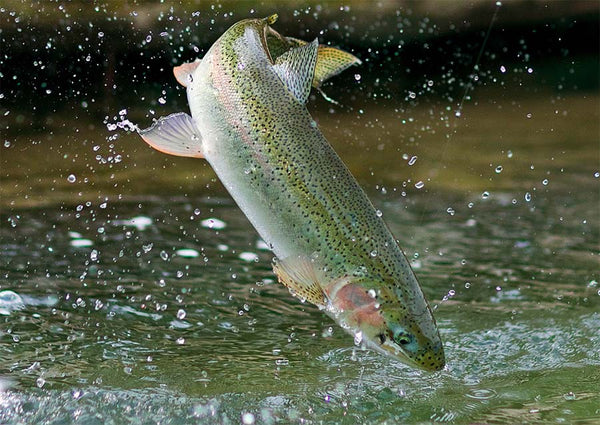
The spectacular leaps are typical of trout — and it's often during these moments that they manage to shake the hook.
When landing a trout, you should always guide the fish into the net, not the other way around. Even when the fish seems almost within reach, it's not uncommon for a trout to find a second wind at the sight of the approaching net — either slipping the hook or even breaking the leader. This is far more likely to happen if you've wound in too much line and are holding the fish under tension. The trout should still have a little more line available than the length of your rod. That way you can absorb those final surges far more effectively, and avoid break-offs and lost fish.
What Tackle Do You Need for Trout Fishing at a Trout Lake?
In this article, we're focusing on lure fishing with spoons using light gear. Ultra-light (UL) fishing has grown steadily in popularity and is now a common sight at trout venues — those small trout spoons, also known as spoons or Japanese spoons, are simply everywhere now. The right tackle for this style of fishing is equally specialised. For our purposes, we've settled on UL rods of around 1.80 m to 2.10 m in length. They're incredibly light, and their action and handling make fishing for salmonids a real pleasure.
Rods for UL Trout Fishing
A length of around 1.80 m to 2.10 m is ideal for this style of fishing. The casting weight should fall between 0.5 g and 8 g. But steer well clear of anything too soft and floppy. The blank should be fast and the tip sensitive. The rod also needs to have real backbone during the fight, because as we've already noted, trout are outstanding fighters. As always: fish with what you're comfortable with and what works best for you. These are simply guidelines.
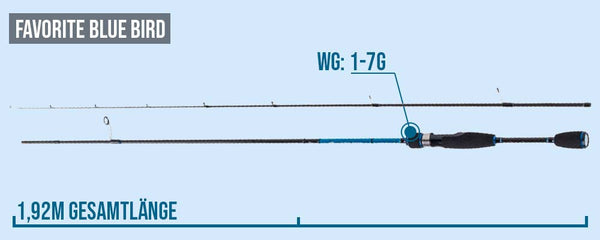
The Favorite Blue Bird, for example, is an ideal rod for UL trout fishing. It comes in various lengths with different casting weights.
How can you even cast with such a rod and such light lures? Quite simply: the action of these rods produces a progressive build-up of power. This means the rod loads up during the cast and delivers solid distance — particularly with small, light lures.
The Right Fixed Spool Reel for Trout Fishing
To match your light setup, the reel needs to meet certain criteria too. There's little point pairing a heavyweight reel with a UL rod. In this case, the most common choice is a size 1000 fixed spool reel. That said, size 500 and 750 reels are now available specifically for ultra-light fishing. Make sure your rod and reel are well matched and perfectly balanced.
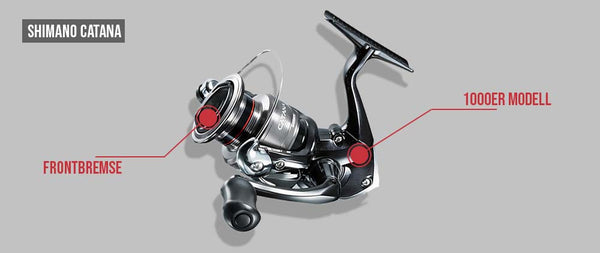
Alongside the size 1000 models, even smaller and lighter reels are now available, purpose-built for UL fishing. The Shimano Catana 1000 is an excellent choice for light lure fishing, offering outstanding value for money.
Playing a trout correctly is a key part of landing it successfully. When it comes to the reel, it's worth spending a little more here. With cheaper reels, the spool can occasionally jerk and briefly lock up as a fish takes line — even when the drag is set very lightly. That makes for an uneven, jerky fight and a lot of lost fish.
Best Line for Trout Fishing
You can of course fish for trout with braid, but there are considerably more drawbacks than with mono. That's why we'd generally recommend going with mono for salmonids. Compared to braid, monofilament has more stretch, which works greatly in your favour during the fight. Trout are natural-born fighters and frequently manage to shake the hook through their powerful head-shaking and spectacular leaps. Mono absorbs these lunges beautifully and gives you a real advantage. The monofilament should have a diameter of approximately 0.16 mm to 0.20 mm, with a breaking strain of around three to four kilos.
INFO:
Because line diameters — both braid and mono — are sometimes measured differently by different manufacturers, it's worth getting into the habit of checking the breaking strain of a line rather than relying on the diameter alone.
If you do opt for braid, go for a similar breaking strain — up to around 5 kg. The line diameter will be around 0.06 mm to 0.08 mm. In that case, use a fairly long leader of abrasion-resistant fluorocarbon with a diameter of 0.16 mm to 0.20 mm and a length of up to 1.20 m. This not only reduces the chance of spooking fish, but also adds a degree of stretch — at least in the leader section.
If you go with braid and a leader, at least your spooled reel becomes more versatile for other uses. Just keep an eye on the right breaking strain for trout fishing.
Spoons: The Perfect Lure for a Trout Lake
There's a wide range of baits and lures that can tempt trout. Alongside natural baits such as maggots, waxworms and worms, lures like plugs, spinners, curly tail grubs, Powerbait and — our focus here — spoons are all on the menu. Let's take a closer look at those popular Japanese spoons.
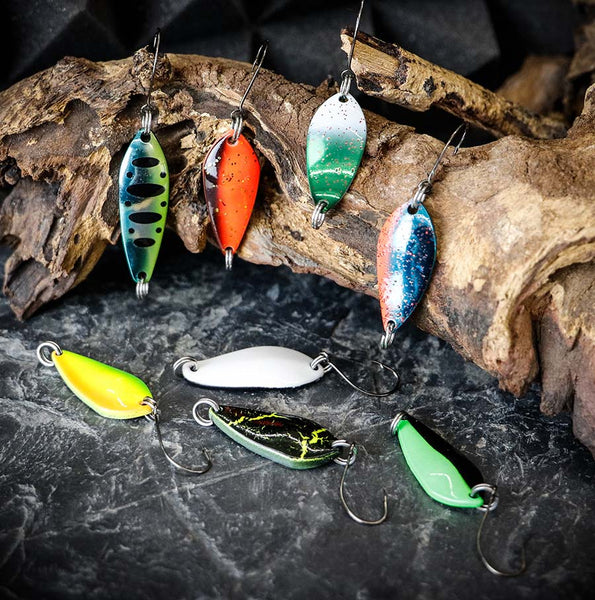
Here we can see a range of different shapes and finishes of spoons from GTT.
What Are Spoons?
Spoons are simply the English name for the trout spoon — a metal lure well known to anglers here. The name comes from their spoon-like shape. They now come in countless finishes and various forms: a concave metal lure with a single hook at the rear.
IMPORTANT:
Always check beforehand whether lure fishing is permitted at your trout lake, and whether any specific rules apply — such as pinching down the barb.
What makes spoons special is their largely unpredictable, erratic action, which trout seem to find irresistible. These lures flash and glint as they catch the light — hence the name. When painted on both sides, the constantly shifting colour contrast makes for a presentation trout simply can't ignore. They were developed specifically for lure fishing for trout and are therefore considerably smaller than, say, pike spoons. You can find spoons with treble hooks, but the standard choice — especially in UL fishing at trout lakes — is a single hook. Given how sensitive trout are, a gentler approach is always preferable. Even where barbed hooks are generally permitted, we personally do without and always pinch the barb down. The real art of catching trout on spoons lies in the exciting and demanding fight that follows.
Spoons and Their Shapes
Just as with other lures, trout spoons come in shallow-running and deep-running variants — essentially lighter and heavier lures. Since we're staying firmly in UL territory here, we're talking about lure weights between 0.5 g and a maximum of 3.5 g. Interestingly, the weight of a spoon is influenced less by its actual size and more by the paint finish applied. In other words, the thickness of the lacquer coating affects the weight. Of course, spoons also vary in size and therefore in weight — that goes without saying. The point here is about different weight classes within the same shape variant.
Slim and Elongated Shape
 This type of trout spoon is often fished quickly and works well in faster-flowing water, where it can be kept moving cleanly through the current. Twitching it causes the spoon to dart erratically to the sides, adding an extra trigger for the trout.
Teardrop and Rounded Spoons
 These are known for a strongly tumbling action and generate a lot of resistance in the water. Ideal for the middle of the water column. In its various forms, this is generally the most versatile shape and can be fished effectively across most areas of the water (depending on weight). Because of the lure's shape, short pauses in the retrieve work particularly well. The rounded side can face either towards the leader or towards the hook, which produces two entirely different actions.
Diamond-Shaped Trout Spoons
 Well suited to stronger currents where you want to fish deeper, or for fishing close to the bottom. In natural waters away from commercial trout fisheries, they're ideal for deeper pools. This is a very versatile lure — a hybrid of the elongated and rounded shapes — and lends itself to a variety of methods.
Classic Spoon
 The leaf shape represents the classic trout spoon form. Not only in spoons, but also in larger versions such as pike spoons, this is considered the original shape.
Japanese Spoons at a Glance
| SHAPE | CHARACTERISTICS | METHOD | EXAMPLE |
| Teardrop and pear shape |
Wider at the rear, making it heavier at the back than the front. On short pauses, it flutters down tail-first. |
Suited to steady retrieve, tumbling tactics and jigging. | Space Spoon |
| Diamond shape | A hybrid of the leaf and elongated shapes. Can be fished in the manner of either variant, depending on its specific proportions. | e.g. twitching, pause-and-go, steady retrieve | Forellen Meister |
| Leaf shape | Classic spoon form. Sinks slowly with a fluttering action due to high water resistance. | Steady retrieve with pauses, tumbling tactics, twitching | Turbo Spoony |
| Elongated shape | Streamlined and the slimmest of all spoon shapes. Low water resistance. Particularly well suited to deeper pools. | Steady retrieve, twitching | Speed Trout |
Trout Spoons: When to Fish Which Finish?
As with all other lures, the rule here is the same: stick with your favourite. If you trust your lure, the results will follow. That said, spoons do come in finishes suited to different water and weather conditions, and many anglers change their spoons quite frequently throughout the day.
Early in the morning at sunrise, and through the morning, rich colours such as bright greens and blues tend to work well. In bright midday sun, go for high-contrast or strongly reflective finishes such as gold or black-and-white patterns. On overcast or rainy days, you can switch to a vivid firetiger-style finish, or alternatively go darker — browns, black spoons or even an olive green can be the better choice.
INFO:
There are now various trout spoons available with a matt finish, such as matt black, matt green or matt brown.
In clear water, we tend to favour more natural finishes, such as the classic trout pattern. There are no fixed rules here — fish with what you're comfortable with and what has worked best for you.
Other Lures and Baits for Trout Lakes
There are plenty of other natural baits and lures that can tempt salmonids to the bank. Here's a quick rundown:
- Curly tail grub: A real staple for trout fishing. The advantage of this lure is that you can present it using virtually any lure fishing method you like.
- Powerbait: The colourful trout dough is a genuine classic. It has proven its worth time and again and still earns its place in countless tackle boxes on a trip to the trout lake. It can be shaped and fished in different ways, making it highly flexible, and it comes in a wide range of colours and flavours. Garlic, incidentally, is a particular favourite with trout.
- Plug: Small hard lures are always a welcome change when nothing else is working. They're not all that common at trout lakes and are not always permitted, but if you're targeting trout in natural waters, they're well worth having — they move a lot of water and can turn a slow session around.
- Natural bait: The full range — worms, maggots and more. At almost every trout fishery you can buy a tub of natural bait on site. Waxworms in particular are a firm favourite with trout. Standard maggots and worms have their place too.
- Spinner: Spinners, much like spoons, come in every conceivable finish. They're a straightforward lure to fish — simply retrieved steadily — and the blade produces a high-frequency vibration that's hard for trout to ignore.
Trout Fishing: Methods & Technique
Finding the Fish
If you've timed your visit right and the conditions are good, you often won't need to search for fish at all — they'll be jumping clear of the water and hunting actively all around you. I've seen this scenario play out many times. It draws other anglers in, of course, and before long you'll have just as many rods as fish competing for the same spot. Sometimes I'd rather do a bit of searching. When there isn't much pressure on the water, those kinds of conditions are a gift.
Even so, there are times when you need to put in the legwork. Walk the bank and fan your casts across the water systematically until you locate a shoal. Inflows, aerators, overhangs and densely vegetated bank sections are all worth targeting. It's also perfectly possible that the fish are holding much deeper — sitting near the bottom in winter, for instance. On hot summer days, they'll seek out shade and cooler spots — trout are fish, after all.
Where do the fish tend to sit? Much of this applies to other species too, but trout lakes score particularly well with their oxygenated, bubbling inflows, which trout love. Here's a rough seasonal breakdown:
- In winter, trout also prefer deeper water and hold close to the bottom. A slow presentation tends to work best at this time of year.
- In spring and autumn, you'll find the best fishing for salmonids at the trout lake. They're active throughout the water column, highly energetic, and bites can come thick and fast.
- In summer, fish tend to sit in the upper water column, can be fussy during the midday heat, and prefer shaded spots and overhanging features.
Fishing Methods for Trout
Fishing with spoons really isn't complicated. There are several distinct ways to get a trout on the bank. In most cases, and especially at a trout lake, you simply find the right depth — or the zone where the fish are holding — and retrieve the spoon steadily. At venues like these, it's not unusual for a fish to follow the lure for some distance, looking it over carefully before committing to a take. If you have visual contact with a fish that's following, resist the urge to pause the retrieve at that moment — especially with very light lures. Once the spoon stops moving, the fish tends to lose interest quickly and turns away. Keep winding steadily and there's a good chance it'll take eventually — often right at your feet.
Another approach is to let the trout spoon sink steadily using controlled pauses in the retrieve. If the spoon is wider and more rounded at the top — the end closest to the leader or main line — the action plays out like this:
Let the lure sink to the depth you want to fish. Then retrieve it and introduce short pauses, during which the spoon (due to the shape described above) flutters down vertically towards the bottom. Resume the retrieve and repeat the process until your next cast.
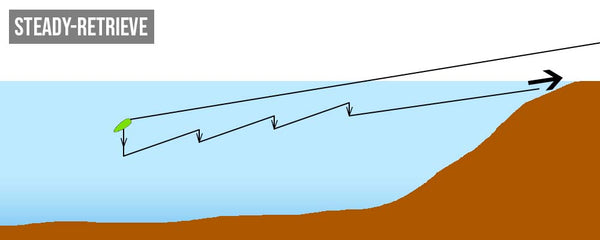
A steady retrieve with pauses is a popular method at trout lakes, alongside a simple, uninterrupted wind-in.
If the rounded side is at the hook end and the narrower end faces the main line or leader, the action changes completely. Fish the spoon in the same way as just described — but because of the shape, the spoon doesn't flutter straight down on the pause. Instead it tumbles diagonally backwards and downwards. When you resume the retrieve, you're almost fishing on the spot, bringing the lure back towards the bank only in small increments.
So, you can either fish with those retrieve pauses — which are very effective given the sinking, tumbling action of the spoon — or simply wind it back in without any added manipulation. Naturally, you can vary and build on your presentation from there. Sharp rod twitches, for example, bring the lure to life and produce spectacular darting movements.
Setting the Drag Correctly
Trout are not a fish that need to be struck hard on a tight line with a stiff rod. Quite the opposite. As mentioned, some stretch in the line is useful to give the fish room to move. The drag also needs to be set correctly. This means it should be fairly light, giving line readily rather than offering the trout too much resistance. When a trout takes your lure, it should be able to run a few metres at first rather than finding itself immediately locked up against the rod. However, if the drag is set too lightly, there's a risk of the line twisting. Experiment a little to find the right setting — it's essential for successful trout fishing, and you'll get the feel for it quickly.
The Right Strike
Because trout often nudge their prey before committing, you should never strike at the very first contact. That's much easier said than done — the moment you feel a fish, every instinct tells you to strike immediately. But those nudges will often result in a missed strike. If you feel a prod, wait just a moment longer and keep presenting the lure exactly as before. Shortly after, you'll feel the fish properly take and move off with the lure. Only when the rod bends over should you set the hook, to make sure you've got the fish firmly on. This will significantly improve your hook-up rate — though it does take a bit of practice.
Fishing at a Trout Lake: Video
To give you a feel for what a visit to a trout lake actually looks like, Toni and Daniel put together the video below. The two of them decided on a spontaneous trip to a local trout fishery, loaded up with the right gear and lures — a jig spinner, plug, soft lure and, of course, spoons from our trout lure set — and headed out for rainbow trout and salmon trout.
Fancy paying your local trout lake a visit?
Tight lines and enjoy your fishing!