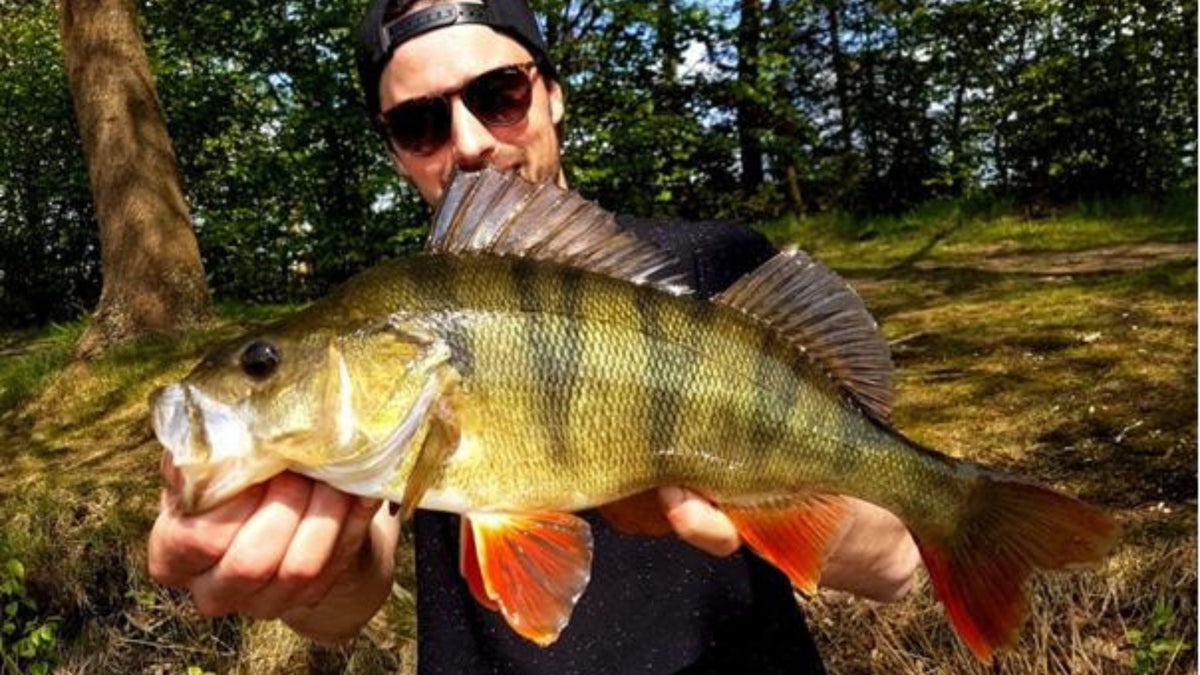
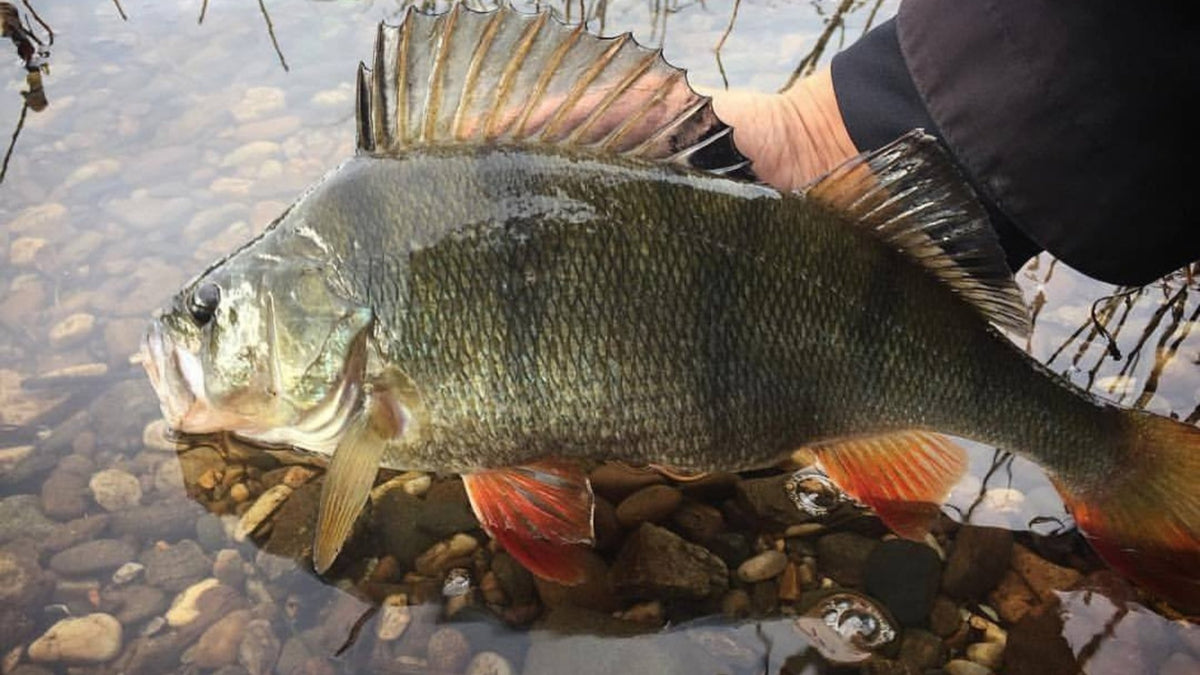
A blog post by team angler Toni Wittbrodt:
For around six years, no other fish has fascinated me quite like the asp. A few years ago it was still dismissed as an unwanted by-catch. Today, however, there are more and more anglers deliberately targeting these freshwater torpedoes. As a teenager, I paid the species very little attention. You'd spot the odd asp at the surface here and there, but as a rule they ignored every lure I put in front of them. Why? I was using the wrong lure, in the wrong place, at far too slow a speed. Asp have exceptional eyesight and can reach extraordinary speeds — and that is exactly how they hunt their prey. My first asp came while I was pike fishing in an oxbow of the Peene. I was trying to target a hunting pike, so I was winding my soft lure back at high speed to get it out of the water. BANG! I will never forget that savage take. After an exhilarating fight, I landed my first asp — and from that moment on, I was completely hooked.
Lightning-fast takes that jolt the rod, broken dive plates on plugs, bent or snapped hooks — that is all part of asp fishing, and it is precisely what makes it so exciting. If you want to take on these powerhouses, you need to be well prepared. Read on to find out when, where and with what you can catch them successfully. Enjoy!
All About the Asp
The asp (Leuciscus aspius) belongs to the carp family. It is the only member of that family to feed exclusively on animal prey — which makes it truly remarkable, given that the Cyprinidae comprises around 2,500 species. Its natural range covers the large rivers of central Europe, though today asp can be found worldwide, largely as a result of stocking programmes but also owing to its own lifestyle.
Asp are potamodromous migratory fish that cover great distances within their home waters, particularly during the spawning season. Depending on the weather, spawning takes place between March and June. Juvenile asp initially feed on all manner of tiny organisms, but from as little as 4 cm in length they switch to an almost exclusively fish-based diet. As asp grow larger, the shoals in which they hunt become smaller. Fish aged four to five years can be considered sexually mature. Because the spawning period often overlaps with that of other cyprinids, hybrid forms are not unheard of. Asp can reach up to 1 m in length and around 10 kg in weight, with a maximum age estimated at up to 15 years.

Asp are cyprinids that earn the nickname 'freshwater torpedo' thanks to their explosive speed
Visual Identification
- Large, toothless, upturned mouth
- Pointed head shape
- Forked, sickle-shaped tail fin
- Colouration ranging from greyish to olive, depending on the water
- Flanks usually silvery
- Almost white belly
Choosing Your Spot
Whether in fresh or brackish water, asp thrive wherever there is moving water. Thanks to stocking programmes, they can also be found in some lakes. Look for them wherever the current changes — at weirs, bridges, bridge pillars, waterfalls, groyne tips and outflows. White, foamy water is always a hotspot for asp, and that holds true almost regardless of the season.
The calmer the surface, the harder asp are to fool.
That is why they are particularly difficult to catch in still lakes. Oxygenated water draws asp like a magnet — find that, and you are halfway there.
Good Lures for Asp
In summer, I recommend starting with surface lures or shallow-running plugs and jerkbaits. If that fails to produce bites, work your way down through the water column.
In other words:
- Surface lures
- Shallow-running plugs and jerks
- Deeper-running plugs, rattlebaits and blade baits
- Jig spinners, soft lures on a jig head or a finesse rig
The key here is to stay observant at the water. Pay attention to the size of the baitfish and match your lure accordingly. In winter I stick exclusively to deep-running lures worked right along the bottom.
Surface Lures
There are days when asp will respond to nothing but a stickbait, a popper or something similar — but equally there are days when the fish show absolutely no interest in them. What matters is that you do not tie yourself in knots trying to work the stickbait or popper in a textbook-perfect, even retrieve. Speed is far more important than a tidy action. Go flat out. Surface lures are undoubtedly at their most productive in summer.

In summer, asp are usually caught at or just below the surface
Plugs and Crankbaits
Most of my asp have fallen to plugs — floating, suspending or sinking, deep or shallow running. Plugs give you the flexibility to cover different depths at will. I always prioritise quality here.
Asp fishing is a real litmus test for lures — you soon find out which ones are up to the job and which are not.
Not every lure can be wound back at high speed; many will blow out to one side or even spin out of control. Lures with a built-in 'weight-transfer system' are particularly worth recommending. A sliding internal weight shifts to the rear on the cast to stabilise the lure, which also adds meaningful casting distance. These lures will catch you asp throughout the year.
Jerkbaits
Here we are not talking about the large jerks used for pike — smaller models are the order of the day. Small jerkbaits are outstanding casting missiles and, retrieved at speed, track through the water in a seductive S-curve. Despite their seemingly monotonous action, they generate considerable pressure, which is enough to trigger an asp into striking. With the range of models available, you can vary running depth with jerkbaits just as with any other lure.
When distance is what matters, I reach for a jerkbait.
Yes, that rhymes :)
Rattlebaits and Blade Baits
I group these two lure types together because the action and presentation options are very similar. In winter you can work them slowly along the bottom or even try vertical jigging. Even in cold water temperatures, the vibration of these aggressive lures is enough to provoke an asp into biting — they are ideal for the job. But in summer too, they can turn the session around when nothing else is working. Let one of these lures sink to the bottom and then rip it back up through the entire water column at high speed — that usually coaxes a fish or two into action.
Heavy Metal: Spinners, Spoons and More
Many anglers catch their first asp on a spinner. Spinners do catch asp, but rarely the bigger specimens, and casting distance is nothing to write home about. For that reason I use them relatively infrequently.
Spoons, on the other hand, I use a great deal. Worked at speed they fish with an aggressive, hunting action and can be cast a long way. They are also comparatively inexpensive.
Jig spinners are sold in many shops as the ultimate weapon for asp. In my view they are slightly overrated, but they do cast well and can be fished at any depth — which counts in their favour.
Soft Lures
I use soft lures for asp only in winter, though there are certainly anglers who catch on them year-round. They offer a great deal of creative scope. In cold water you can jig for asp in a fairly conventional manner, using lures with a strong, lively action on heavier jig heads — a slightly different approach from, say, zander fishing. In summer, however, a soft lure fished 'weightless' and skittered across the surface can become a real weapon. Experimentation is the name of the game.
Sea Trout Lures
Spöket, Nordic Seeker and similar lures make an excellent addition to the standard asp armoury, with casting distance being their biggest advantage. When I am fishing spots with large expanses of open water, I often dip into the sea trout box. Streamers fished under a float or on a fly rod also produce large asp on a regular basis.
Toni's Top 5 for Asp Fishing (a tough choice)
-
- Savage Gear Crucian Crank
- Illex Squad Minnow
- River2Sea Rover
- Salmo Slider Jerkbait
- Freiwild Köder Blanker Hans
Rod
Your tackle really needs to be well matched for this type of fishing. Asp generate explosive, extreme power. Any weak link in your setup and you risk losing the fish — or worse, breaking your rod. Asp typically lie in wait in specific areas, then attack in a fraction of a second before returning to their lie. It all happens in tenths of a second, and that is precisely what makes the takes so brutal.
To cushion the initial impact of the bite, I use rods with a through-action or at least a semi-through action, with a maximum casting weight of 30 g. Rod length naturally depends on the water. On a large river such as the Elbe, rods of 2.40–2.70 m are more appropriate. On my smaller rivers I use rods between 2.20–2.55 m.
Even from a float tube or a boat I exclusively use rods over 2.20 m. Asp are powerful fish and will try to get under the boat or between the fins of a float tube. The longer rod keeps them at a safe distance. The only exception is when I am fishing surface lures all day — in that case I use a shorter rod, as topwater fishing with long rods becomes very tiring over time.
Reel
For a reel, models in the 2500–4000 size range are suitable, and a high gear ratio is important. Larger reels make it easier to retrieve the lure quickly and mean you can fish for longer without fatigue. I always keep the drag slightly open so the fish can take line immediately after the take. You do not need to strike with asp — as a rule they hook themselves completely.
Leader and Line
For the main line, use thin braid. Depending on lure size, I use lines with a diameter of 0.10–0.15 mm. For the leader, fluorocarbon of at least 0.30 mm diameter is essential — anything lighter will be snapped by an asp if you make even the smallest mistake.
Landing Your Fish
As a final note, I want to give you a few tips on landing asp correctly. In many magazines and videos you repeatedly see anglers landing asp with a gill-cover grip and even holding them up for photos that way. This harms the fish. Asp have a thin membrane at the rear of the gill cover that extends almost down to the lower jaw. If you land the fish using a gill-cover grip, this membrane tears — which can lead to fungal or bacterial infections, and many fish die as a result. The same advice applies to other toothless predators such as chub and ide.
Asp anglers should always use a landing net and/or grip the fish by the wrist of the tail.
If you would like to see some asp action in motion, check out the following video (asp action from 13:13 onwards):
I hope this post has passed on some useful knowledge and inspired you to target these freshwater torpedoes. Do not compromise on your tackle, stay flexible, and it is only a matter of time before you experience that savage take for yourself.
Tight lines,
Toni from the Pike & Perch team at pikeandperch.eu